Zarif Hadi, Hosseiny Salma, Paquet Agnès, Lebrigand Kevin, Arguel Marie-Jeanne, Cazareth Julie, Lazzari Anne, Heurteaux Catherine, Glaichenhaus Nicolas, Chabry Joëlle, Guyon Alice, Petit-Paitel Agnès
Université Côte d'Azur, CNRS, IPMC, Nice, France.
Université Côte d'Azur, INSERM, IPMC, Nice, France.
Front Synaptic Neurosci. 2018 Jun 13;10:14. doi: 10.3389/fnsyn.2018.00014. eCollection 2018.
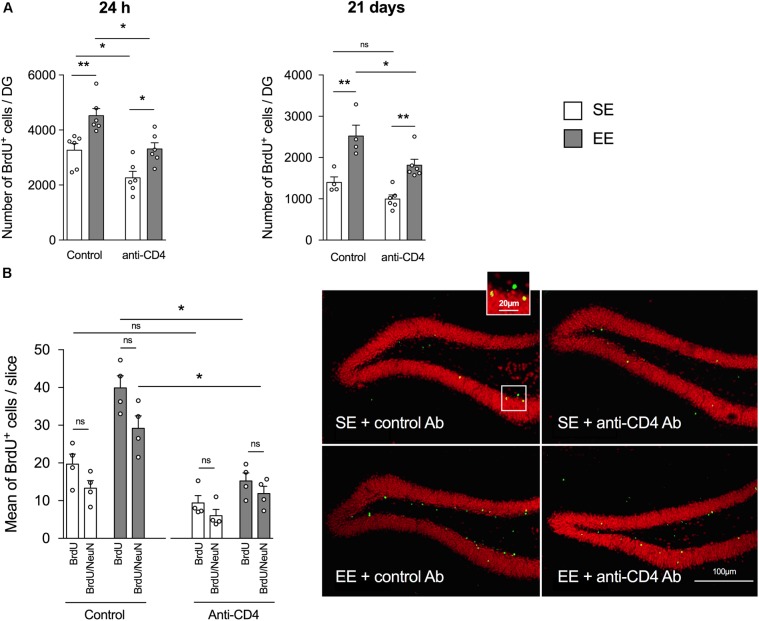
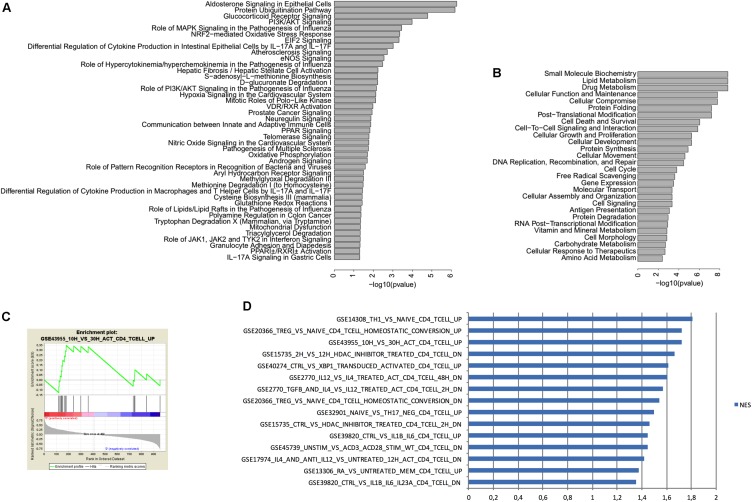
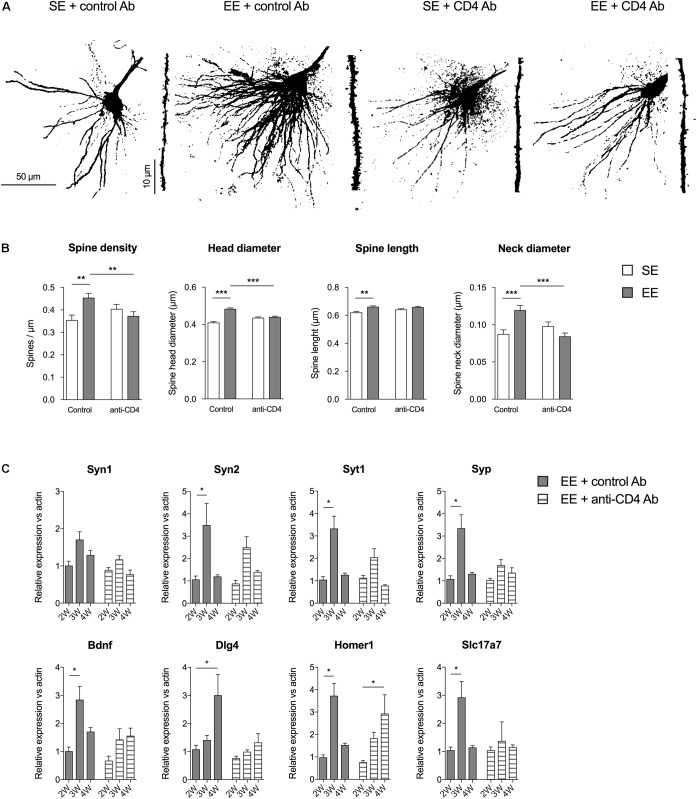
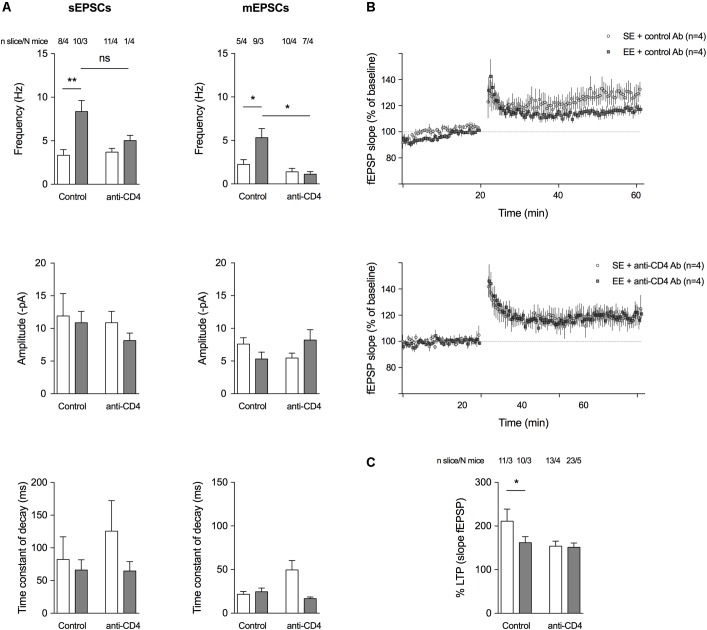
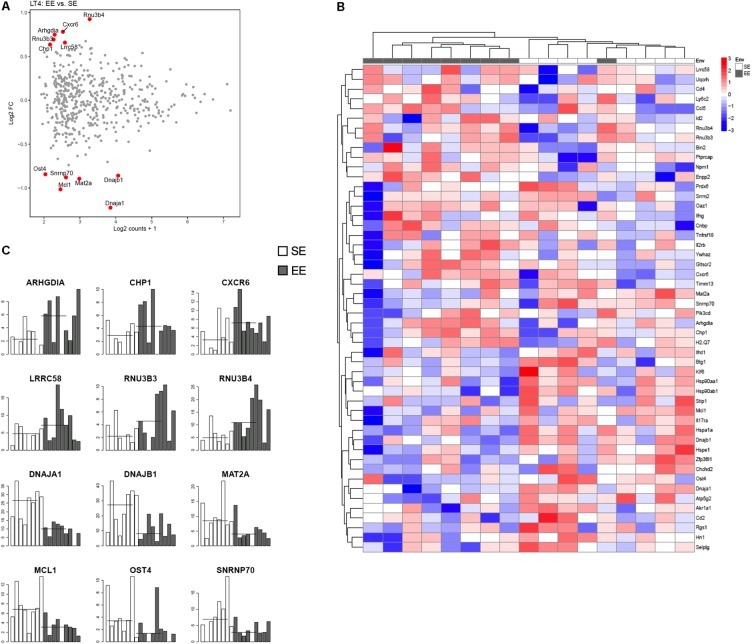
Living in an enriched environment (EE) benefits health by acting synergistically on various biological systems including the immune and the central nervous systems. The dialog between the brain and the immune cells has recently gained interest and is thought to play a pivotal role in beneficial effects of EE. Recent studies show that T lymphocytes have an important role in hippocampal plasticity, learning, and memory, although the precise mechanisms by which they act on the brain remain elusive. Using a mouse model of EE, we show here that CD4 T cells are essential for spinogenesis and glutamatergic synaptic function in the CA of the hippocampus. However, CD4 lymphocytes do not influence EE-induced neurogenesis in the DG of the hippocampus, by contrast to what we previously demonstrated for CD8 T cells. Importantly, CD4 T cells located in the choroid plexus have a specific transcriptomic signature as a function of the living environment. Our study highlights the contribution of CD4 T cells in the brain plasticity and function.
生活在丰富环境(EE)中通过协同作用于包括免疫系统和中枢神经系统在内的各种生物系统而有益于健康。大脑与免疫细胞之间的对话最近引起了人们的兴趣,并被认为在EE的有益作用中起着关键作用。最近的研究表明,T淋巴细胞在海马可塑性、学习和记忆中具有重要作用,尽管它们作用于大脑的确切机制仍不清楚。利用EE小鼠模型,我们在此表明CD4 T细胞对海马CA区的树突棘形成和谷氨酸能突触功能至关重要。然而,与我们之前对CD8 T细胞的研究结果相反,CD4淋巴细胞并不影响EE诱导的海马齿状回神经发生。重要的是,脉络丛中的CD4 T细胞具有作为生活环境函数的特定转录组特征。我们的研究突出了CD4 T细胞在大脑可塑性和功能中的作用。