Oswald Florian, Zwick Michaela, Omar Ola, Hotz Ernst N, Neumann Anke
Institute of Process Engineering in Life Sciences, Section II, Technical Biology, Karlsruhe Institute of Technology, Karlsruhe, Germany.
Front Microbiol. 2018 Jun 13;9:1213. doi: 10.3389/fmicb.2018.01213. eCollection 2018.
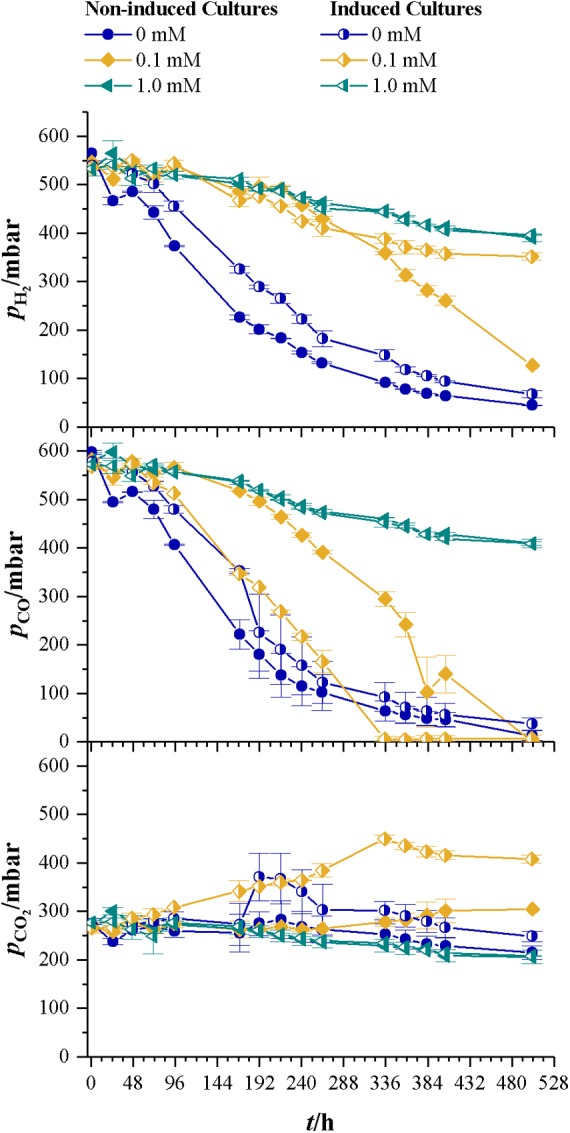
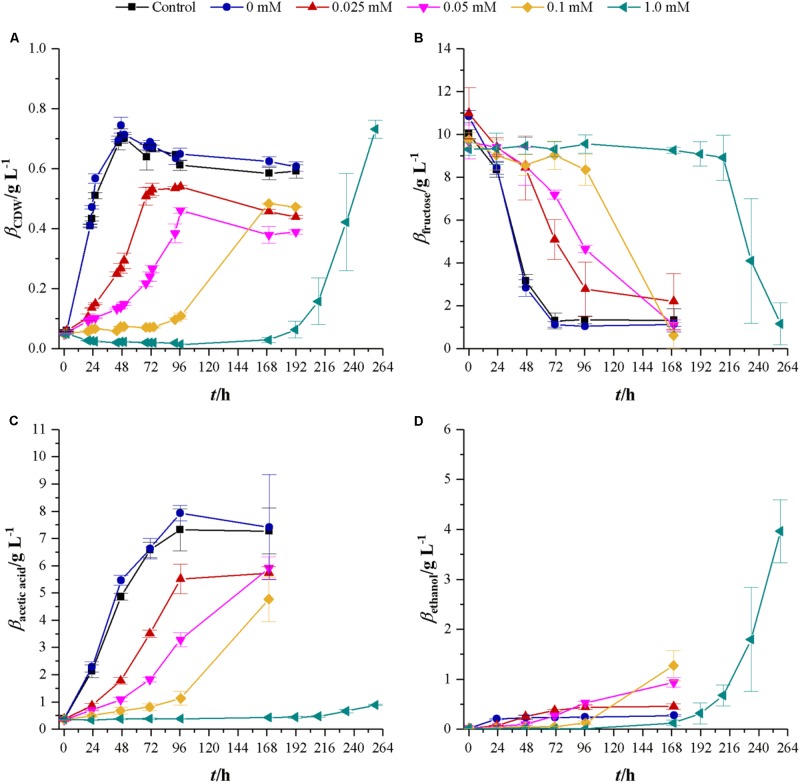
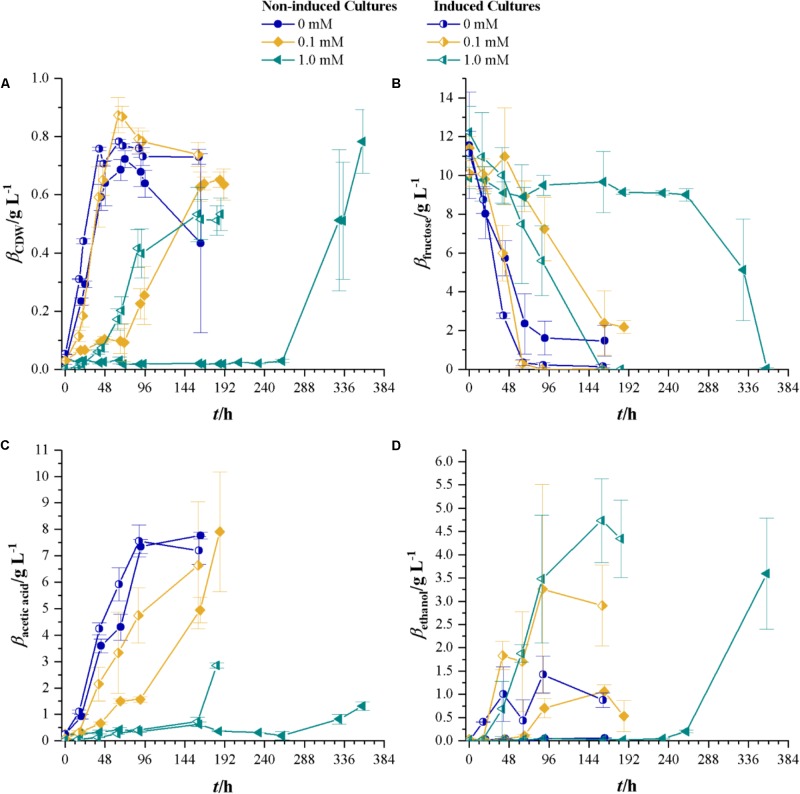
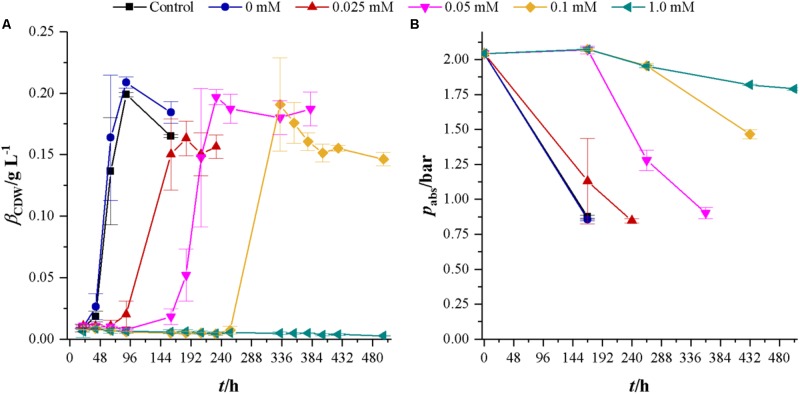
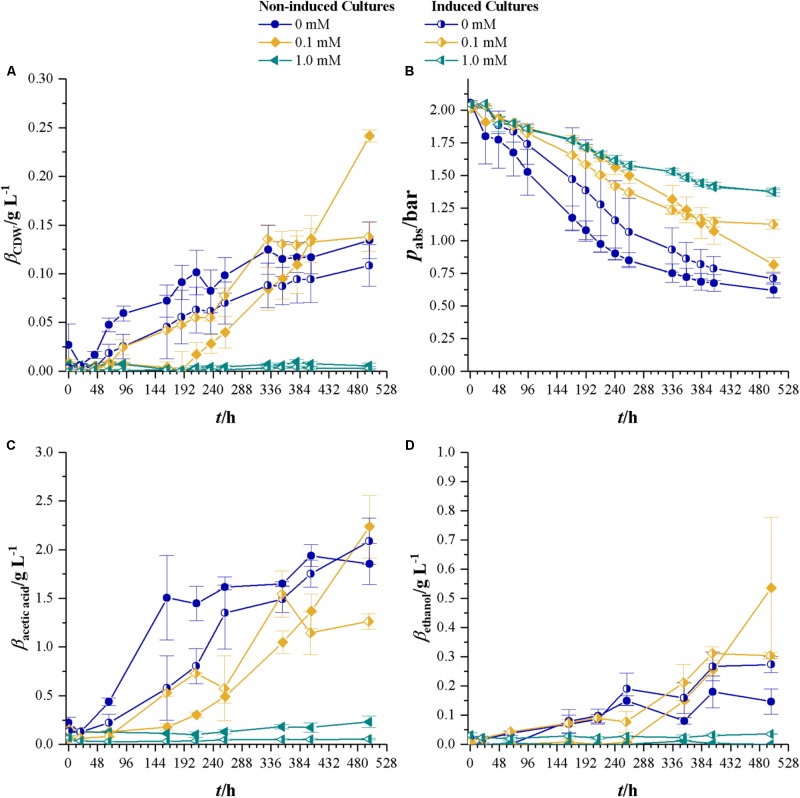
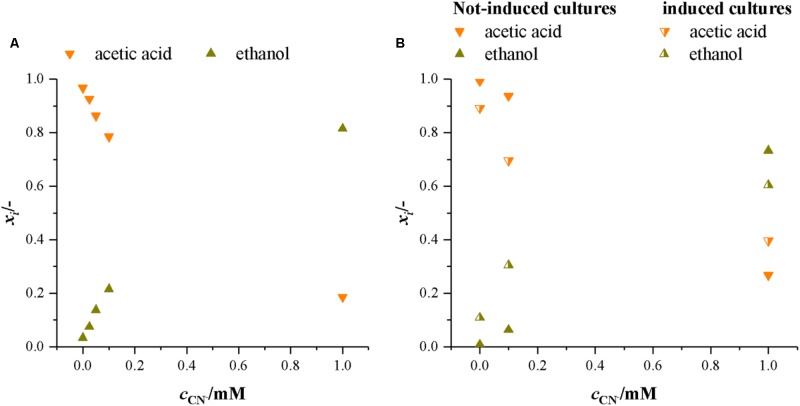
Cyanide is a minor constituent of crude syngas whose content depends on the feedstock and gasification procedure. It is a known poison to metal catalysts and inhibits iron-containing enzymes like carbon monoxide dehydrogenase of acetogenic organisms. Therefore, it is considered a component that has to be removed from the gas stream prior to use in chemical synthesis or syngas fermentation. We show that the growth rate and maximum biomass concentration of are unaffected by cyanide at concentrations of up to 1.0 mM with fructose as a carbon source and up to 0.1 mM with syngas as a carbon source. After the culture is adapted to cyanide it shows no growth inhibition. While the difference in growth is an increasing lag-phase with increasing cyanide concentrations, the product spectrum shifts from 97% acetic acid and 3% ethanol at 0 mM cyanide to 20% acetic acid and 80% ethanol at 1.0 mM cyanide for cultures growing on (fructose) and 80% acetic acid and 20% ethanol at 0.1 mM cyanide (syngas).
氰化物是粗合成气中的微量成分,其含量取决于原料和气化工艺。它是金属催化剂的已知毒物,会抑制产乙酸生物的含铁酶,如一氧化碳脱氢酶。因此,它被认为是在用于化学合成或合成气发酵之前必须从气流中去除的成分。我们表明,以果糖为碳源时,氰化物浓度高达1.0 mM,以合成气为碳源时,氰化物浓度高达0.1 mM, 的生长速率和最大生物量浓度不受影响。培养物适应氰化物后,未表现出生长抑制。虽然随着氰化物浓度增加,生长差异表现为滞后期延长,但对于以(果糖)为碳源生长的培养物,产物谱从氰化物浓度为0 mM时的97%乙酸和3%乙醇,变为氰化物浓度为1.0 mM时的20%乙酸和80%乙醇;对于以合成气为碳源生长的培养物,氰化物浓度为0.1 mM时,产物谱为80%乙酸和20%乙醇。