Temerozo Jairo R, de Azevedo Suwellen S D, Insuela Daniella B R, Vieira Rhaíssa C, Ferreira Pedro L C, Carvalho Vinícius F, Bello Gonzalo, Bou-Habib Dumith Chequer
Laboratory on Thymus Research, Oswaldo Cruz Institute/Fiocruz, Rio de Janeiro, Brazil.
National Institute of Science and Technology on Neuroimmunomodulation, Oswaldo Cruz Institute/Fiocruz, Rio de Janeiro, Brazil.
Front Immunol. 2018 Jun 12;9:1336. doi: 10.3389/fimmu.2018.01336. eCollection 2018.
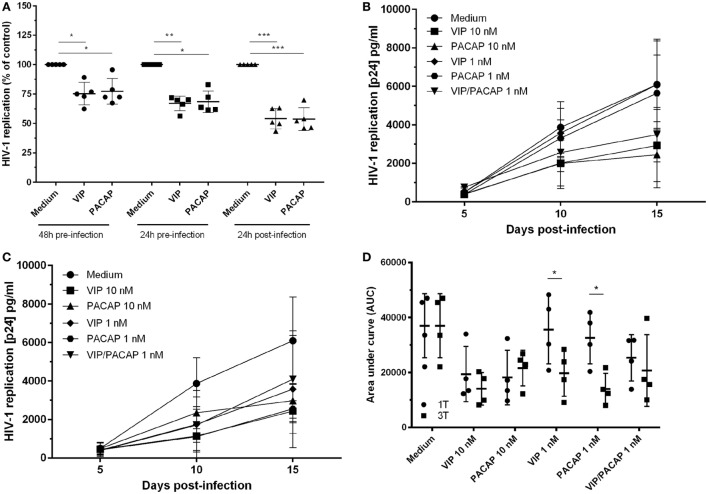
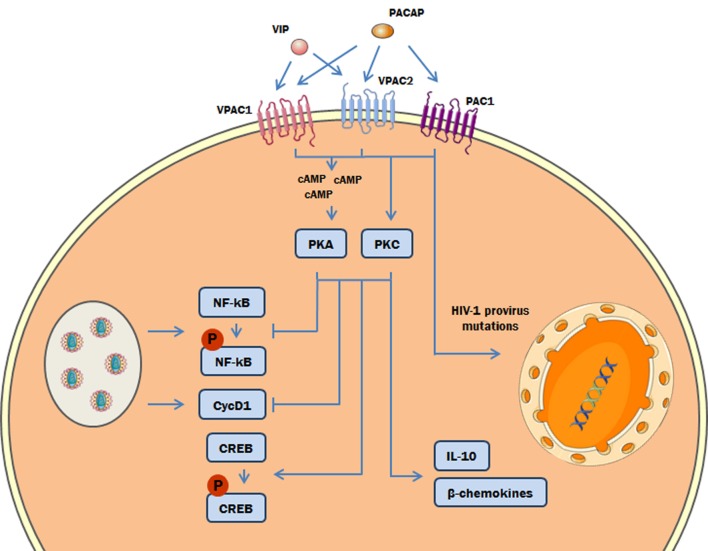
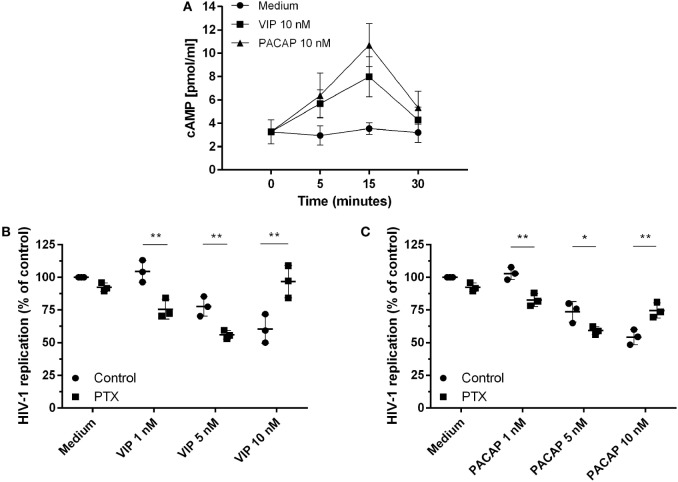
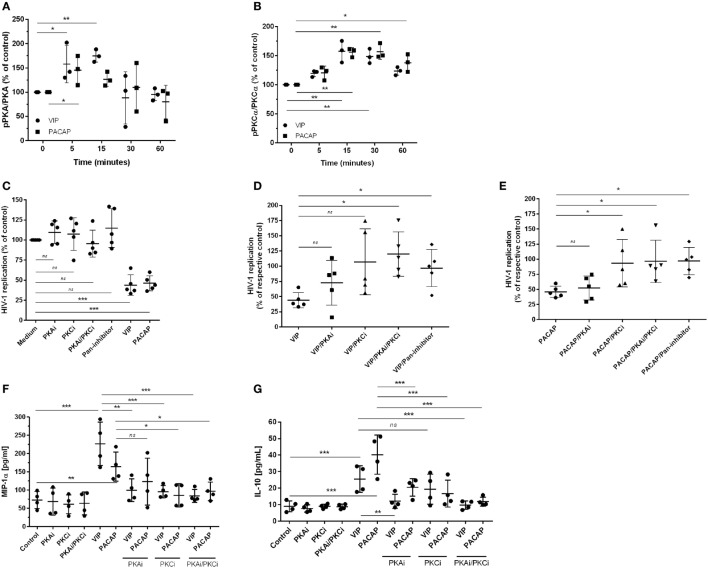
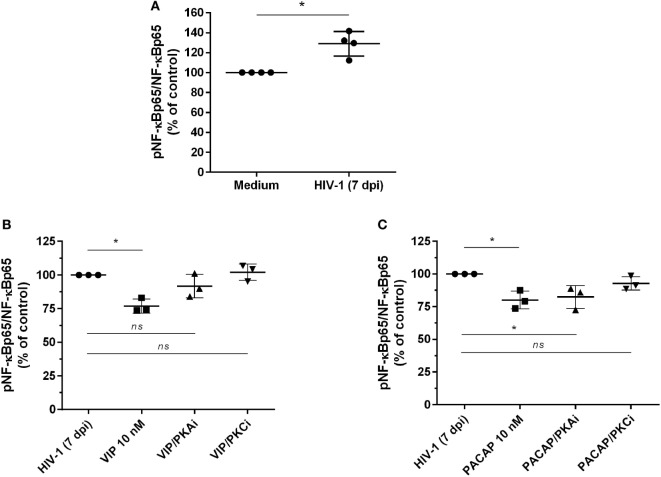
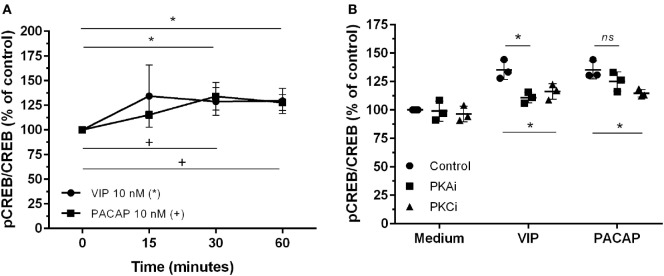
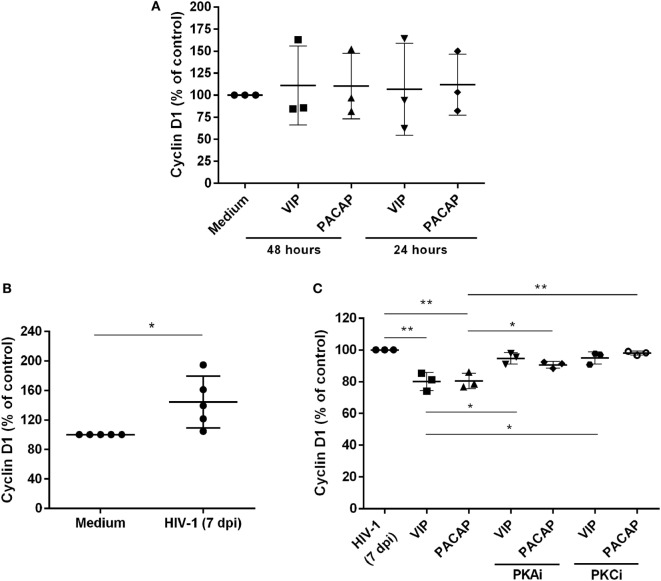
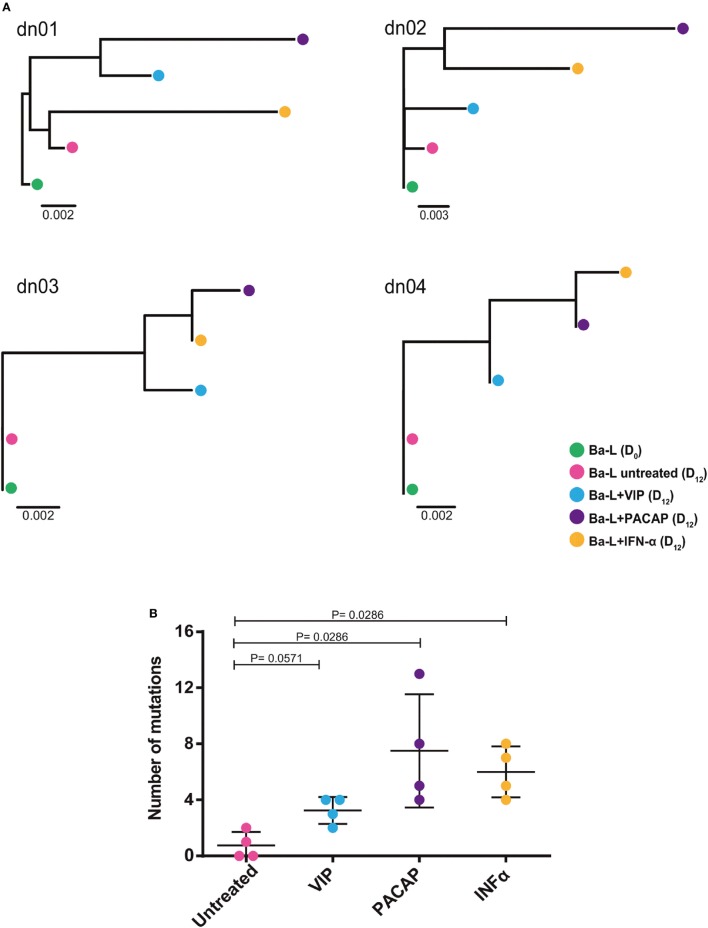
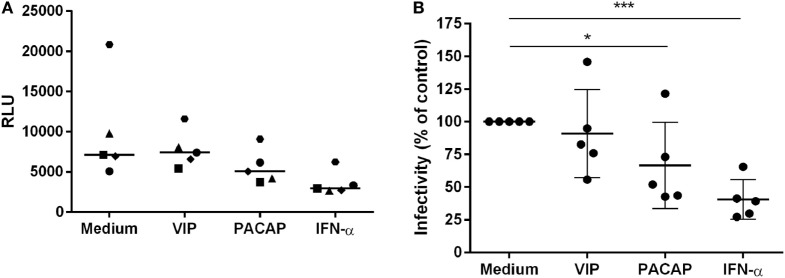
Vasoactive intestinal peptide (VIP) and pituitary adenylate cyclase-activating polypeptide (PACAP) are highly similar neuropeptides present in several tissues, endowed with immunoregulatory functions and other systemic effects. We previously reported that both neuropeptides reduce viral production in HIV-1-infected primary macrophages, with the participation of β-chemokines and IL-10, and now we describe molecular mechanisms engaged in this activity. Macrophages exposed to VIP or PACAP before HIV-1 infection showed resistance to viral replication, comparable to that observed when the cells were treated after infection. Also, multiple treatments with a suboptimal dose of VIP or PACAP after macrophage infection resulted in a decline of virus production similar to the inhibition promoted by a single exposure to the optimal inhibitory concentration. Cellular signaling pathways involving cAMP production and activation of protein kinases A and C were critical components of the VIP and PACAP anti-HIV-1 effects. Analysis of the transcription factors and the transcriptional/cell cycle regulators showed that VIP and PACAP induced cAMP response element-binding protein activation, inhibited NF-kB, and reduced Cyclin D1 levels in HIV-1-infected cells. Remarkably, VIP and PACAP promoted G-to-A mutations in the HIV-1 provirus, matching those derived from the activity of the APOBEC family of viral restriction factors, and reduced viral infectivity. In conclusion, our findings strengthen the antiretroviral potential of VIP and PACAP and point to new therapeutic approaches to control the progression of HIV-1 infection.
血管活性肠肽(VIP)和垂体腺苷酸环化酶激活多肽(PACAP)是存在于多种组织中的高度相似的神经肽,具有免疫调节功能和其他全身效应。我们之前报道过,这两种神经肽在β趋化因子和白细胞介素10的参与下,可降低HIV-1感染的原代巨噬细胞中的病毒产生,现在我们描述参与该活性的分子机制。在HIV-1感染前暴露于VIP或PACAP的巨噬细胞对病毒复制表现出抗性,这与感染后处理细胞时观察到的情况相当。此外,巨噬细胞感染后用次优剂量的VIP或PACAP进行多次处理导致病毒产生下降,类似于单次暴露于最佳抑制浓度所促进的抑制作用。涉及环磷酸腺苷(cAMP)产生以及蛋白激酶A和C激活的细胞信号通路是VIP和PACAP抗HIV-1作用的关键组成部分。对转录因子以及转录/细胞周期调节因子的分析表明,VIP和PACAP可诱导HIV-1感染细胞中的cAMP反应元件结合蛋白激活、抑制核因子κB(NF-κB)并降低细胞周期蛋白D1水平。值得注意的是,VIP和PACAP促进HIV-1前病毒发生G到A的突变,与病毒限制因子载脂蛋白B编辑酶催化多肽样家族(APOBEC)的活性所产生的突变相匹配,并降低病毒感染性。总之,我们的研究结果强化了VIP和PACAP的抗逆转录病毒潜力,并指出了控制HIV-1感染进展的新治疗方法。