Zhou Weinan, Davis Elizabeth A, Li Kailiang, Nowak Romana A, Dailey Megan J
Department of Animal Sciences, University of Illinois at Urbana-Champaign, Urbana, Illinois.
Neuroscience Program, University of Illinois at Urbana-Champaign, Urbana, Illinois.
Physiol Rep. 2018 Jul;6(13):e13746. doi: 10.14814/phy2.13746.
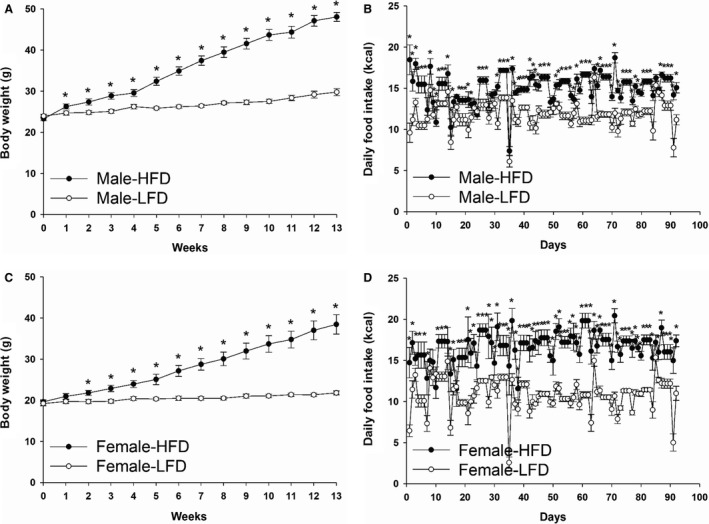
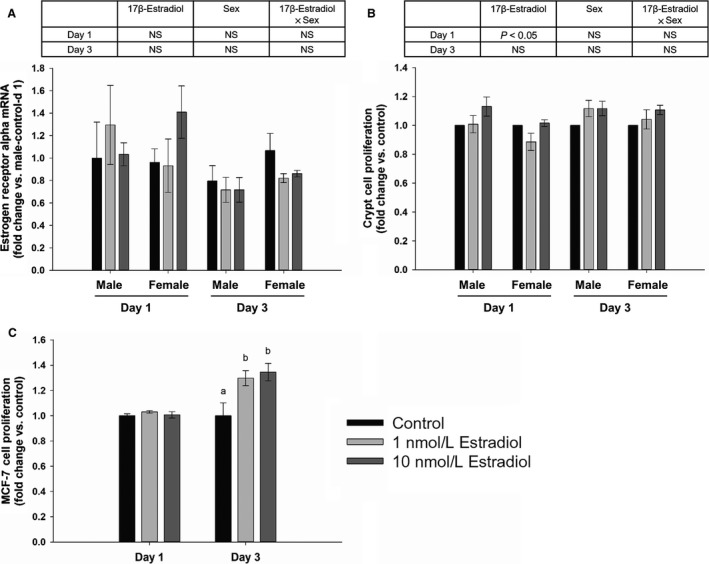
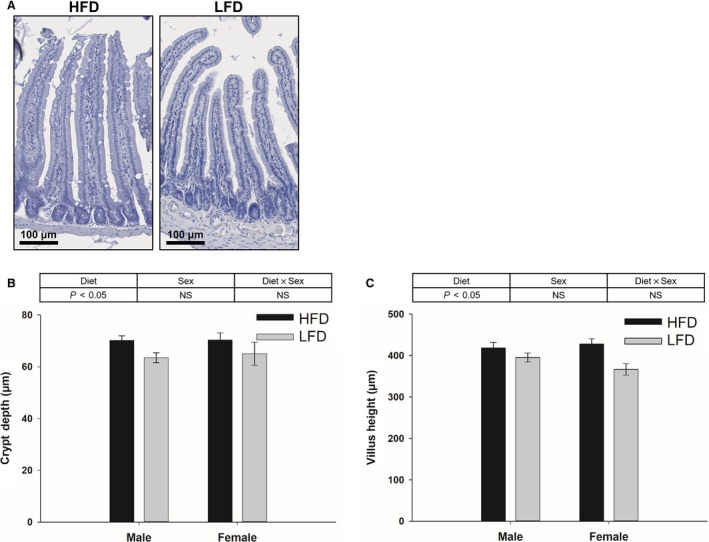
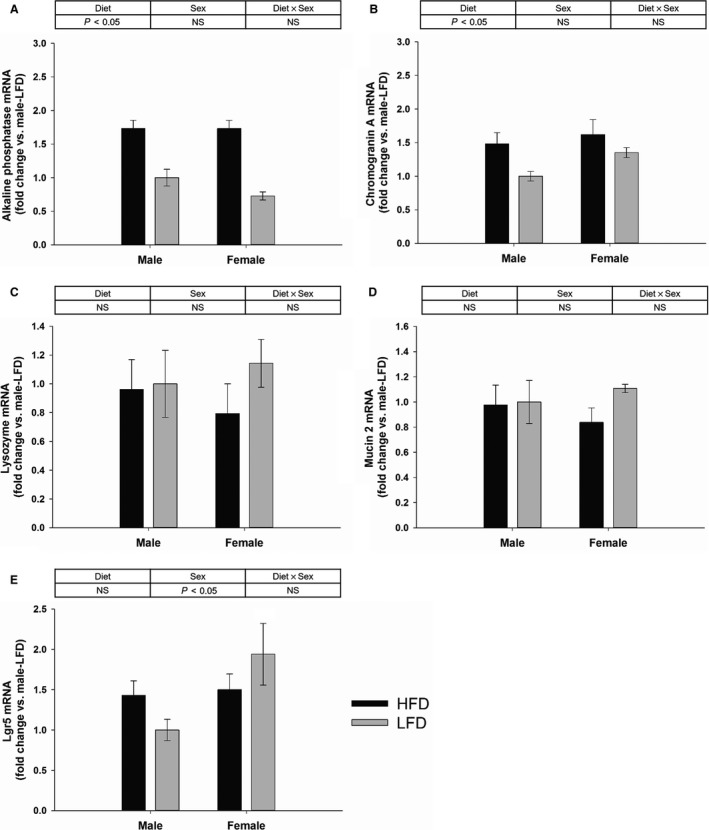
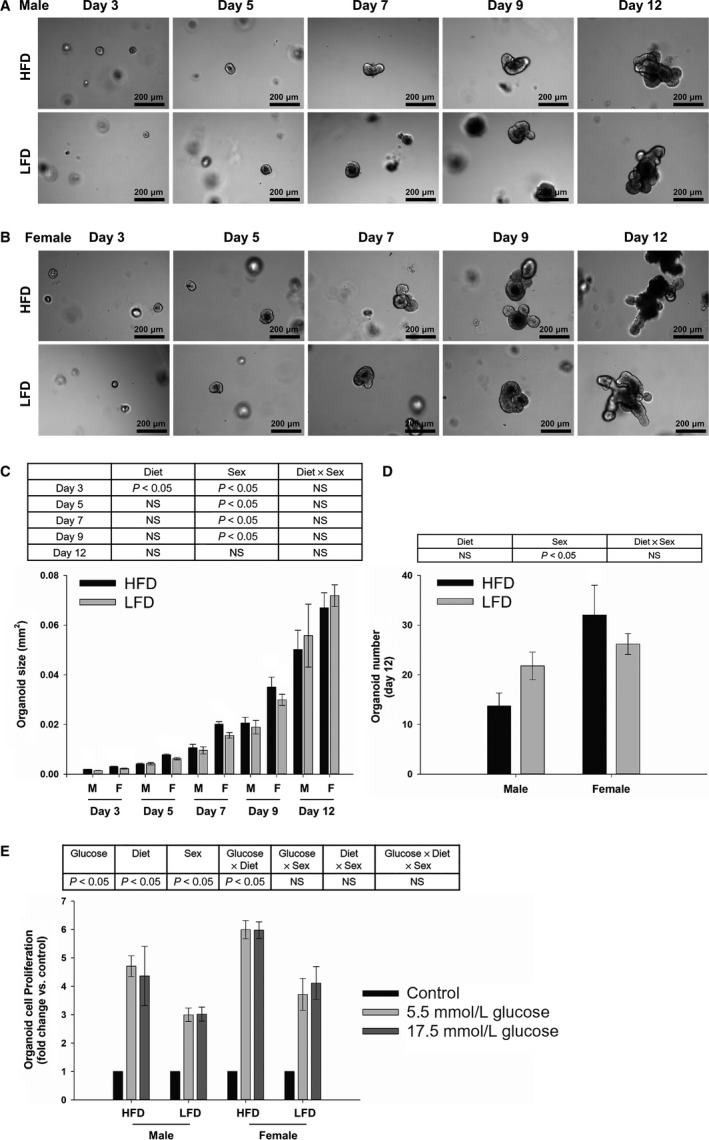
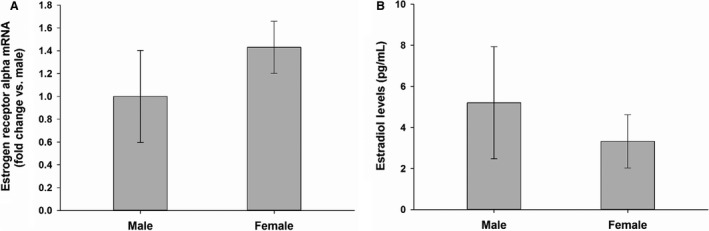
The intestinal epithelium is continuously regenerated by cell renewal of intestinal epithelial stem cells (IESCs) located in the intestinal crypts. Obesity affects this process and results in changes in the size and cellular make-up of the tissue, but it remains unknown if there are sex differences in obesity-induced alterations in IESC proliferation and differentiation. We fed male and female mice a 60% high-fat diet (HFD) or a 10% low-fat diet (LFD) for 3 months and investigated the differences in (1) the expression of markers of different intestinal epithelial cell types in vivo, and (2) lasting effects on IESC growth in vitro. We found that the growth of IESCs in vitro were enhanced in females compared with males. HFD induced similar in vivo changes and in vitro early growth of IESCs in males and females. The IESCs isolated and grown in vitro from females, though, showed an enhanced growth that was independent of obesity. To determine whether this effect was driven by sex steroid hormones, we used primary intestinal crypts isolated from male and female mice and investigated the differences in (1) the expression of steroid hormone receptors, and (2) cell proliferation in response to steroid hormones. We found that estrogen receptor α was expressed in crypts from both sexes, but estrogen had no effect on proliferation in either sex. These results suggest that obesity similarly effects IESCs in males and females, but IESCs in females have greater proliferation ability than males, but this is not driven by a direct effect of sex steroid hormones on IESCs or other crypt cells that provide essential niche support for IESCs.
位于肠隐窝的肠上皮干细胞(IESCs)通过细胞更新使肠上皮不断再生。肥胖会影响这一过程,并导致组织大小和细胞组成发生变化,但肥胖引起的IESC增殖和分化改变是否存在性别差异仍不清楚。我们给雄性和雌性小鼠喂食60%的高脂饮食(HFD)或10%的低脂饮食(LFD),持续3个月,并研究了以下两方面的差异:(1)体内不同肠上皮细胞类型标志物的表达;(2)对体外IESC生长的长期影响。我们发现,与雄性相比,雌性体外IESC的生长增强。HFD在雄性和雌性小鼠中诱导了类似的体内变化和体外IESC早期生长。然而,从雌性小鼠分离并在体外培养的IESC显示出与肥胖无关的生长增强。为了确定这种效应是否由性类固醇激素驱动,我们使用从雄性和雌性小鼠分离的原代肠隐窝,研究了以下两方面的差异:(1)类固醇激素受体的表达;(2)对类固醇激素的细胞增殖反应。我们发现雌激素受体α在两性的隐窝中均有表达,但雌激素对两性的增殖均无影响。这些结果表明,肥胖对雄性和雌性的IESC影响相似,但雌性的IESC比雄性具有更强的增殖能力,不过这并非由性类固醇激素对IESC或为IESC提供关键生态位支持的其他隐窝细胞的直接作用所驱动。