Dipartimento di Fisica, "Sapienza" Università di Roma, Rome, I-00185, Italy.
CNR-NANOTEC, Soft and Living Matter Laboratory, Rome, I-00185, Italy.
Soft Matter. 2018 Aug 21;14(31):6431-6438. doi: 10.1039/c8sm00751a. Epub 2018 Jun 28.
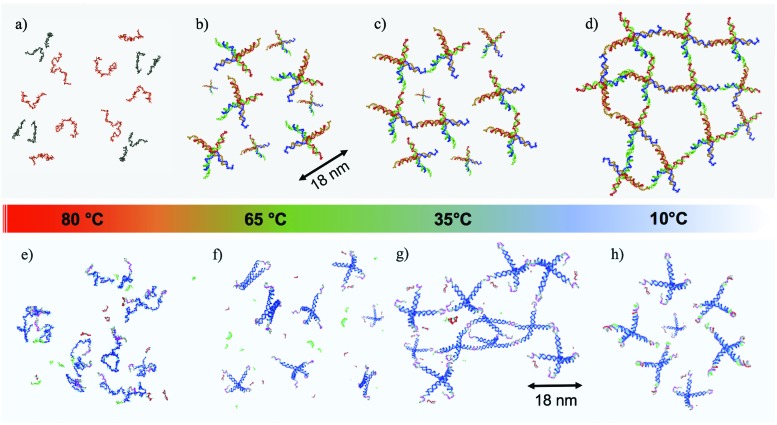
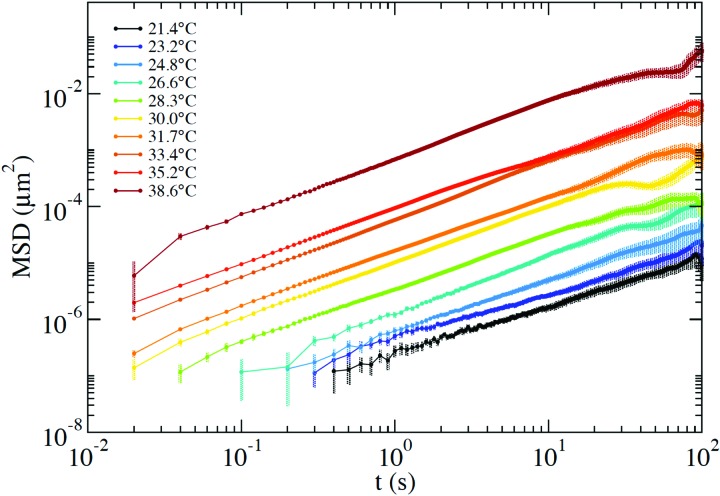
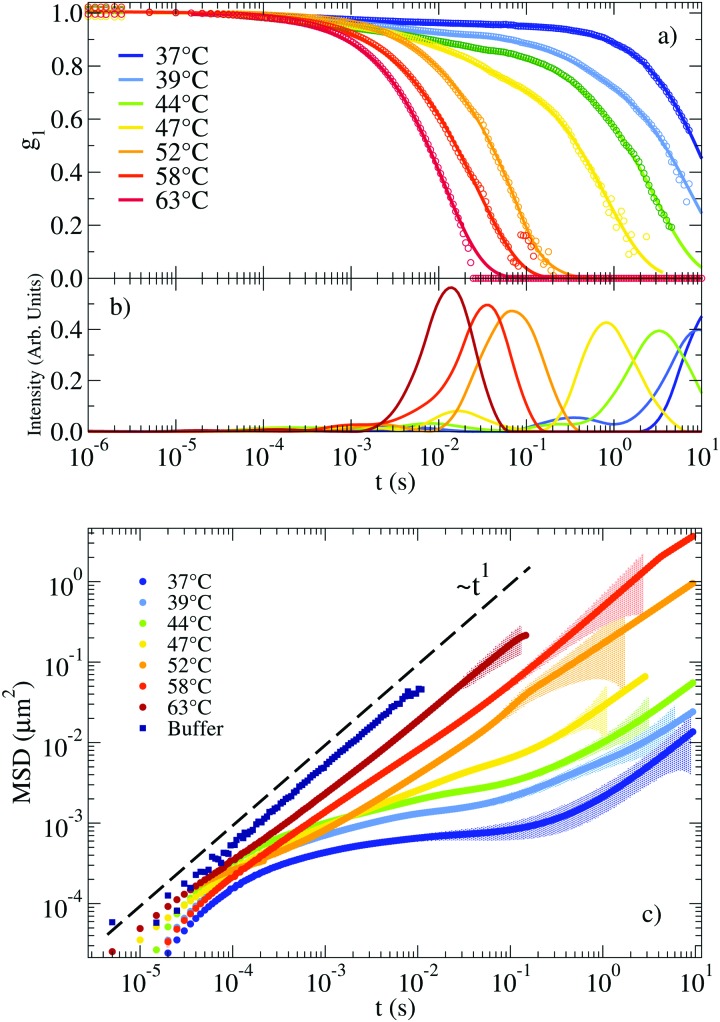
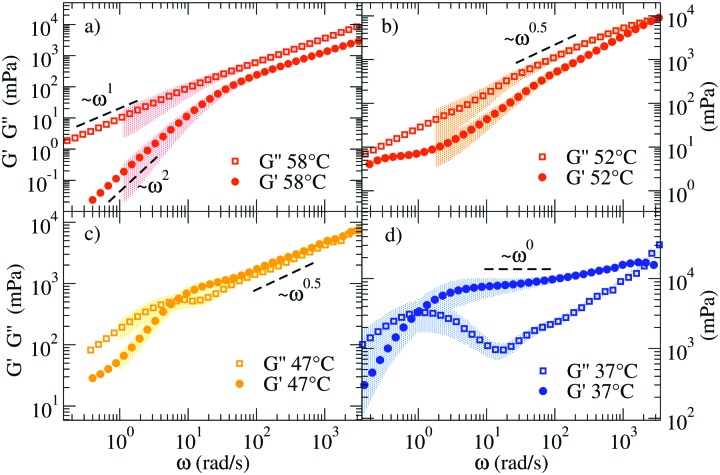
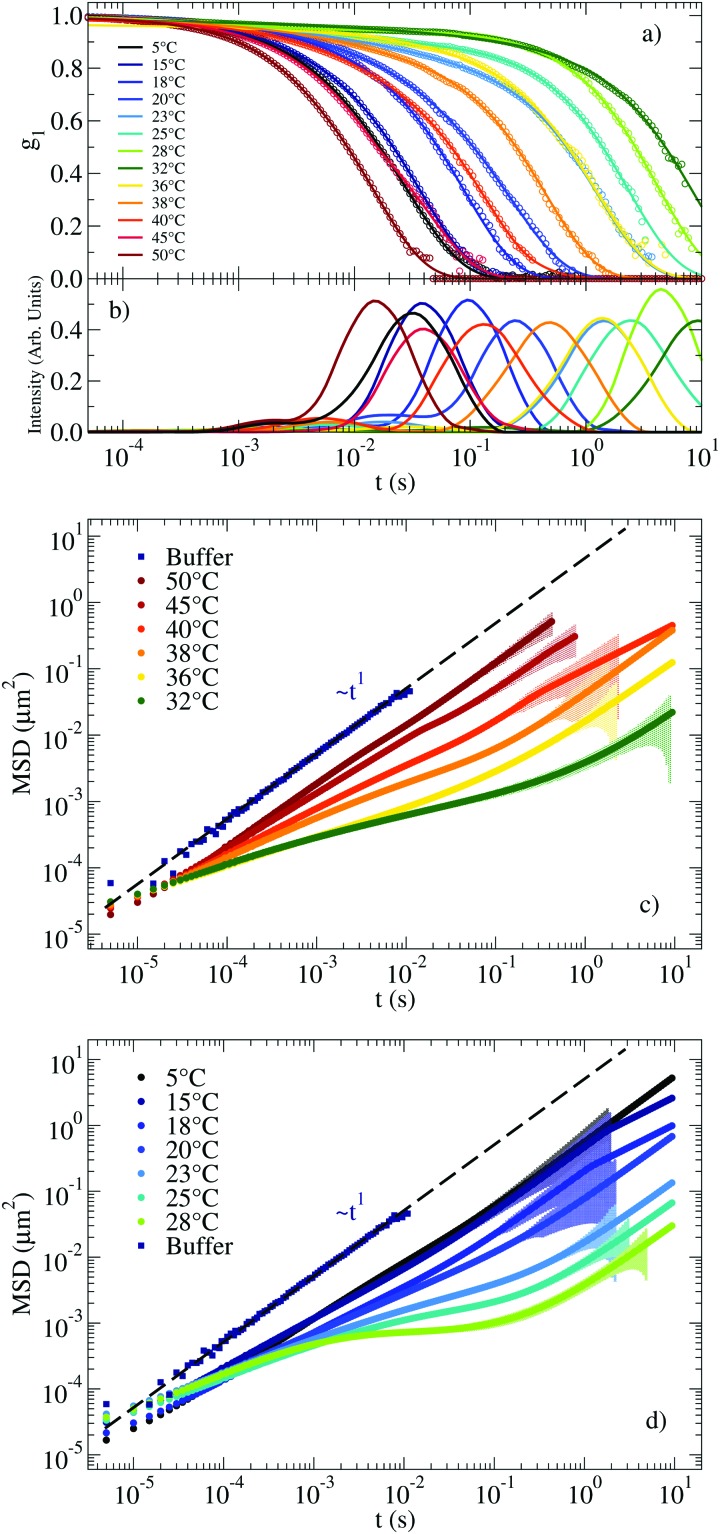
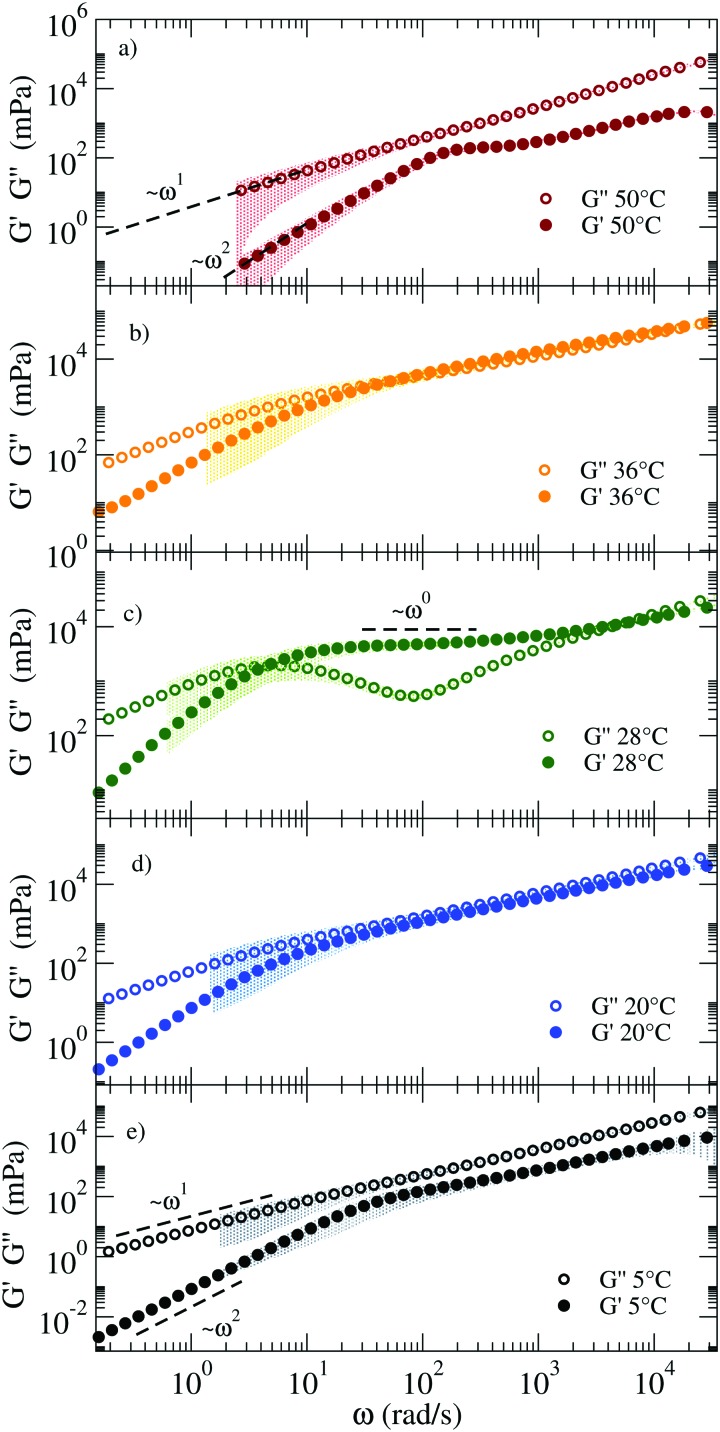
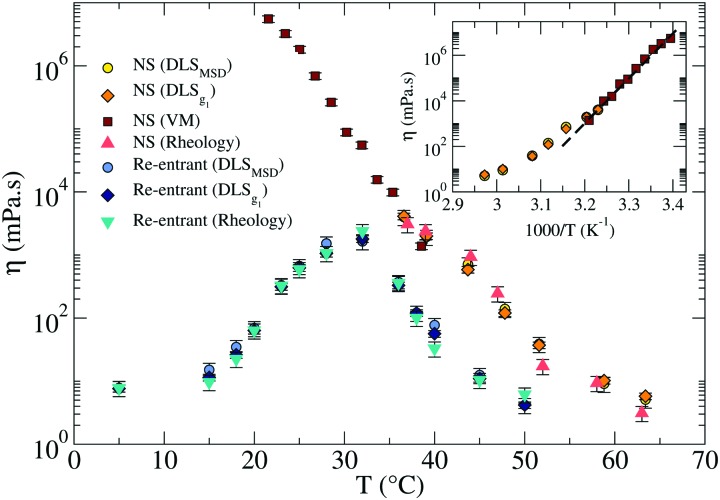
We present systematic characterisation by means of dynamic light scattering and particle tracking techniques of the viscosity and of the linear viscoelastic moduli, G'(ω) and G''(ω), for two different DNA hydrogels. These thermoreversible systems are composed of tetravalent DNA-made nanostars whose sticky sequence is designed to provide controlled interparticle bonding. While the first system forms a gel on cooling, the second one has been programmed to behave as a re-entrant gel, turning again to a fluid solution at low temperature. The frequency-dependent viscous and storage moduli and the viscosity reveal the different viscoelastic behavior of the two DNA hydrogels. Our results show how little variations in the design of the DNA sequences allow tuning of the mechanical response of these biocompatible all-DNA materials.
我们通过动态光散射和粒子跟踪技术对两种不同的 DNA 水凝胶的粘度和线性粘弹模量 G'(ω)和 G"(ω)进行了系统的表征。这些热可逆系统由四价 DNA 纳米星组成,其粘性序列旨在提供受控的颗粒间键合。第一个系统在冷却时形成凝胶,而第二个系统被设计成再进入凝胶,在低温下再次变成流体溶液。频率相关的粘性和储能模量以及粘度揭示了两种 DNA 水凝胶的不同粘弹性行为。我们的结果表明,DNA 序列设计的微小变化如何能够调节这些生物相容性全 DNA 材料的机械响应。