Zhang Ying, Zhang Leilei, Sun Ruibo, Jia Yudong, Chen Xiantao, Liu Youwen, Oyang Hong, Feng Lizhi
Medical Center of Hip, Luoyang Orthopedic-Traumatological Hospital, Orthopedics Hospital of Henan Province, Luoyang Beijing TianXinFu Medical Appliance Co, Beijing The First Affiliated Hospital of Guangzhou University of Traditional Chinese Medicine, Guangzhou, China.
Medicine (Baltimore). 2018 Jun;97(26):e11088. doi: 10.1097/MD.0000000000011088.
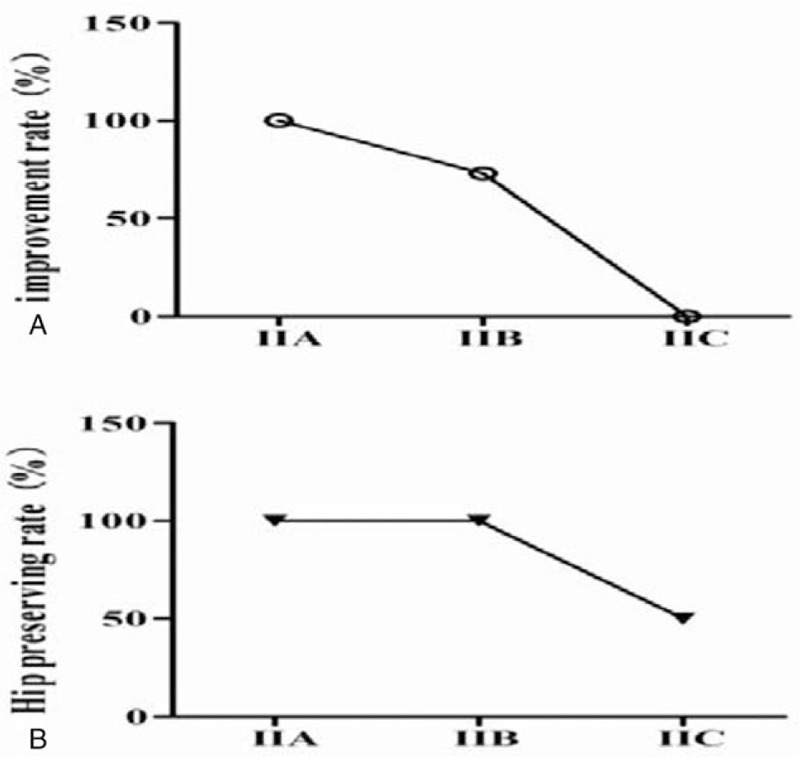
Presently, biomechanical support therapy for the femoral head has become an important approach in the treatment of early osteonecrosis of the femoral head (ONFH). Previous studies have reported that the titanium metal trabecular bone reconstruction systems (TMTBRS) achieved satisfactory clinical results for the treatment of early femoral head necrosis. Electron beam melting technology (EBMT) is an important branch of 3D printing technology, which enables the construction of an interface that is required for support of bone in-growth. However, the effect of TMTBRS created using EBMT for clinical applications for early ONFH is still unknown. At present, there are no reports on this topic worldwide. The purpose of this study was to assess the safety of a new 3D printed TMTBRS implant and to evaluate its clinical efficacy in early ONFH.Thirty patients who underwent surgery for ONFH were selected. The stages of ONFH were classified according to the Association Research Circulation Osseus (ARCO) classification. They were followed-up and radiological examination was performed at 6, 12, and 24 months post-surgery to assess TMTBRS stability and bone growth in the bone trabecular holder portion surface. To evaluate hip function, postoperative Harris and Visual Analogue Scale (VAS) scores were used.The postoperative Harris score increased significantly and VAS score decreased significantly at the 12-month follow-up compared to the 24-month follow-up, wherein the Harris score declined slightly and the VAS score was slightly elevated with the aggravation of ONFH. With the passage of time, postoperative improvement rates were 100% for IIA, 70% for IIB, and 0% for IIC. Hip-preserving rates were 100% for IIA, 100% for IIB, and 50% for IIC.The effect of TMTBRS treatment for early ONFH in ARCO IIA and ARCO IIB is satisfactory. However, it is not recommended for a relatively large area of necrosis such as in ARCO IIC.
目前,股骨头生物力学支撑治疗已成为早期股骨头缺血性坏死(ONFH)治疗的重要手段。既往研究报道,钛金属小梁骨重建系统(TMTBRS)在早期股骨头坏死治疗中取得了满意的临床效果。电子束熔化技术(EBMT)是3D打印技术的一个重要分支,它能够构建骨向内生长所需的界面。然而,使用EBMT制造的TMTBRS在早期ONFH临床应用中的效果仍不清楚。目前,全球尚无关于该主题的报道。本研究的目的是评估一种新型3D打印TMTBRS植入物的安全性,并评估其在早期ONFH中的临床疗效。选择30例行ONFH手术的患者。根据骨循环研究协会(ARCO)分类对ONFH分期。术后6、12和24个月进行随访及影像学检查,以评估TMTBRS稳定性及骨小梁支架部分表面的骨生长情况。采用术后Harris评分和视觉模拟评分法(VAS)评估髋关节功能。与24个月随访相比,12个月随访时术后Harris评分显著提高,VAS评分显著降低,其中随着ONFH病情加重,Harris评分略有下降,VAS评分略有升高。随着时间的推移,IIA期术后改善率为100%,IIB期为70%,IIC期为0%。保髋率IIA期为100%,IIB期为100%,IIC期为50%。TMTBRS治疗ARCO IIA和ARCO IIB期早期ONFH的效果满意。然而,对于ARCO IIC期等较大面积坏死的情况,不建议使用。