Salaminia Shirvan, Sayehmiri Fatemeh, Angha Parvin, Sayehmiri Koroush, Motedayen Morteza
Department of Cardiac Surgery, Yasuj University of Medical Science, Yasuj, Iran.
Proteomics Research Center, Shahid Beheshti University of Medical Sciences, Tehran, Iran.
BMC Cardiovasc Disord. 2018 Jun 28;18(1):129. doi: 10.1186/s12872-018-0857-6.
Atrial and ventricular cardiac arrhythmias are one of the most common early complications after cardiac surgery and these serve as a major cause of mortality and morbidity after cardiac revascularization. We want to evaluate the effect of magnesium sulfate administration on the incidence of cardiac arrhythmias after cardiac revascularization by doing this systematic review and meta-analysis.
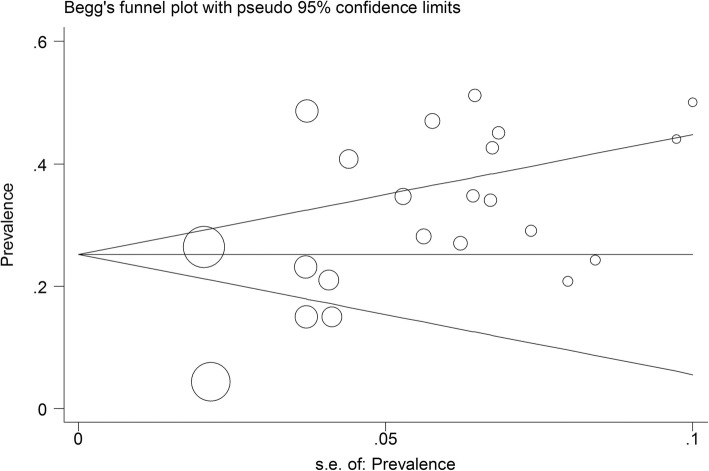
The search performed in several databases (SID, Magiran, IranDoc, IranMedex, MedLib, PubMed, EmBase, Web of Science, Scopus, the Cochrane Library and Google Scholar) for published Randomized controlled trials before December 2017 that have reported the association between Magnesium consumption and the incidence of cardiac arrhythmias. This relationship measured using odds ratios (ORs) with a confidence interval of 95% (CIs). Funnel plots and Egger test used to examine publication bias. STATA (version 11.1) used for all analyses.
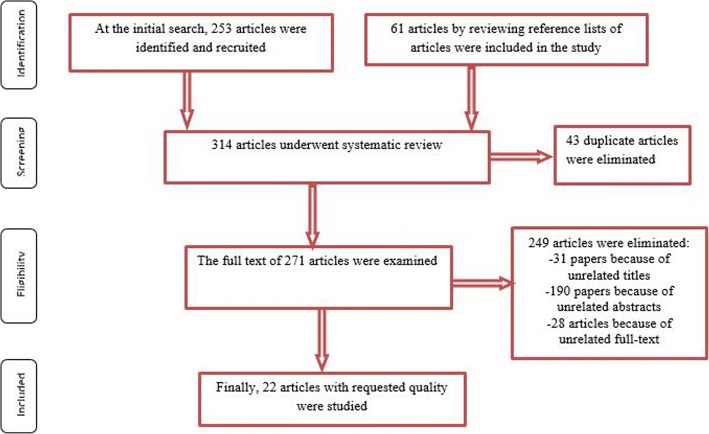
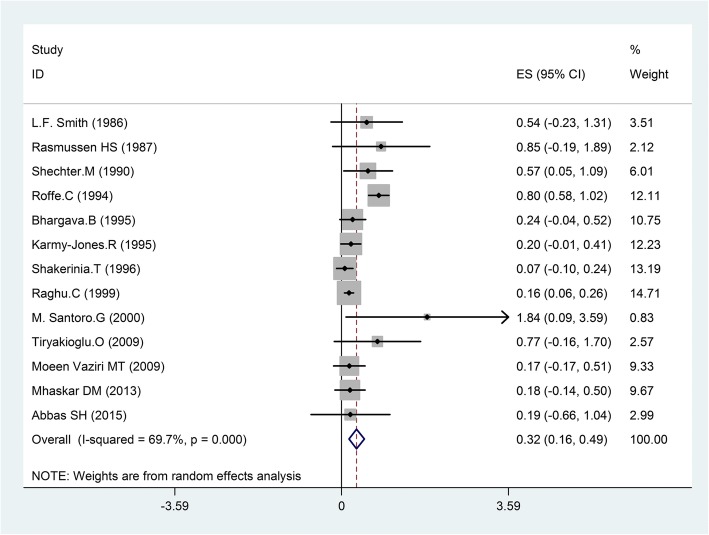
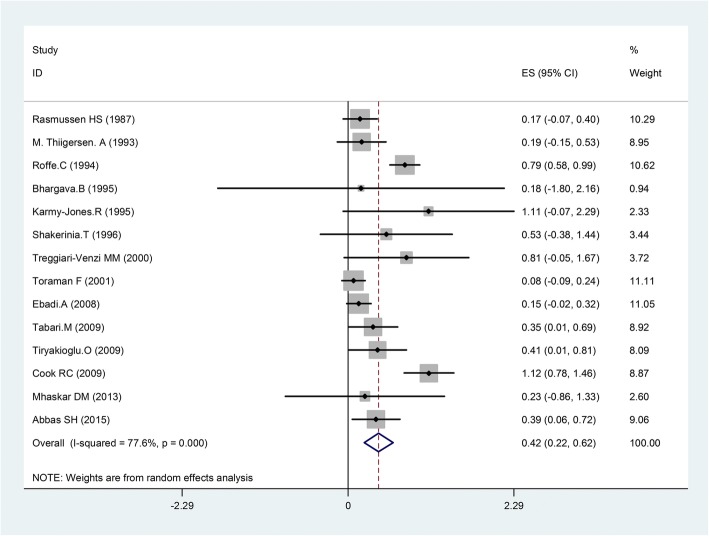
Twenty-two studies selected as eligible for this research and included in the final analysis. The total rate of ventricular arrhythmia was lower in the group receiving magnesium sulfate than placebo (11.88% versus 24.24%). The same trend obtained for the total incidence of supraventricular arrhythmia (10.36% in the magnesium versus 23.91% in the placebo group). In general the present meta-analysis showed that magnesium could decrease ventricular and supraventricular arrhythmias compared with placebo (OR = 0.32, 95% CI 0.16-0.49; p < 0.001 and OR = 0.42, 95% CI 0.22-0.65; p < 0.001, respectively). Subgroup analysis showed that the effect of magnesium on the incidence of cardiac arrhythmias was not affected by clinical settings and dosage of magnesium. Meta-regression analysis also showed that there was no significant association between the reduction of ventricular arrhythmias and sample size.
The results of this meta-analysis study suggest that magnesium sulfate can be used safely and effectively and is a cost-effective way in the prevention of many of ventricular and supraventricular arrhythmias.
房性和室性心律失常是心脏手术后最常见的早期并发症之一,也是心脏血运重建术后死亡和发病的主要原因。我们希望通过这项系统评价和荟萃分析来评估硫酸镁给药对心脏血运重建术后心律失常发生率的影响。
在多个数据库(SID、Magiran、IranDoc、IranMedex、MedLib、PubMed、EmBase、Web of Science、Scopus、Cochrane图书馆和谷歌学术)中进行检索,以查找2017年12月之前发表的随机对照试验,这些试验报告了镁摄入与心律失常发生率之间的关联。这种关系用比值比(OR)和95%置信区间(CI)来衡量。使用漏斗图和Egger检验来检查发表偏倚。所有分析均使用STATA(11.1版)。
22项研究被选为符合本研究条件并纳入最终分析。接受硫酸镁治疗的组室性心律失常的总发生率低于安慰剂组(11.88%对24.24%)。室上性心律失常的总发生率也呈现相同趋势(镁治疗组为10.36%,安慰剂组为23.91%)。总体而言,本荟萃分析表明,与安慰剂相比,镁可降低室性和室上性心律失常的发生率(OR = 0.32,95% CI 0.16 - 0.49;p < 0.001和OR = 0.42,95% CI 0.22 - 0.65;p < 0.001)。亚组分析表明,镁对心律失常发生率的影响不受临床背景和镁剂量的影响。Meta回归分析还表明,室性心律失常的减少与样本量之间没有显著关联。
这项荟萃分析研究的结果表明,硫酸镁可安全有效地使用,是预防多种室性和室上性心律失常的一种经济有效的方法。