Division of Nanomaterials & Chemistry, Hefei National Research Center for Physical Sciences at the Microscale, CAS Center for Excellence in Nanoscience, Hefei Science Center of CAS, Collaborative Innovation Center of Suzhou Nano Science and Technology, Department of Chemistry, University of Science and Technology of China, Hefei, 230026, China.
Hefei National Research Center for Physical Sciences at the Microscale, Synergetic Innovation Center of Quantum Information and Quantum Physics, University of Science and Technology of China, Hefei, 230026, China.
Nat Commun. 2018 Jun 28;9(1):2533. doi: 10.1038/s41467-018-04954-7.
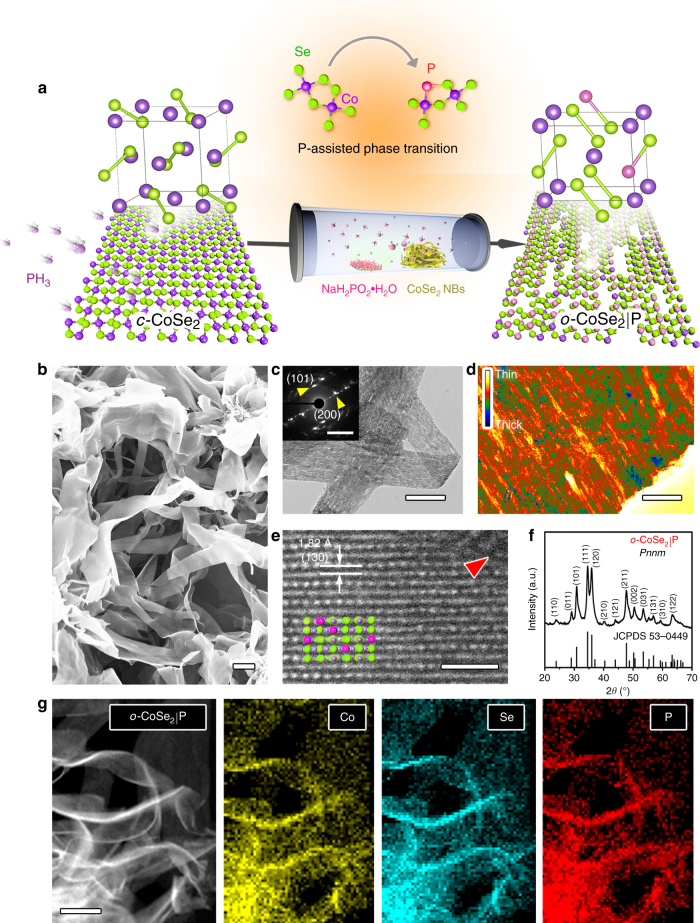
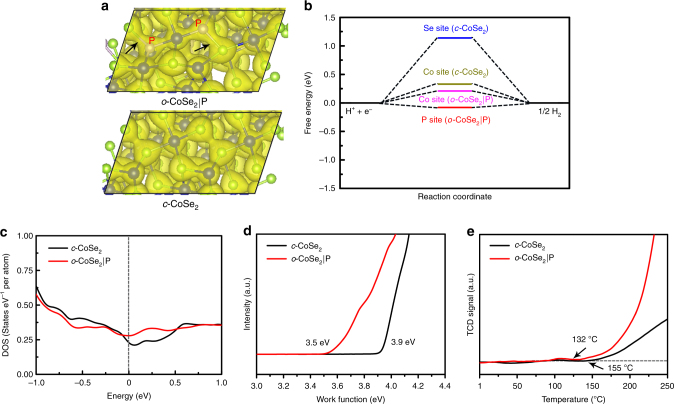
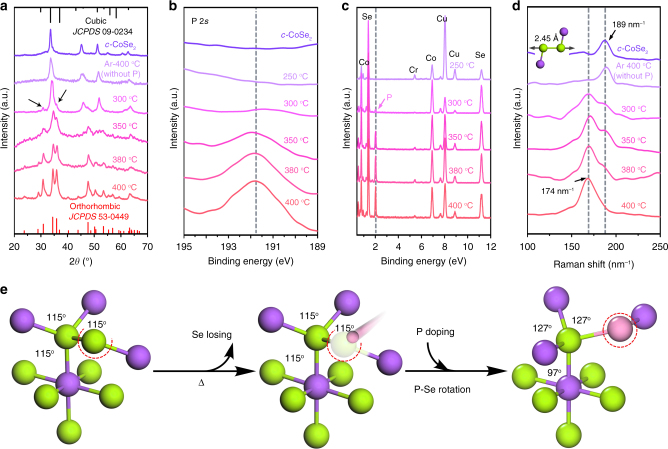
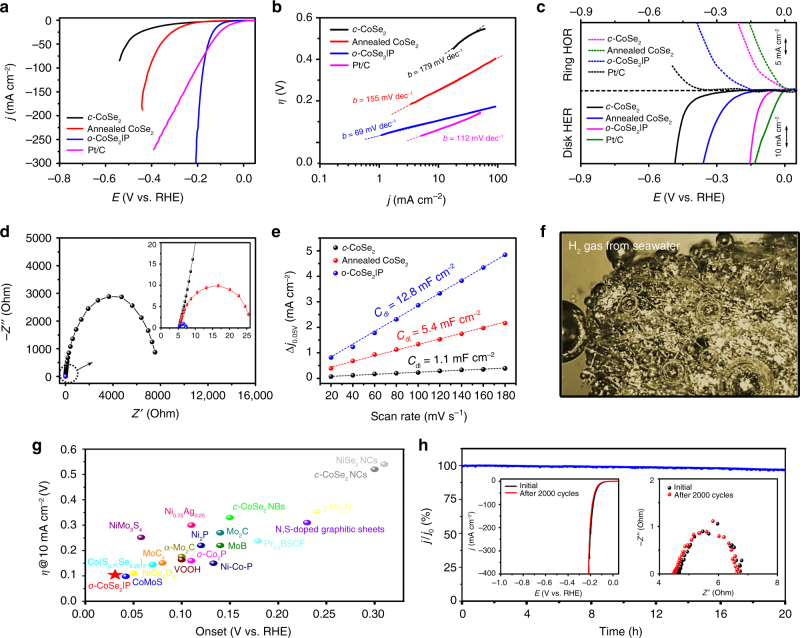
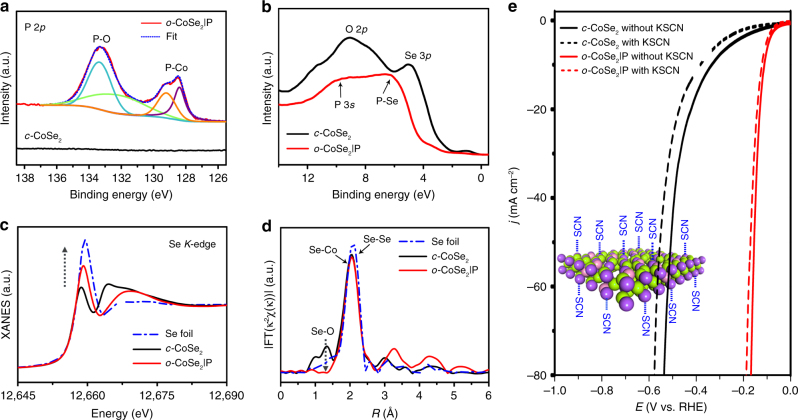
Transition metal dichalcogenide materials have been explored extensively as catalysts to negotiate the hydrogen evolution reaction, but they often run at a large excess thermodynamic cost. Although activating strategies, such as defects and composition engineering, have led to remarkable activity gains, there remains the requirement for better performance that aims for real device applications. We report here a phosphorus-doping-induced phase transition from cubic to orthorhombic phases in CoSe. It has been found that the achieved orthorhombic CoSe with appropriate phosphorus dopant (8 wt%) needs the lowest overpotential of 104 mV at 10 mA cm in 1 M KOH, with onset potential as small as -31 mV. This catalyst demonstrates negligible activity decay after 20 h of operation. The striking catalysis performance can be attributed to the favorable electronic structure and local coordination environment created by this doping-induced structural phase transition strategy.
过渡金属二卤化物材料已被广泛探索作为催化剂来调节析氢反应,但它们通常需要大量的热力学成本。尽管激活策略,如缺陷和组成工程,已经导致了显著的活性提高,但仍需要更好的性能,以实现实际设备的应用。我们在这里报告了 CoSe 中磷掺杂诱导的从立方相到正交相的相变。已经发现,具有适当磷掺杂(8wt%)的所获得的正交 CoSe 在 1 M KOH 中需要 10 mA cm 的最低过电位为 104 mV,起始电位小至-31 mV。该催化剂在 20 小时的运行后表现出可忽略的活性衰减。这种引人注目的催化性能可以归因于这种掺杂诱导的结构相变策略所产生的有利的电子结构和局部配位环境。