• 文献检索
  • 文档翻译
  • 深度研究
  • 学术资讯
  • Suppr Zotero 插件Zotero 插件
  • 邀请有礼
  • 套餐&价格
  • 历史记录
应用&插件
Suppr Zotero 插件Zotero 插件浏览器插件Mac 客户端Windows 客户端微信小程序
定价
高级版会员购买积分包购买API积分包
服务
文献检索文档翻译深度研究API 文档MCP 服务
关于我们
关于 Suppr公司介绍联系我们用户协议隐私条款
关注我们

Suppr 超能文献

核心技术专利:CN118964589B侵权必究
粤ICP备2023148730 号-1Suppr @ 2026

文献检索

告别复杂PubMed语法,用中文像聊天一样搜索,搜遍4000万医学文献。AI智能推荐,让科研检索更轻松。

立即免费搜索

文件翻译

保留排版,准确专业,支持PDF/Word/PPT等文件格式,支持 12+语言互译。

免费翻译文档

深度研究

AI帮你快速写综述,25分钟生成高质量综述,智能提取关键信息,辅助科研写作。

立即免费体验

夏威夷希洛国际大陆科学钻探计划(ICDP)热液科学钻探项目2号钻孔岩芯玄武岩的实验性微生物蚀变与铁迁移

Experimental Microbial Alteration and Fe Mobilization From Basaltic Rocks of the ICDP HSDP2 Drill Core, Hilo, Hawaii.

作者信息

Stranghoener Marius, Schippers Axel, Dultz Stefan, Behrens Harald

机构信息

Institute of Mineralogy, Leibniz Universität Hannover, Hanover, Germany.

Geomicrobiology, Federal Institute for Geosciences and Natural Resources, Hanover, Germany.

出版信息

Front Microbiol. 2018 Jun 14;9:1252. doi: 10.3389/fmicb.2018.01252. eCollection 2018.

DOI:10.3389/fmicb.2018.01252
PMID:29963022
原文链接:https://pmc.ncbi.nlm.nih.gov/articles/PMC6010528/
Abstract

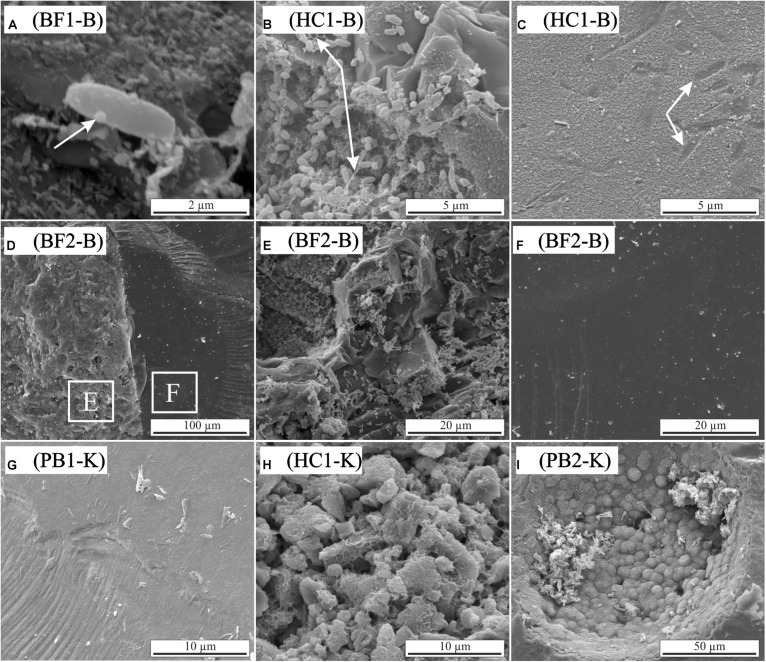
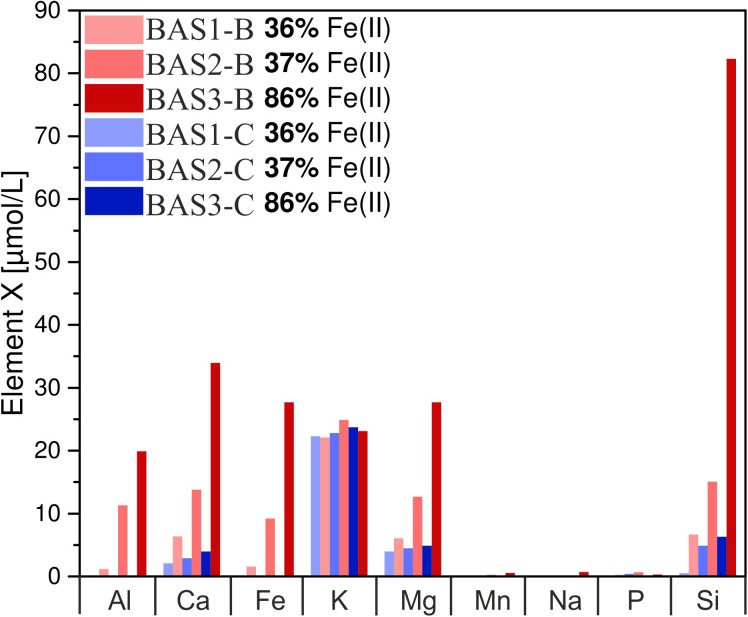
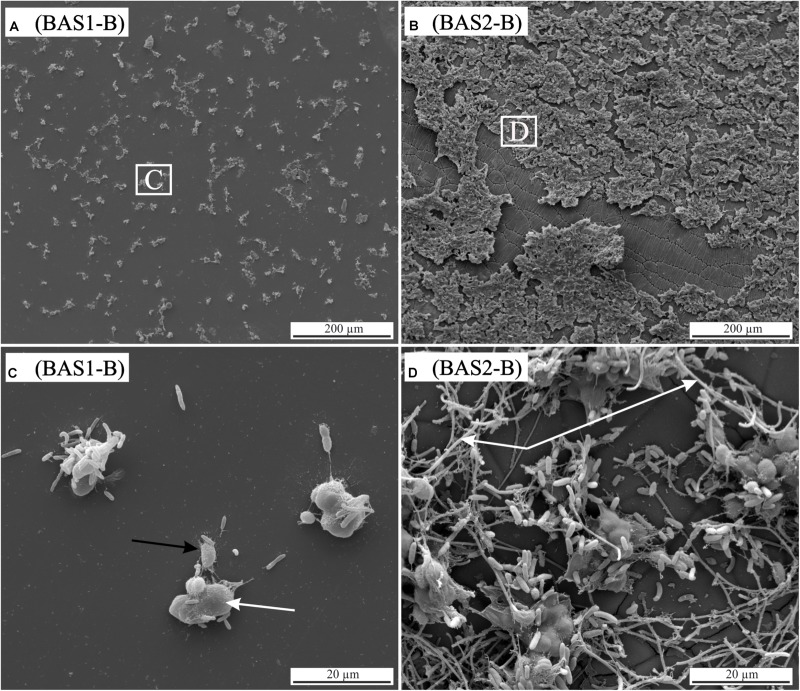
The interaction of a single bacterial species () with basaltic rocks from the ICDP HSDP2 drill core and synthetic basaltic glasses was investigated in batch laboratory experiments to better understand the role of microbial activity on rock alteration and Fe mobilization. Incubation experiments were performed with drill core basaltic rock samples to investigate differences in the solution chemistry during biotic and abiotic alteration. Additionally, colonization experiments with synthetic basaltic glasses of different Fe redox states and residual stresses were performed to evaluate their influence on microbial activity and surface attachment of cells. In biotic incubation experiments bacterial growth was observed and the release of Fe and other major elements from drill core basaltic rocks to solution exceeded that of abiotic controls only when the rock sample assay was nutrient depleted. The concentration of dissolved major elements in solution in biotic colonization experiments with synthetic basaltic glasses increased with increasing residual stress and Fe(II) content. Furthermore, the concentration of dissolved Fe and Al increased similarly in biotic colonization experiments indicating that their dissolution might be triggered by microbial activity. Surface morphology imaging by SEM revealed that cells on basaltic rocks in incubation experiments were most abundant on the glass and surfaces with high roughness and almost absent on minerals. In colonization experiments, basaltic glasses with residual stress and high Fe(II) content were intensely covered with a cellular biofilm. In contrast, glasses with high Fe(III) content and no residual stress were sparsely colonized. We therefore conclude that structurally bound Fe is most probably used by as a nutrient. Furthermore, we assume that microbial activity overall increased rock dissolution as soon as the environment becomes nutrient depleted. Our results show that besides compositional effects, other factors such as redox state and residual stress can control microbial alteration of basaltic glasses.

摘要

通过批量实验室实验,研究了单一细菌物种()与国际大陆钻探计划(ICDP)热结构钻探计划2(HSDP2)钻孔岩芯的玄武岩以及合成玄武玻璃之间的相互作用,以更好地了解微生物活动在岩石蚀变和铁迁移中的作用。对钻孔岩芯玄武岩样品进行了培养实验,以研究生物蚀变和非生物蚀变过程中溶液化学的差异。此外,还对具有不同铁氧化还原状态和残余应力的合成玄武玻璃进行了定殖实验,以评估它们对微生物活动和细胞表面附着的影响。在生物培养实验中观察到细菌生长,并且只有当岩石样品分析显示营养耗尽时,钻孔岩芯玄武岩中铁和其他主要元素向溶液中的释放量才超过非生物对照。在使用合成玄武玻璃的生物定殖实验中,溶液中溶解的主要元素浓度随着残余应力和Fe(II)含量的增加而增加。此外,在生物定殖实验中,溶解的铁和铝的浓度也有类似的增加,这表明它们的溶解可能是由微生物活动引发的。扫描电子显微镜(SEM)的表面形态成像显示,在培养实验中,玄武岩上的细胞在玻璃和高粗糙度表面上最为丰富,而在矿物表面上几乎不存在。在定殖实验中,具有残余应力和高Fe(II)含量的玄武玻璃被细胞生物膜密集覆盖。相比之下,具有高Fe(III)含量且无残余应力的玻璃定殖较少。因此,我们得出结论,结构结合的铁很可能被用作营养物质。此外,我们假设一旦环境变得营养耗尽,微生物活动总体上会增加岩石溶解。我们的结果表明,除了成分影响外,其他因素如氧化还原状态和残余应力也可以控制玄武玻璃的微生物蚀变。
https://cdn.ncbi.nlm.nih.gov/pmc/blobs/c800/6010528/7b9d129d079a/fmicb-09-01252-g008.jpg
https://cdn.ncbi.nlm.nih.gov/pmc/blobs/c800/6010528/92e566e6de46/fmicb-09-01252-g001.jpg
https://cdn.ncbi.nlm.nih.gov/pmc/blobs/c800/6010528/e8c0c1398b8f/fmicb-09-01252-g002.jpg
https://cdn.ncbi.nlm.nih.gov/pmc/blobs/c800/6010528/d48b0bc7cb45/fmicb-09-01252-g003.jpg
https://cdn.ncbi.nlm.nih.gov/pmc/blobs/c800/6010528/b73b168bdfe6/fmicb-09-01252-g004.jpg
https://cdn.ncbi.nlm.nih.gov/pmc/blobs/c800/6010528/21a55874a2f6/fmicb-09-01252-g005.jpg
https://cdn.ncbi.nlm.nih.gov/pmc/blobs/c800/6010528/ae9ba5f7a5ad/fmicb-09-01252-g006.jpg
https://cdn.ncbi.nlm.nih.gov/pmc/blobs/c800/6010528/e30681960bb1/fmicb-09-01252-g007.jpg
https://cdn.ncbi.nlm.nih.gov/pmc/blobs/c800/6010528/7b9d129d079a/fmicb-09-01252-g008.jpg
https://cdn.ncbi.nlm.nih.gov/pmc/blobs/c800/6010528/92e566e6de46/fmicb-09-01252-g001.jpg
https://cdn.ncbi.nlm.nih.gov/pmc/blobs/c800/6010528/e8c0c1398b8f/fmicb-09-01252-g002.jpg
https://cdn.ncbi.nlm.nih.gov/pmc/blobs/c800/6010528/d48b0bc7cb45/fmicb-09-01252-g003.jpg
https://cdn.ncbi.nlm.nih.gov/pmc/blobs/c800/6010528/b73b168bdfe6/fmicb-09-01252-g004.jpg
https://cdn.ncbi.nlm.nih.gov/pmc/blobs/c800/6010528/21a55874a2f6/fmicb-09-01252-g005.jpg
https://cdn.ncbi.nlm.nih.gov/pmc/blobs/c800/6010528/ae9ba5f7a5ad/fmicb-09-01252-g006.jpg
https://cdn.ncbi.nlm.nih.gov/pmc/blobs/c800/6010528/e30681960bb1/fmicb-09-01252-g007.jpg
https://cdn.ncbi.nlm.nih.gov/pmc/blobs/c800/6010528/7b9d129d079a/fmicb-09-01252-g008.jpg

相似文献

1
Experimental Microbial Alteration and Fe Mobilization From Basaltic Rocks of the ICDP HSDP2 Drill Core, Hilo, Hawaii.夏威夷希洛国际大陆科学钻探计划(ICDP)热液科学钻探项目2号钻孔岩芯玄武岩的实验性微生物蚀变与铁迁移
Front Microbiol. 2018 Jun 14;9:1252. doi: 10.3389/fmicb.2018.01252. eCollection 2018.
2
Structural Iron (II) of Basaltic Glass as an Energy Source for Zetaproteobacteria in an Abyssal Plain Environment, Off the Mid Atlantic Ridge.大西洋中脊附近深海平原环境中玄武玻璃的结构亚铁作为泽塔变形菌的能量来源
Front Microbiol. 2016 Jan 21;6:1518. doi: 10.3389/fmicb.2015.01518. eCollection 2015.
3
Determination of Geochemical Bio-Signatures in Mars-Like Basaltic Environments.类火星玄武岩环境中地球化学生物标志物的测定
Front Microbiol. 2017 Sep 8;8:1668. doi: 10.3389/fmicb.2017.01668. eCollection 2017.
4
Submarine Basaltic Glass Colonization by the Heterotrophic Fe(II)-Oxidizing and Siderophore-Producing Deep-Sea Bacterium VS-10: The Potential Role of Basalt in Enhancing Growth.异养型Fe(II)氧化和产铁载体深海细菌VS-10对海底玄武岩玻璃的定殖:玄武岩在促进生长中的潜在作用
Front Microbiol. 2017 Mar 10;8:363. doi: 10.3389/fmicb.2017.00363. eCollection 2017.
5
Microbial colonization of basaltic glasses in hydrothermal organic-rich sediments at Guaymas Basin.在瓜伊马斯盆地富含有机物的热液沉积物中玄武玻璃的微生物定殖。
Front Microbiol. 2013 Aug 27;4:250. doi: 10.3389/fmicb.2013.00250. eCollection 2013.
6
Potential for microbial oxidation of ferrous iron in basaltic glass.玄武玻璃中亚铁离子的微生物氧化潜力。
Astrobiology. 2015 May;15(5):331-40. doi: 10.1089/ast.2014.1233. Epub 2015 Apr 27.
7
Deep Microbial Colonization in Saponite-Bearing Fractures in Aged Basaltic Crust: Implications for Subsurface Life on Mars.古老玄武岩地壳中含皂石裂缝内的深层微生物定殖:对火星地下生命的启示
Front Microbiol. 2019 Dec 5;10:2793. doi: 10.3389/fmicb.2019.02793. eCollection 2019.
8
The effect of rock composition on cyanobacterial weathering of crystalline basalt and rhyolite.岩石成分对蓝藻风化结晶玄武岩和流纹岩的影响。
Geobiology. 2012 Sep;10(5):434-44. doi: 10.1111/j.1472-4669.2012.00333.x. Epub 2012 Jun 14.
9
Element mobility during basalt-water-CO interaction: observations in natural systems vs. laboratory experiments and implication for carbon storage.玄武岩 - 水 - CO相互作用过程中的元素迁移:自然系统与实验室实验的观测结果及对碳储存的启示
Geochem Trans. 2024 May 16;25(1):4. doi: 10.1186/s12932-024-00087-7.
10
Some Compositional and Kinetic Controls on the Bioenergetic Landscapes in Oceanic Basement.大洋基底生物能量景观的一些成分和动力学控制因素。
Front Microbiol. 2016 Feb 9;7:107. doi: 10.3389/fmicb.2016.00107. eCollection 2016.

引用本文的文献

1
Alteration of high alkaline and alkaline basaltic rocks: parent rocks in the Lava Durian orchard, Sisaket Province, NE Thailand.高碱性和碱性玄武岩的蚀变:泰国东北部四色菊府榴莲火山果园的母岩。
Heliyon. 2021 Dec 20;7(12):e08619. doi: 10.1016/j.heliyon.2021.e08619. eCollection 2021 Dec.
2
The Weathering Microbiome of an Outcropping Granodiorite.露头花岗闪长岩的风化微生物群落
Front Microbiol. 2020 Dec 14;11:601907. doi: 10.3389/fmicb.2020.601907. eCollection 2020.

本文引用的文献

1
Submarine Basaltic Glass Colonization by the Heterotrophic Fe(II)-Oxidizing and Siderophore-Producing Deep-Sea Bacterium VS-10: The Potential Role of Basalt in Enhancing Growth.异养型Fe(II)氧化和产铁载体深海细菌VS-10对海底玄武岩玻璃的定殖:玄武岩在促进生长中的潜在作用
Front Microbiol. 2017 Mar 10;8:363. doi: 10.3389/fmicb.2017.00363. eCollection 2017.
2
Quantitative Monitoring of Microbial Species during Bioleaching of a Copper Concentrate.铜精矿生物浸出过程中微生物种类的定量监测
Front Microbiol. 2016 Dec 20;7:2044. doi: 10.3389/fmicb.2016.02044. eCollection 2016.
3
Structural Iron (II) of Basaltic Glass as an Energy Source for Zetaproteobacteria in an Abyssal Plain Environment, Off the Mid Atlantic Ridge.
大西洋中脊附近深海平原环境中玄武玻璃的结构亚铁作为泽塔变形菌的能量来源
Front Microbiol. 2016 Jan 21;6:1518. doi: 10.3389/fmicb.2015.01518. eCollection 2015.
4
Manganese-Cycling Microbial Communities Inside Deep-Sea Manganese Nodules.深海锰结核内锰循环微生物群落。
Environ Sci Technol. 2015 Jul 7;49(13):7692-700. doi: 10.1021/es504930v. Epub 2015 Jun 12.
5
Shewanella oneidensis MR-1 nanowires are outer membrane and periplasmic extensions of the extracellular electron transport components.希瓦氏菌MR-1纳米线是细胞外电子传递组分的外膜和周质延伸部分。
Proc Natl Acad Sci U S A. 2014 Sep 2;111(35):12883-8. doi: 10.1073/pnas.1410551111. Epub 2014 Aug 20.
6
Microbial colonization of basaltic glasses in hydrothermal organic-rich sediments at Guaymas Basin.在瓜伊马斯盆地富含有机物的热液沉积物中玄武玻璃的微生物定殖。
Front Microbiol. 2013 Aug 27;4:250. doi: 10.3389/fmicb.2013.00250. eCollection 2013.
7
Investigating the role of microbes in mineral weathering: nanometre-scale characterisation of the cell-mineral interface using FIB and TEM.研究微生物在矿物风化中的作用:使用 FIB 和 TEM 对细胞-矿物界面进行纳米尺度的表征。
Micron. 2013 Apr;47:10-7. doi: 10.1016/j.micron.2012.12.006. Epub 2013 Jan 3.
8
The microbial habitability of weathered volcanic glass inferred from continuous sensing techniques.从连续感应技术推断出风化火山玻璃的微生物宜居性。
Astrobiology. 2011 Sep;11(7):651-64. doi: 10.1089/ast.2010.0563.
9
Iron-oxidizing bacteria: an environmental and genomic perspective.铁氧化菌:环境与基因组视角。
Annu Rev Microbiol. 2010;64:561-83. doi: 10.1146/annurev.micro.112408.134208.
10
Microbial mineral weathering for nutrient acquisition releases arsenic.微生物为获取养分而进行的矿物风化会释放砷。
Appl Environ Microbiol. 2009 Apr;75(8):2558-65. doi: 10.1128/AEM.02440-07. Epub 2009 Feb 27.