Bock Christina, Salcher Michaela, Jensen Manfred, Pandey Ram Vinay, Boenigk Jens
Biodiversity, Faculty of Biology, University of Duisburg-Essen, Essen, Germany.
Limnological Station, Institute of Plant and Microbial Biology, University of Zurich, Zürich, Switzerland.
Front Microbiol. 2018 Jun 15;9:1290. doi: 10.3389/fmicb.2018.01290. eCollection 2018.
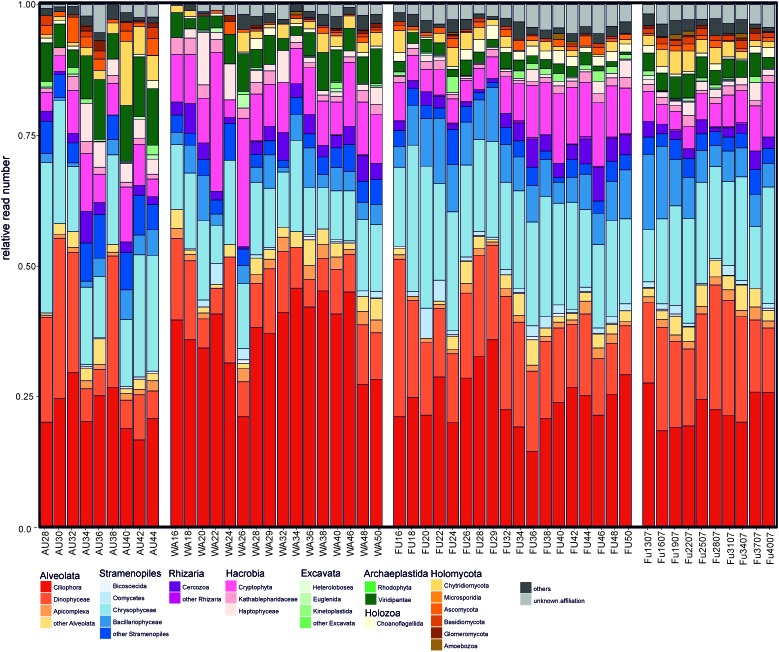
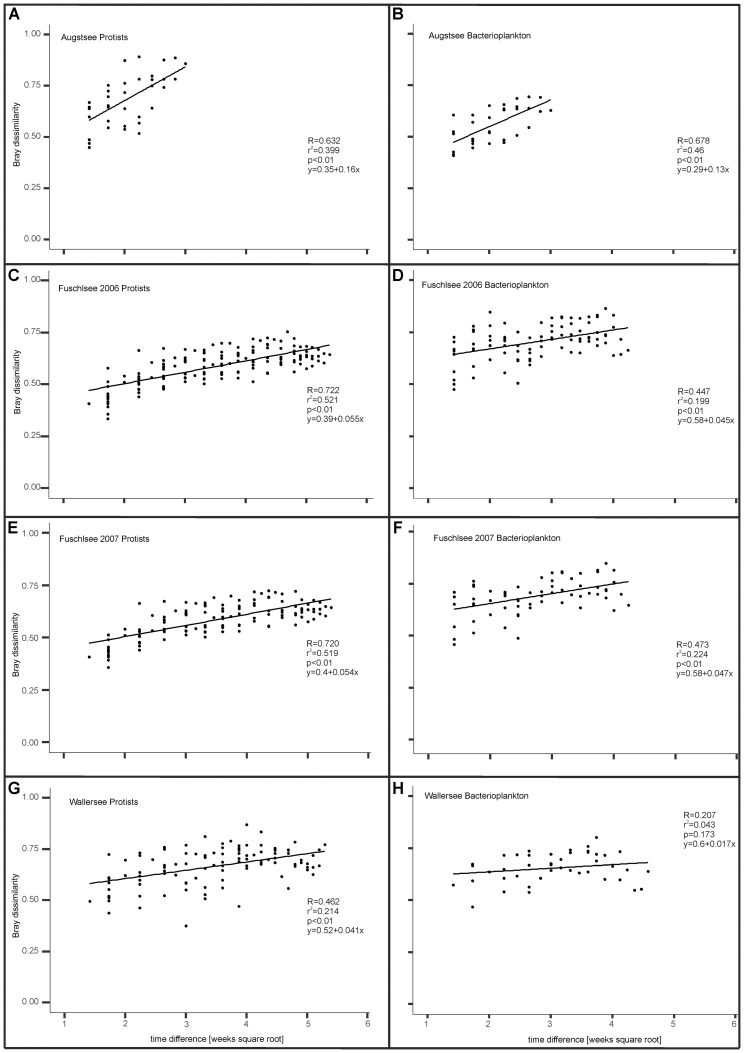
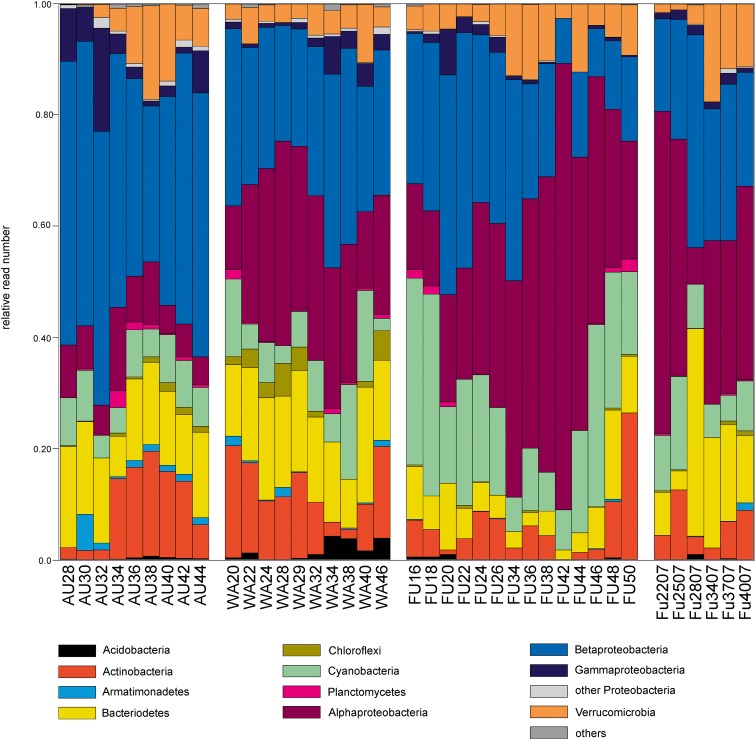
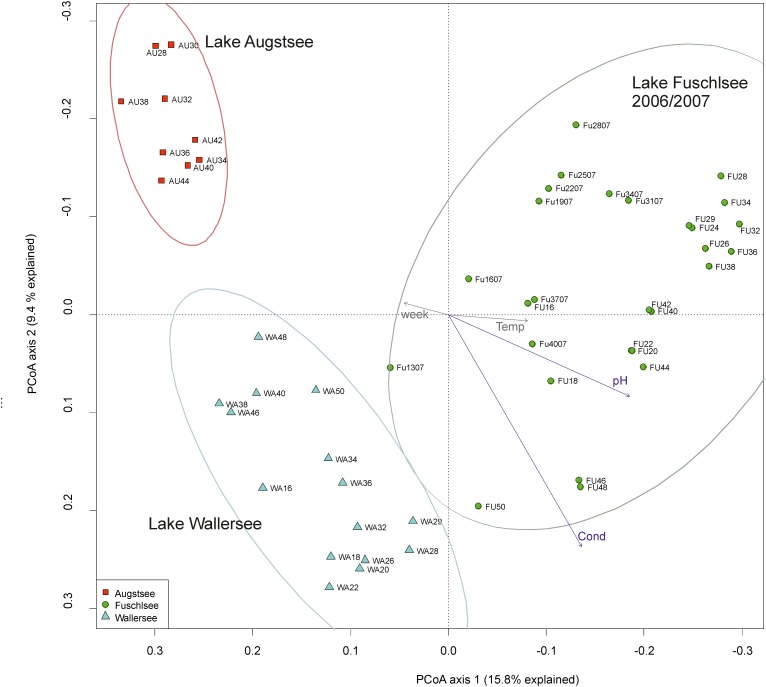
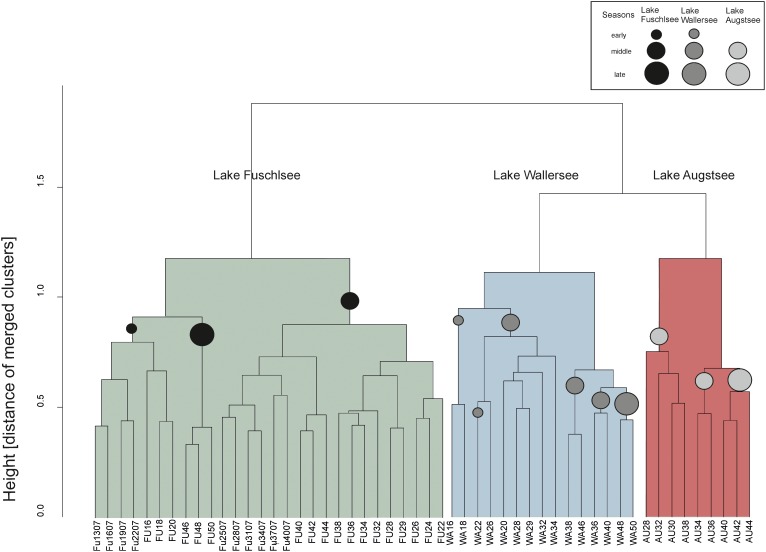
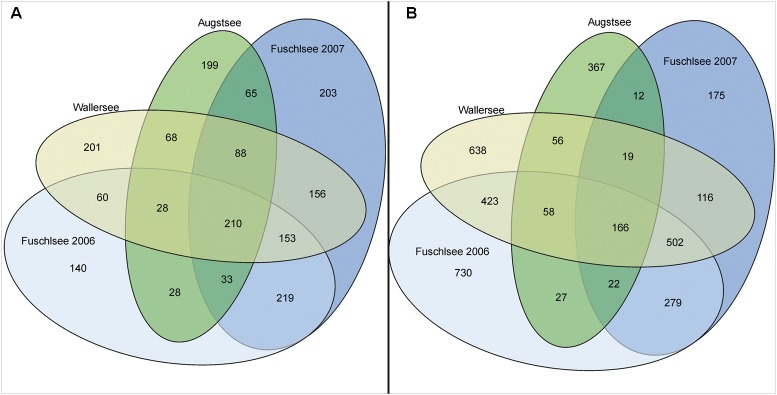
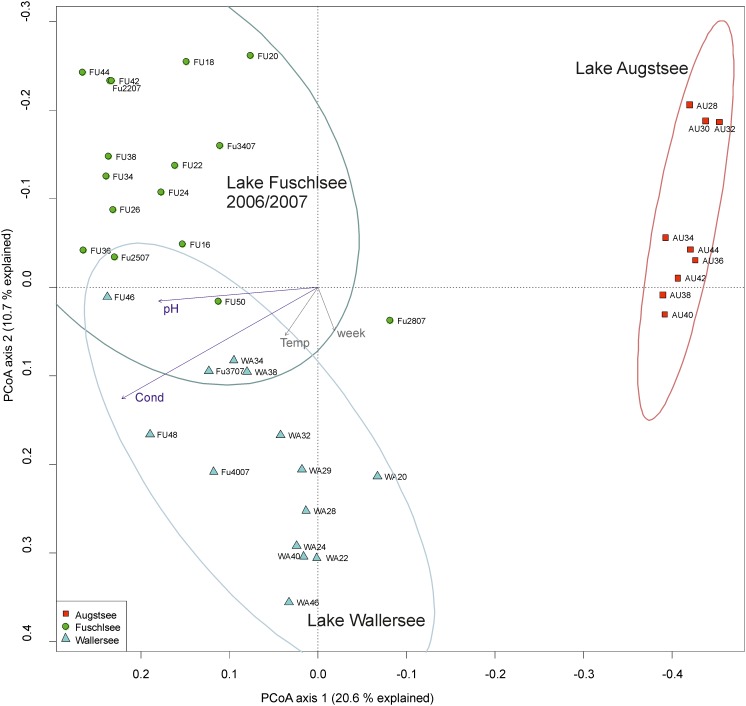
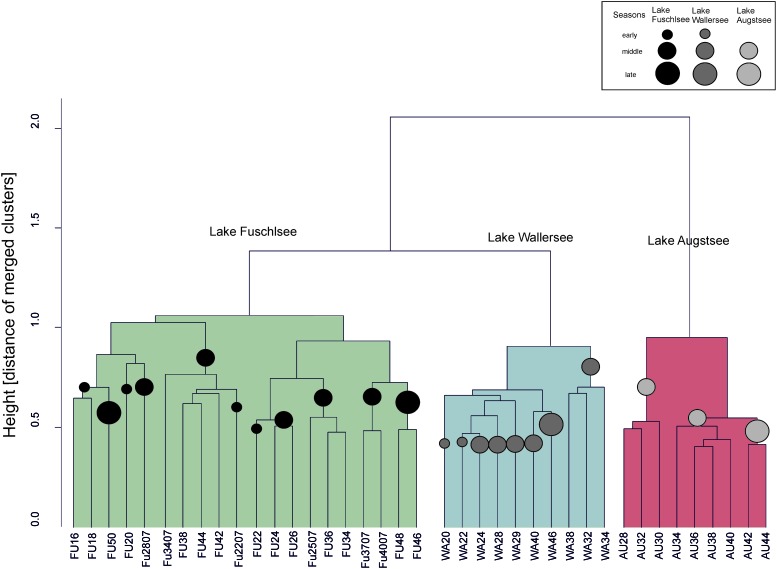
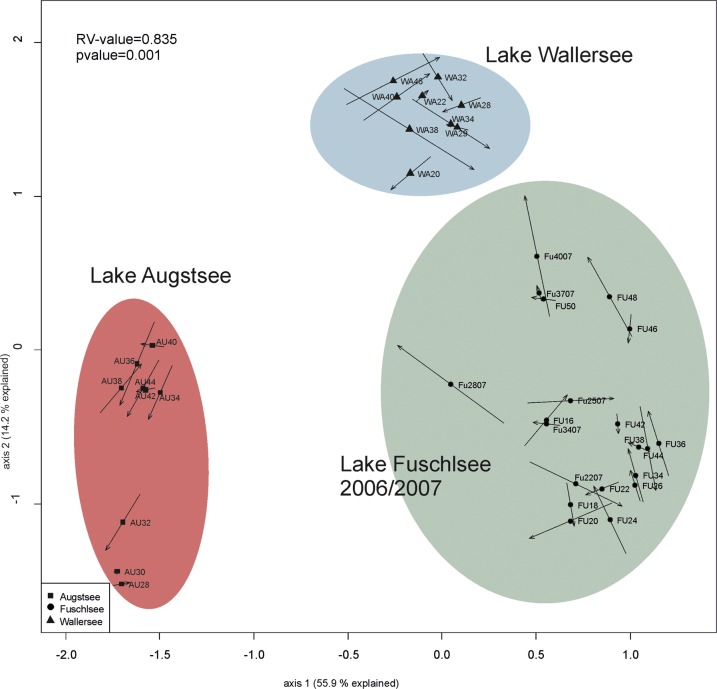
Freshwater systems are characterized by an enormous diversity of eukaryotic protists and prokaryotic taxa. The community structures in different lakes are thereby influenced by factors such as habitat size, lake chemistry, biotic interactions, and seasonality. In our study, we used high throughput 454 sequencing to study the diversity and temporal changes of prokaryotic and eukaryotic planktonic communities in three Austrian lakes during the ice-free season. In the following year, one lake was sampled again with a reduced set of sampling dates to observe reoccurring patterns. Cluster analyses (based on SSU V9 (eukaryotic) and V4 (prokaryotic) OTU composition) grouped samples according to their origin followed by separation into seasonal clusters, indicating that each lake has a unique signature based on OTU composition. These results suggest a strong habitat-specificity of microbial communities and in particular of community patterns at the OTU level. A comparison of the prokaryotic and eukaryotic datasets via co-inertia analysis (CIA) showed a consistent clustering of prokaryotic and eukaryotic samples, probably reacting to the same environmental forces (e.g., pH, conductivity). In addition, the shifts in eukaryotic and bacterioplanktonic communities generally occurred at the same time and on the same scale. Regression analyses revealed a linear relationship between an increase in Bray-Curtis dissimilarities and elapsed time. Our study shows a pronounced coupling between bacteria and eukaryotes in seasonal samplings of the three analyzed lakes. However, our temporal resolution (biweekly sampling) and data on abiotic factors were insufficient to determine if this was caused by direct biotic interactions or by reacting to the same seasonally changing environmental forces.
淡水系统的特点是真核原生生物和原核生物分类群具有巨大多样性。不同湖泊中的群落结构因此受到诸如栖息地大小、湖泊化学性质、生物相互作用和季节性等因素的影响。在我们的研究中,我们使用高通量454测序技术来研究奥地利三个湖泊在无冰季节原核和真核浮游生物群落的多样性和时间变化。在接下来的一年里,对其中一个湖泊再次进行采样,但采样日期减少,以观察重复出现的模式。聚类分析(基于SSU V9(真核生物)和V4(原核生物)OTU组成)根据样本来源对样本进行分组,然后分离为季节性聚类,这表明每个湖泊基于OTU组成都有独特的特征。这些结果表明微生物群落具有很强的栖息地特异性,尤其是在OTU水平上的群落模式。通过共惯性分析(CIA)对原核生物和真核生物数据集进行比较,结果显示原核生物和真核生物样本聚类一致,可能是对相同的环境力量(如pH值、电导率)做出反应。此外,真核生物和浮游细菌群落的变化通常同时且在相同规模上发生。回归分析揭示了Bray-Curtis差异增加与时间流逝之间的线性关系。我们的研究表明,在对三个分析湖泊的季节性采样中,细菌和真核生物之间存在明显的耦合关系。然而,我们的时间分辨率(每两周采样一次)和非生物因素数据不足以确定这是由直接的生物相互作用还是对相同的季节性变化环境力量做出反应所导致的。