Potvin Marianne, Rautio Milla, Lovejoy Connie
Département de Biologie, Québec Océan, and Institut Intégrative et des Systèmes (IBIS), Université Laval, Quebec, QC, Canada.
Département des Sciences Fondamentales, Université du Québec à Chicoutimi, Saguenay, QC, Canada.
Front Microbiol. 2022 Feb 11;12:786094. doi: 10.3389/fmicb.2021.786094. eCollection 2021.
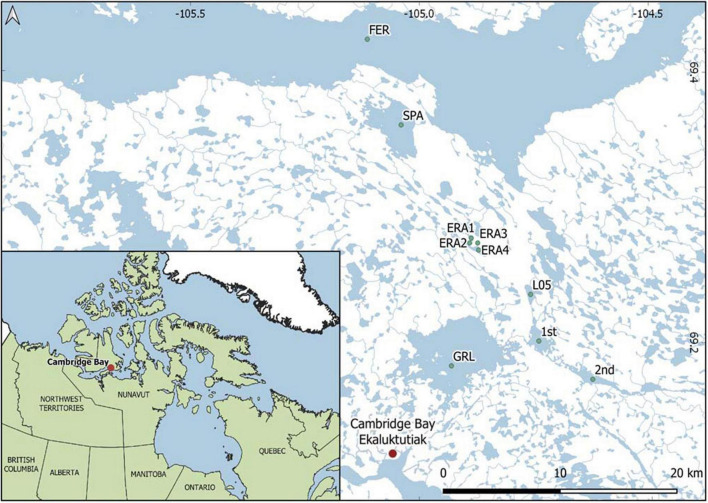
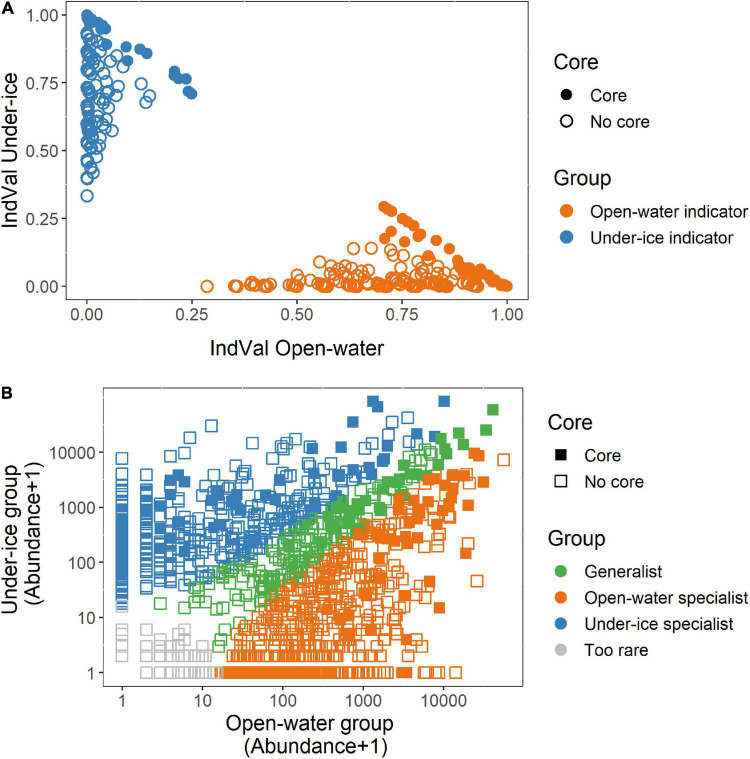
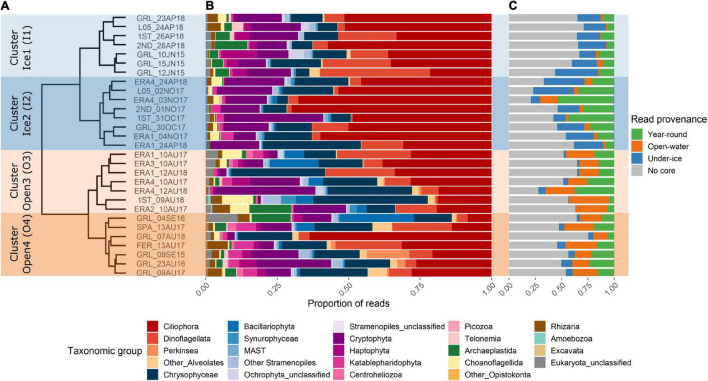
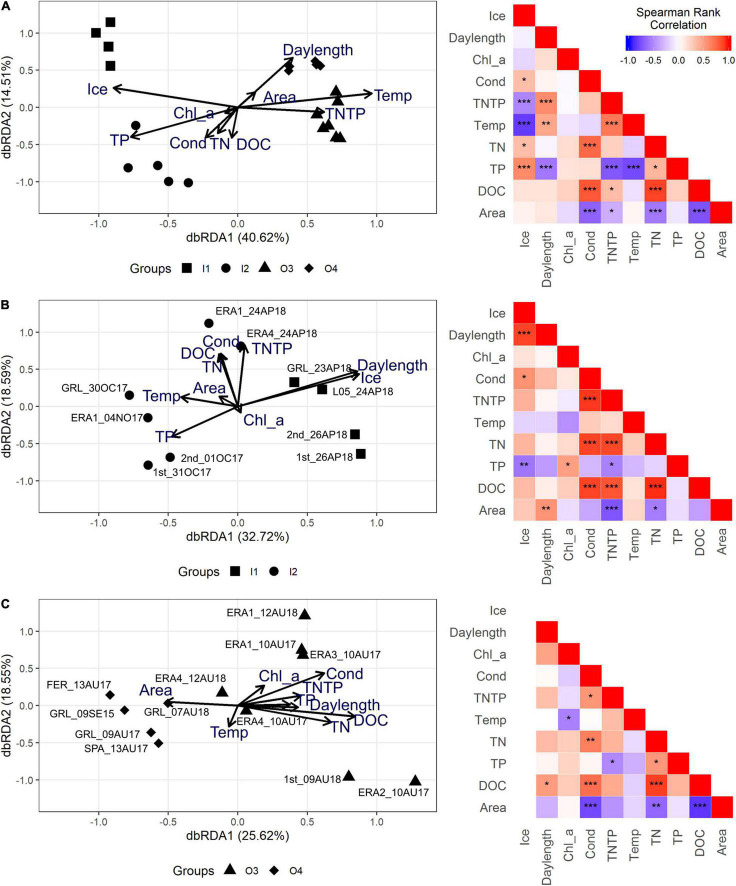
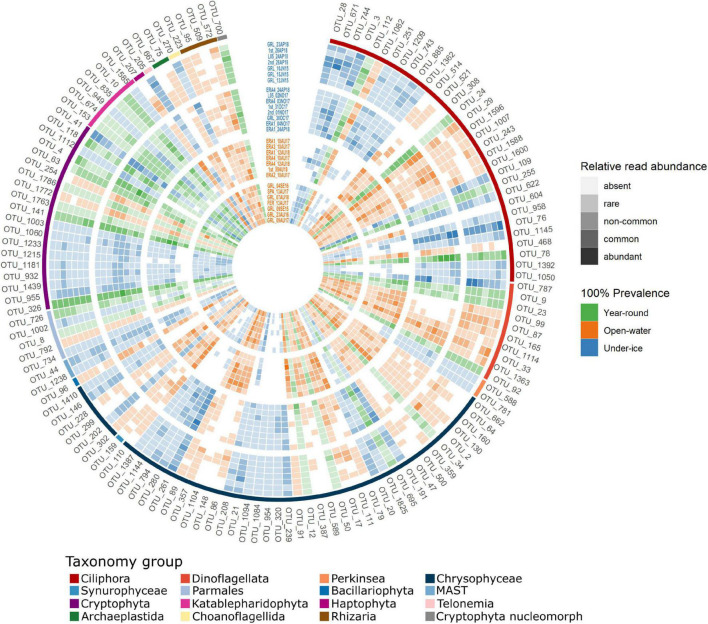
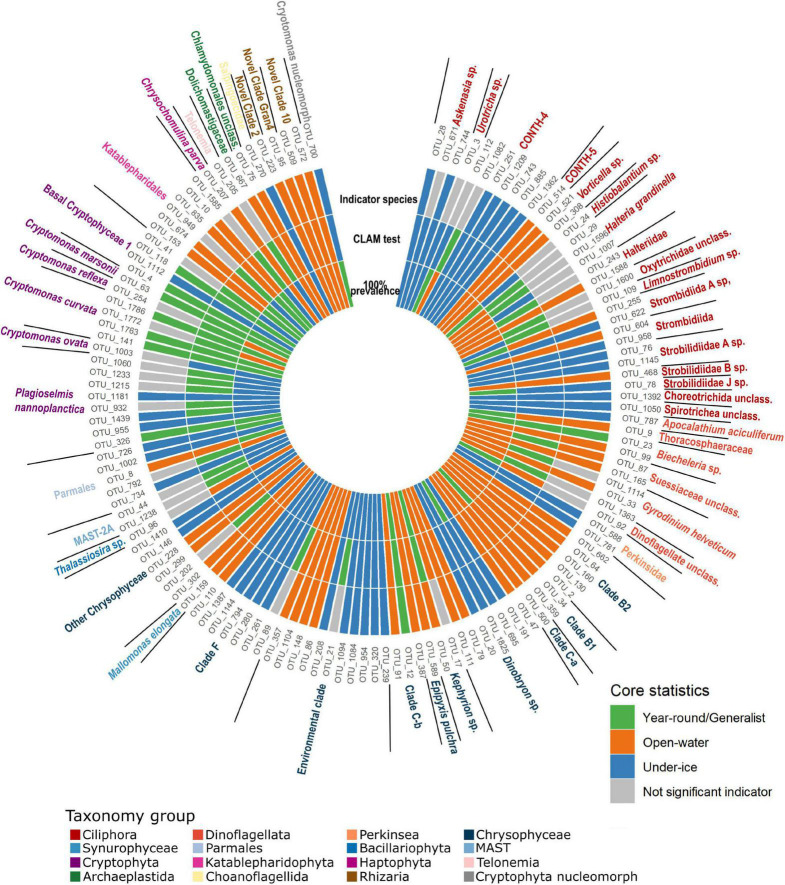
Across much of the Arctic, lakes and ponds dominate the landscape. Starting in late September, the lakes are covered in ice, with ice persisting well into June or early July. In summer, the lakes are highly productive, supporting waterfowl and fish populations. However, little is known about the diversity and ecology of microscopic life in the lakes that influence biogeochemical cycles and contribute to ecosystem services. Even less is known about the prevalence of species that are characteristic of the seasons or whether some species persist year-round under both ice cover and summer open-water conditions. To begin to address these knowledge gaps, we sampled 10 morphometrically diverse lakes in the region of Ekaluktutiak (Cambridge Bay), on southern Victoria Island (NU, Canada). We focused on Greiner Lake, the lakes connected to it, isolated ponds, and two nearby larger lakes outside the Greiner watershed. The largest lakes sampled were Tahiryuaq (Ferguson Lake) and the nearby Spawning Lake, which support commercial sea-run Arctic char () fisheries. Samples for nucleic acids were collected from the lakes along with limnological metadata. Microbial eukaryotes were identified with high-throughput amplicon sequencing targeting the V4 region of the 18S rRNA gene. Ciliates, dinoflagellates, chrysophytes, and cryptophytes dominated the lake assemblages. A Bray-Curtis dissimilarity matrix separated communities into under-ice and open-water clusters, with additional separation by superficial lake area. In all, 133 operational taxonomic units (OTUs) occurred either in all under-ice or all open-water samples and were considered "core" microbial species or ecotypes. These were further characterized as seasonal indicators. Ten of the OTUs were characteristic of all lakes and all seasons sampled. Eight of these were cryptophytes, suggesting diverse functional capacity within the lineage. The core open-water indicators were mostly chrysophytes, with a few ciliates and uncharacterized Cercozoa, suggesting that summer communities are mixotrophic with contributions by heterotrophic taxa. The core under-ice indicators included a dozen ciliates along with chrysophytes, cryptomonads, and dinoflagellates, indicating a more heterotrophic community augmented by mixotrophic taxa in winter.
在北极大部分地区,湖泊和池塘占据了主要地貌。从9月下旬开始,湖泊被冰层覆盖,冰层一直持续到6月或7月初。夏季,湖泊生产力很高,为水禽和鱼类种群提供了生存支持。然而,对于湖泊中影响生物地球化学循环并对生态系统服务有贡献的微观生命的多样性和生态,我们了解甚少。对于具有季节特征的物种的普遍程度,或者是否有一些物种在冰盖和夏季开阔水域条件下全年都存在,我们更是所知甚少。为了开始填补这些知识空白,我们在加拿大努纳武特地区维多利亚岛南部的埃卡卢图蒂亚克(剑桥湾)地区对10个形态各异的湖泊进行了采样。我们重点研究了格雷纳湖、与之相连的湖泊、孤立的池塘以及格雷纳流域外附近的两个较大湖泊。采样的最大湖泊是塔里尤阿克湖(弗格森湖)和附近的产卵湖,它们支持商业性溯河产卵北极红点鲑()渔业。从湖泊中采集了核酸样本以及湖沼学元数据。通过针对18S rRNA基因V4区域的高通量扩增子测序来鉴定微生物真核生物。纤毛虫、甲藻、金藻和隐藻在湖泊群落中占主导地位。布雷-柯蒂斯差异矩阵将群落分为冰下和开阔水域集群,并根据湖面面积进一步区分。总共133个操作分类单元(OTU)出现在所有冰下或所有开阔水域样本中,被视为“核心”微生物物种或生态型。这些进一步被表征为季节指标。其中10个OTU是所有采样湖泊和所有季节的特征物种。其中8个是隐藻,表明该谱系内具有多种功能能力。核心开阔水域指标主要是金藻,还有一些纤毛虫和未分类的丝足虫,这表明夏季群落是混合营养型,有异养类群的贡献。核心冰下指标包括十几种纤毛虫以及金藻、隐藻和甲藻,表明冬季群落更具异养性,混合营养类群有所增加。