Yasumizu Yota, Hongo Hiroshi, Kosaka Takeo, Mikami Shuji, Nishimoto Koshiro, Kikuchi Eiji, Oya Mototsugu
Department of Urology, Keio University School of Medicine, Tokyo, Japan.
Division of Diagnostic Pathology, Keio University School of Medicine, Tokyo, Japan.
Oncotarget. 2018 Jun 12;9(45):27698-27707. doi: 10.18632/oncotarget.25498.
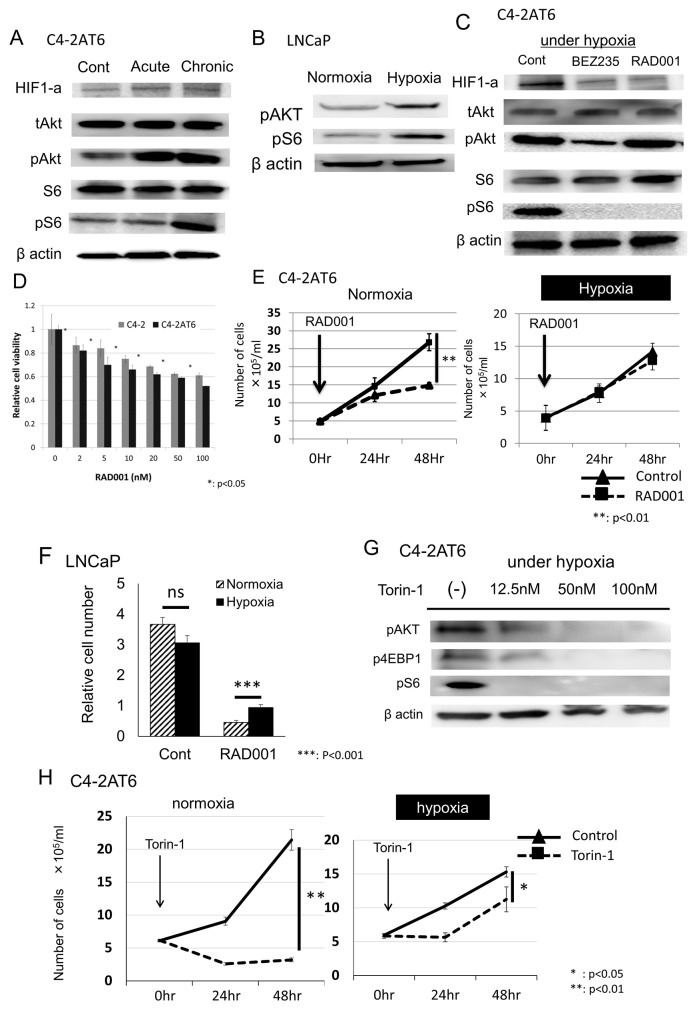
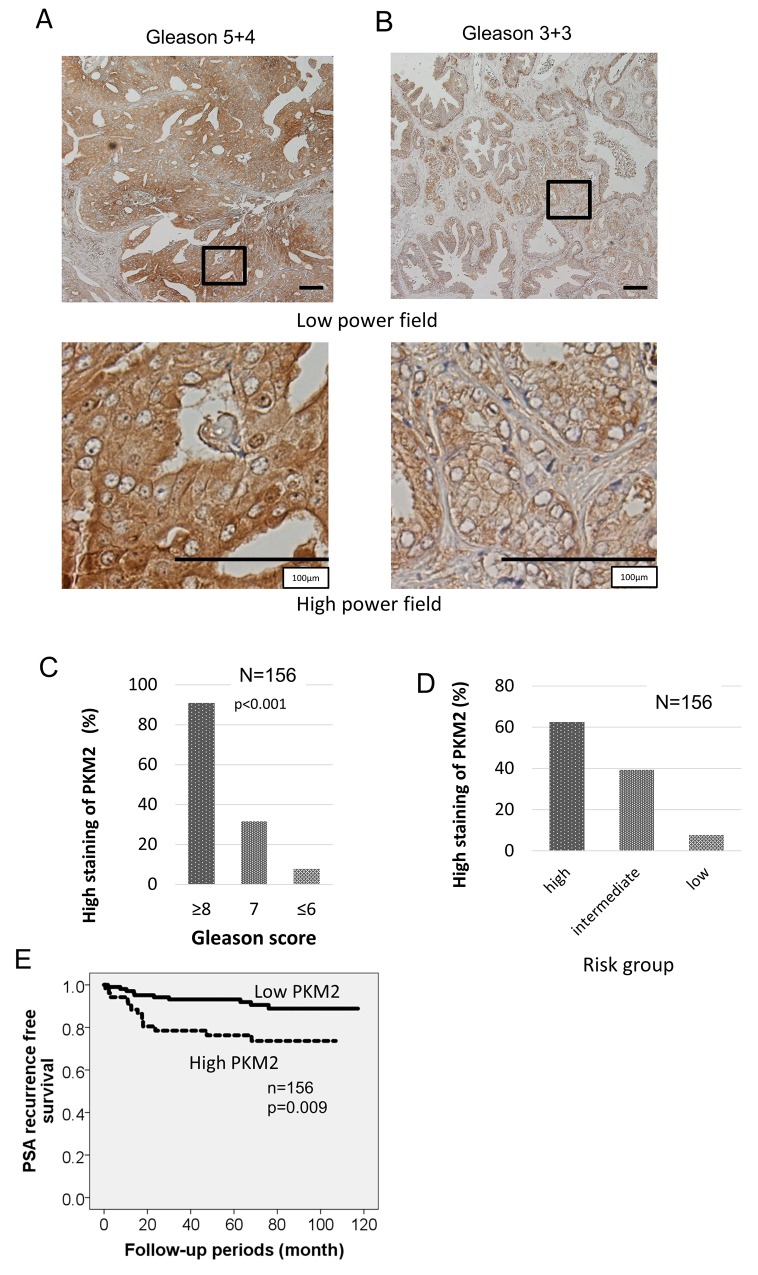
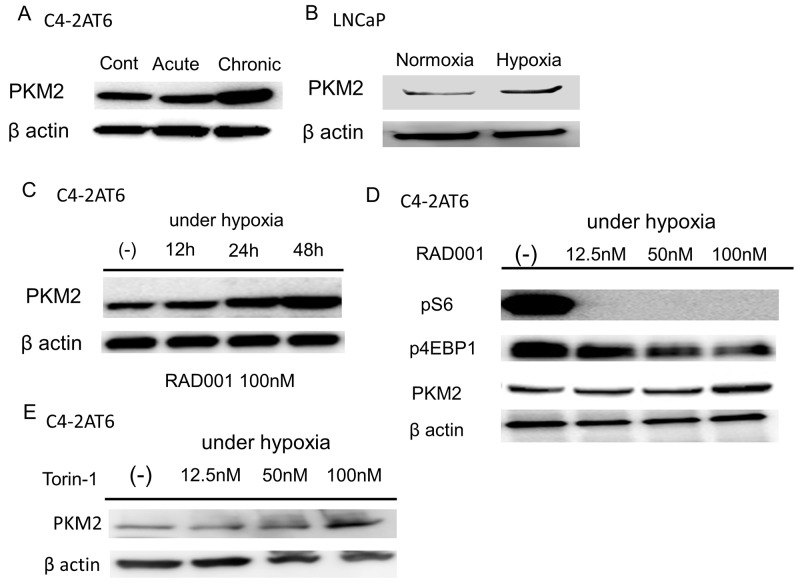
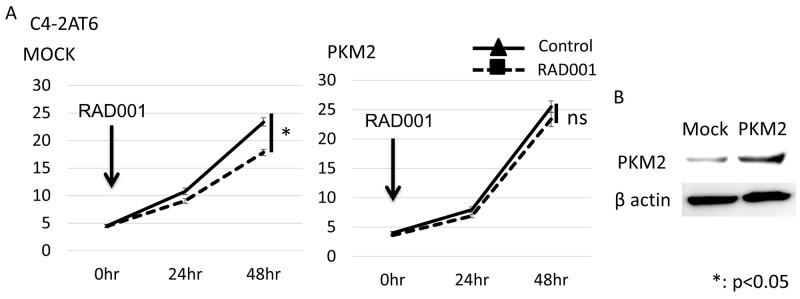
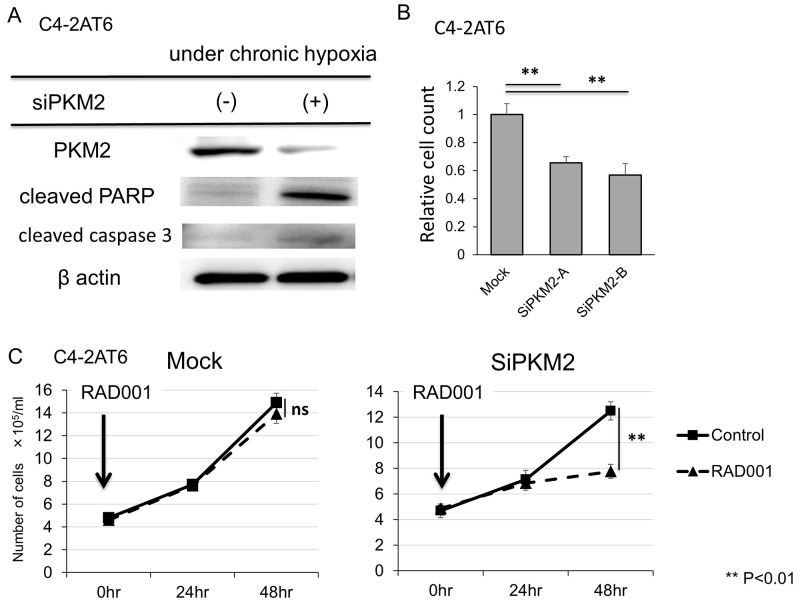
The aim of this study was to explore the efficacy of mTOR inhibitor for castration-resistant prostate cancer (CRPC) under hypoxia. Although under normoxia C4-2AT6, it is a CRPC cell line, expressed elevated pAkt, pS6 and Pyruvate kinase M2 (PKM2) accompanied by elevated HIF-1a expression, 5% hypoxic condition further induced expression of these proteins. These results indicate hypoxic environment elevated PI3K/Akt/mTOR pathway in aggressive prostate cancer. However, C4-2AT6 cells treated with mTOR inhibitor under hypoxia less decreased compared to cells treated with the same dose drugs under normoxia. Western blot analysis showed mTOR inhibitor: RAD001 not only inhibited pS6, but also increased the expression of PKM2 in a dose and time dependent manner. Pyruvate kinase acts on glycolysis. PKM2, which is frequently express in tumor cells, is one isoform of pyruvate kinase. PKM2 is reported to act as a transcription factor. In the present study overexpression of PKM2 in C4-2AT6 induced resistance to RAD001 under normoxia. To evaluate the therapeutic effect of targeting PKM2, we inhibited PKM2 in C4-2AT6 under hypoxia using si-PKM2. The number of C4-2AT6 under chronic hypoxia exposed to siPKM2 significantly decreased compared to intact C4-2AT6 under chronic hypoxia. Furthermore, si-PKM2 improved resistance to mTOR inhibitor in C4-2AT6. When examined using clinical samples, high PKM2 expression was correlated with a high Gleason score and poor PSA free survival. These results suggested that up-regulation of PKM2 is one possibility of resistance to mTOR inhibitor in CRPC. And it is possible that PKM2 is a useful therapeutic target of CRPC.
本研究的目的是探讨mTOR抑制剂在低氧条件下对去势抵抗性前列腺癌(CRPC)的疗效。尽管在常氧条件下C4-2AT6(一种CRPC细胞系)表达升高的pAkt、pS6和丙酮酸激酶M2(PKM2),同时伴有HIF-1a表达升高,但5%的低氧条件进一步诱导了这些蛋白的表达。这些结果表明低氧环境会使侵袭性前列腺癌中的PI3K/Akt/mTOR通路升高。然而,与在常氧条件下用相同剂量药物处理的细胞相比,低氧条件下用mTOR抑制剂处理的C4-2AT6细胞减少程度较小。蛋白质印迹分析显示,mTOR抑制剂RAD001不仅抑制pS6,还以剂量和时间依赖性方式增加PKM2的表达。丙酮酸激酶作用于糖酵解。PKM2是丙酮酸激酶的一种同工型,在肿瘤细胞中经常表达。据报道,PKM2可作为一种转录因子。在本研究中,C4-2AT6中PKM2的过表达在常氧条件下诱导了对RAD001的抗性。为了评估靶向PKM2的治疗效果,我们在低氧条件下使用si-PKM2抑制C4-2AT6中的PKM2。与慢性低氧条件下完整的C4-2AT6相比,暴露于siPKM2的慢性低氧条件下的C4-2AT6数量显著减少。此外,si-PKM2提高了C4-2AT6对mTOR抑制剂的抗性。当使用临床样本进行检测时,高PKM2表达与高Gleason评分和较差的无PSA生存期相关。这些结果表明,PKM2的上调是CRPC对mTOR抑制剂产生抗性的一种可能性。并且PKM2有可能是CRPC的一个有用的治疗靶点。