Foers Andrew D, Chatfield Simon, Dagley Laura F, Scicluna Benjamin J, Webb Andrew I, Cheng Lesley, Hill Andrew F, Wicks Ian P, Pang Ken C
Inflammation Division, The Walter and Eliza Hall Institute of Medical Research, Parkville, Victoria, Australia.
Department of Medical Biology, University of Melbourne, Parkville, Victoria, Australia.
J Extracell Vesicles. 2018 Jun 26;7(1):1490145. doi: 10.1080/20013078.2018.1490145. eCollection 2018.
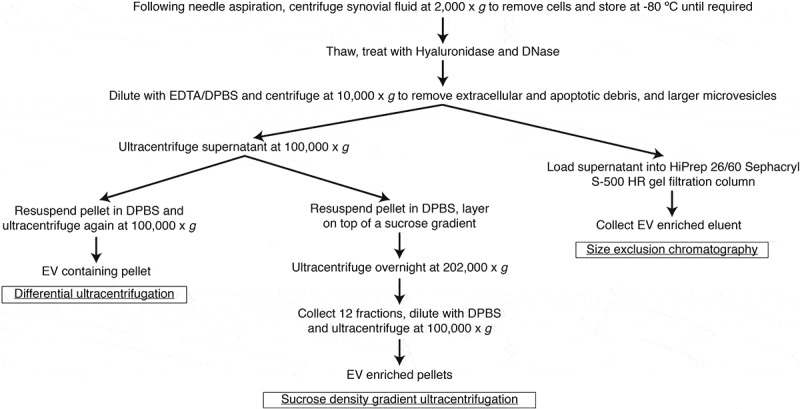
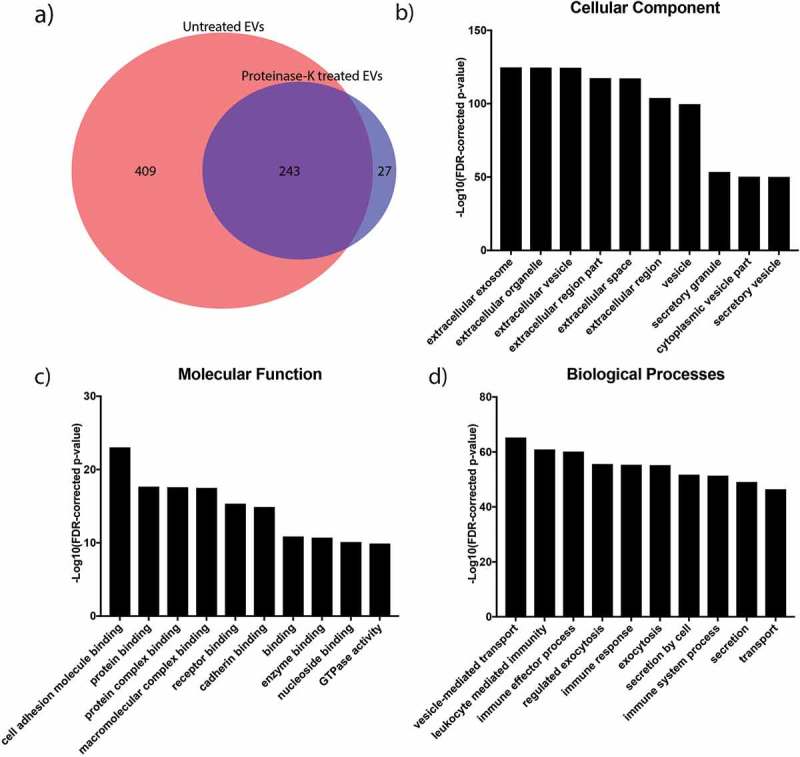
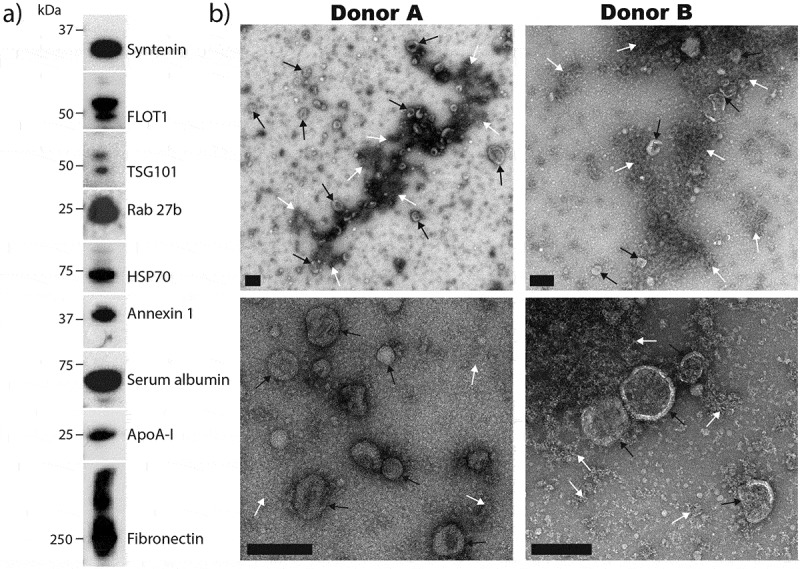
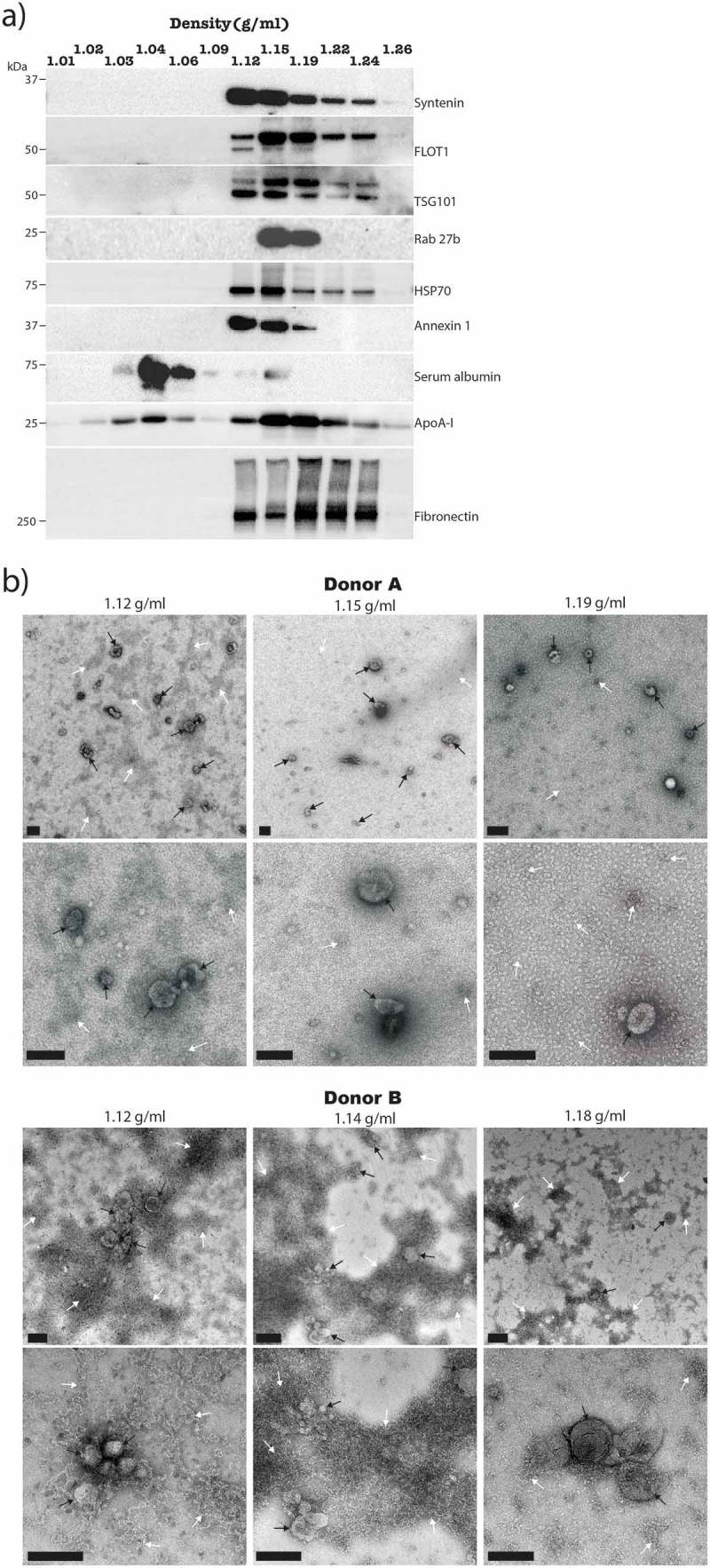
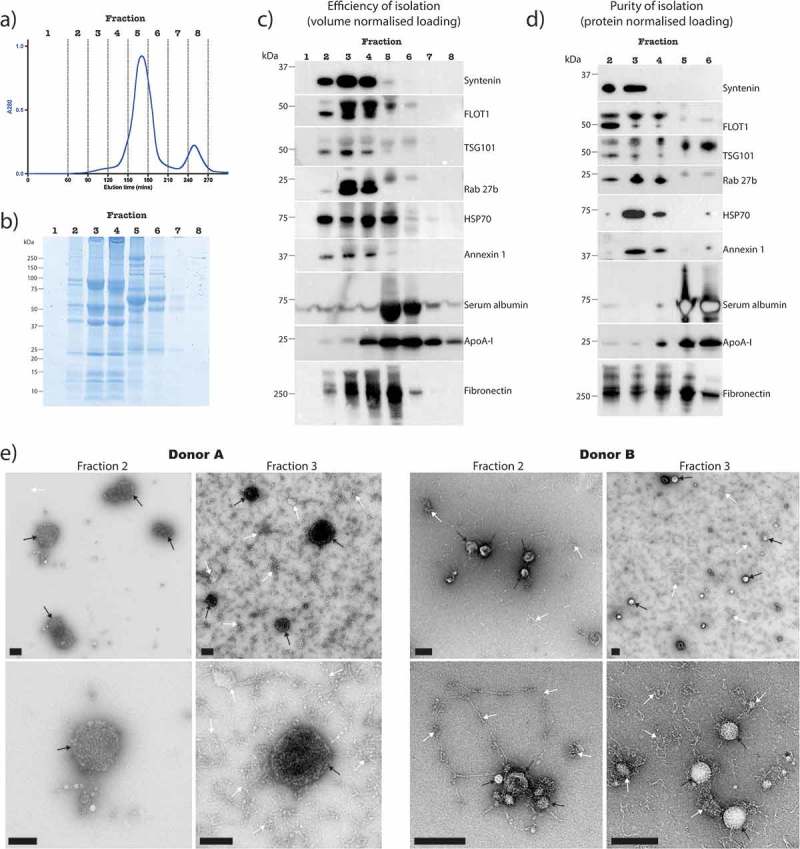
As a complex biological fluid, human synovial fluid (SF) presents challenges for extracellular vesicle (EV) enrichment using standard methods. In this study of human SF, a size exclusion chromatography (SEC)-based method of EV enrichment is shown to deplete contaminants that remain after standard ultracentrifugation-based enrichment methods. Specifically, considerable levels of serum albumin, the high-density lipoprotein marker, apolipoprotein A-I, fibronectin and other extracellular proteins and debris are present in EVs prepared by differential ultracentrifugation. While the addition of a sucrose density gradient purification step improved purification quality, some contamination remained. In contrast, using a SEC-based approach, SF EVs were efficiently separated from serum albumin, apolipoprotein A-I and additional contaminating proteins that co-purified with high-speed centrifugation. Finally, using high-resolution mass spectrometry analysis, we found that residual contaminants which remain after SEC, such as fibronectin and other extracellular proteins, can be successfully depleted by proteinase K. Taken together, our results highlight the limitations of ultracentrifugation-based methods of EV isolation from complex biological fluids and suggest that SEC can be used to obtain higher purity EV samples. In this way, SEC-based methods are likely to be useful for identifying EV-enriched components and improving understanding of EV function in disease.
作为一种复杂的生物流体,人体滑液(SF)对使用标准方法富集细胞外囊泡(EV)提出了挑战。在这项关于人体滑液的研究中,一种基于尺寸排阻色谱(SEC)的EV富集方法被证明能够去除基于标准超速离心的富集方法后残留的污染物。具体而言,在通过差速超速离心制备的EV中存在相当水平的血清白蛋白、高密度脂蛋白标志物载脂蛋白A-I、纤连蛋白以及其他细胞外蛋白质和碎片。虽然添加蔗糖密度梯度纯化步骤提高了纯化质量,但仍有一些污染物残留。相比之下,使用基于SEC的方法,SF EV能够有效地与血清白蛋白、载脂蛋白A-I以及与高速离心共纯化的其他污染蛋白分离。最后,通过高分辨率质谱分析,我们发现SEC后残留的污染物,如纤连蛋白和其他细胞外蛋白质,可以通过蛋白酶K成功去除。综上所述,我们的结果突出了基于超速离心的从复杂生物流体中分离EV方法的局限性,并表明SEC可用于获得更高纯度的EV样本。通过这种方式,基于SEC的方法可能有助于识别富含EV的成分,并增进对疾病中EV功能的理解。