Department of Biochemistry, University of Oxford, Oxford, United Kingdom.
Department of Biology, University of York, York, United Kingdom.
Elife. 2018 Jul 3;7:e34995. doi: 10.7554/eLife.34995.
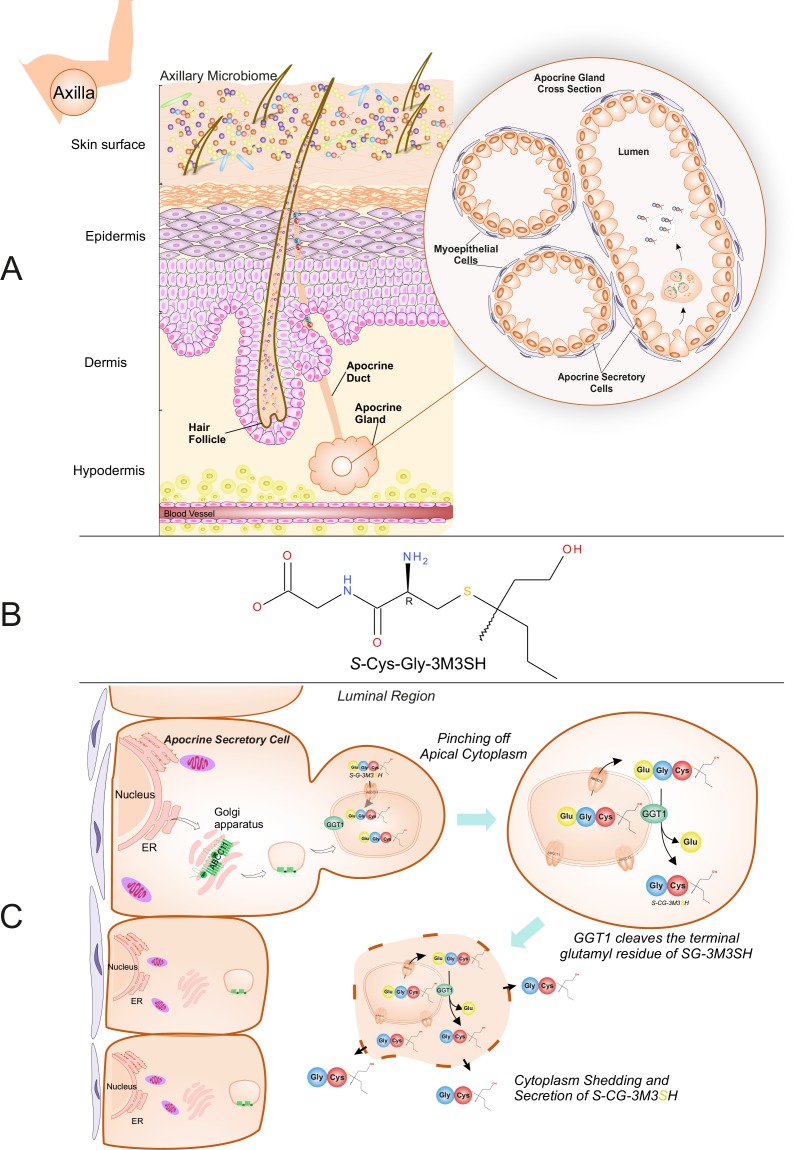
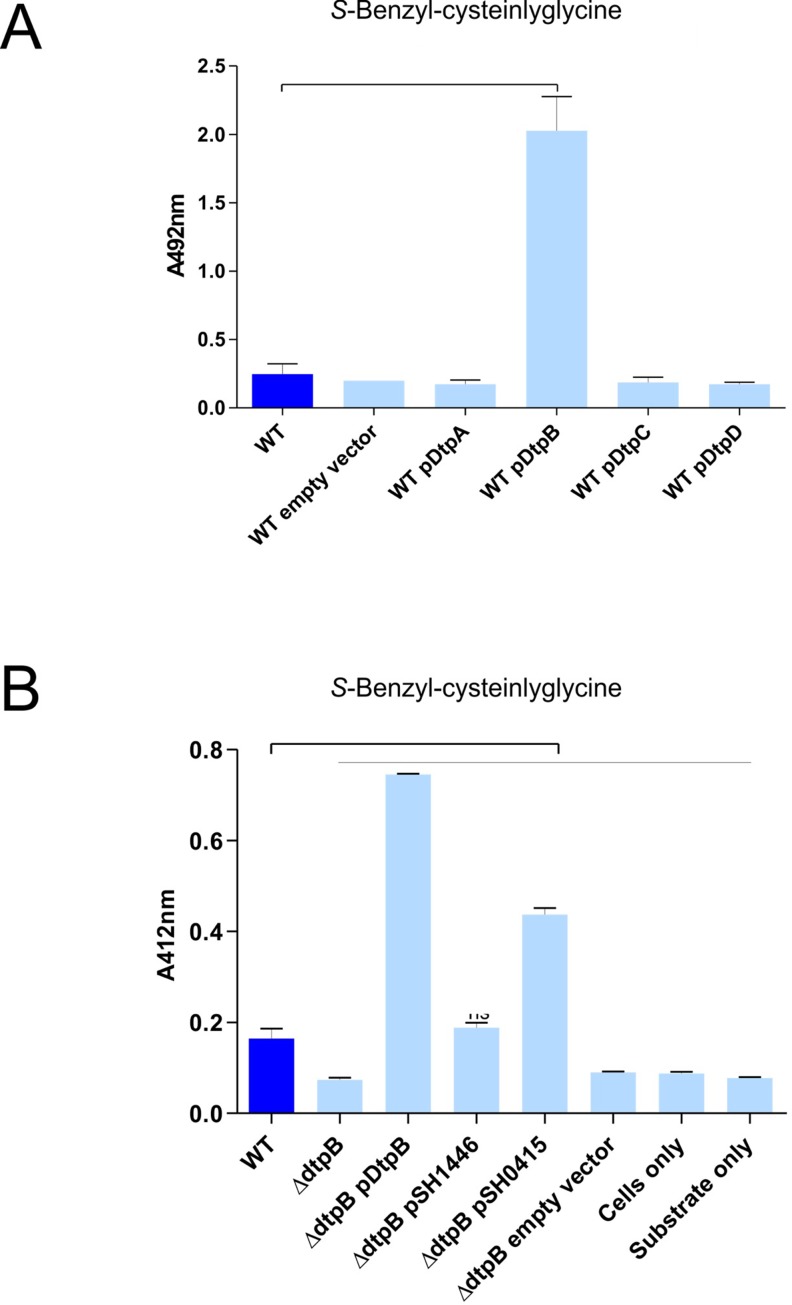
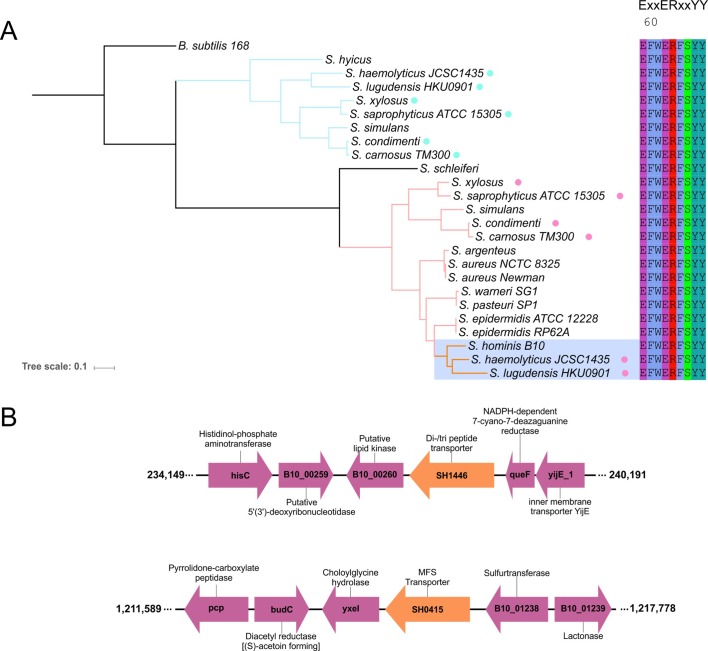
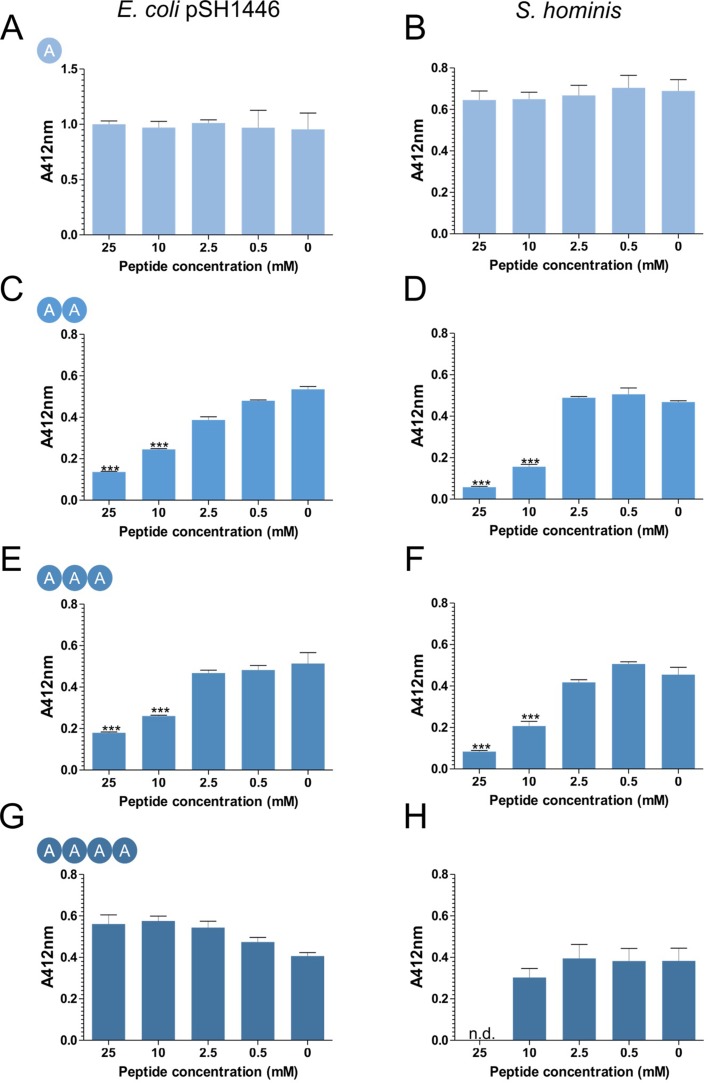
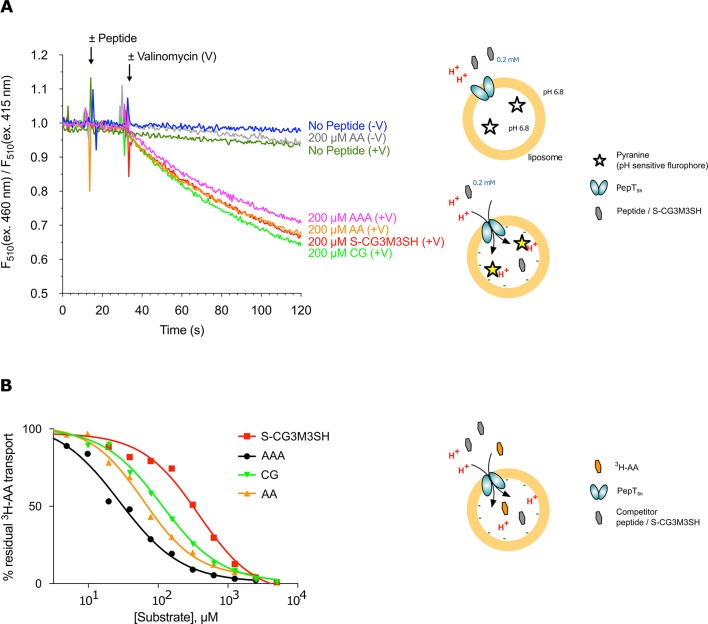
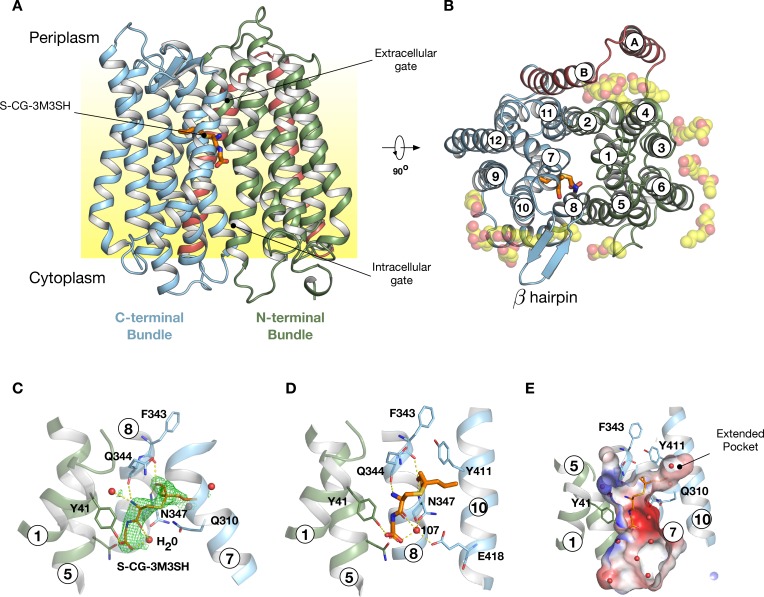
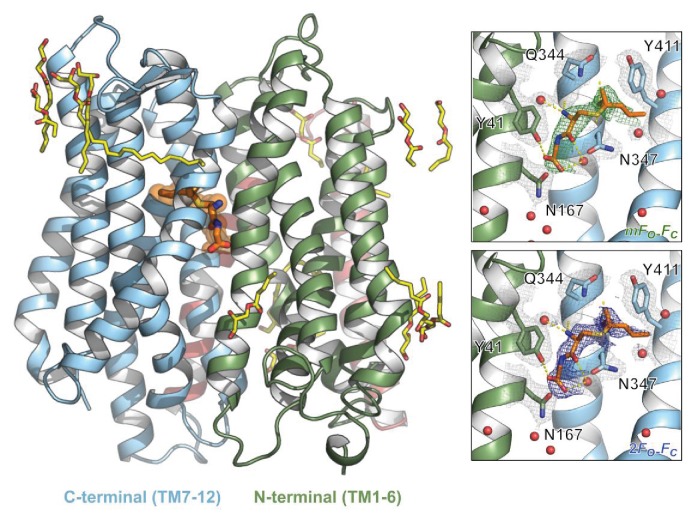
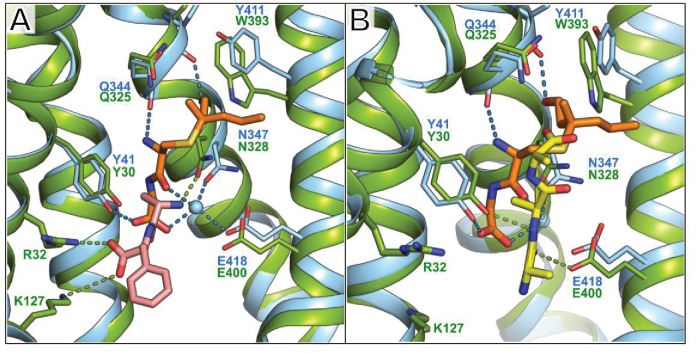
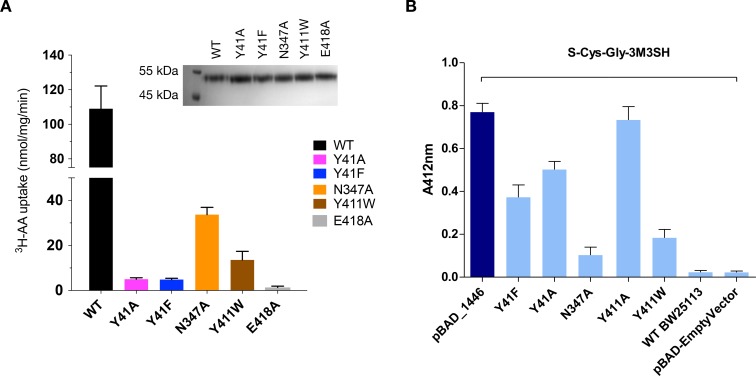
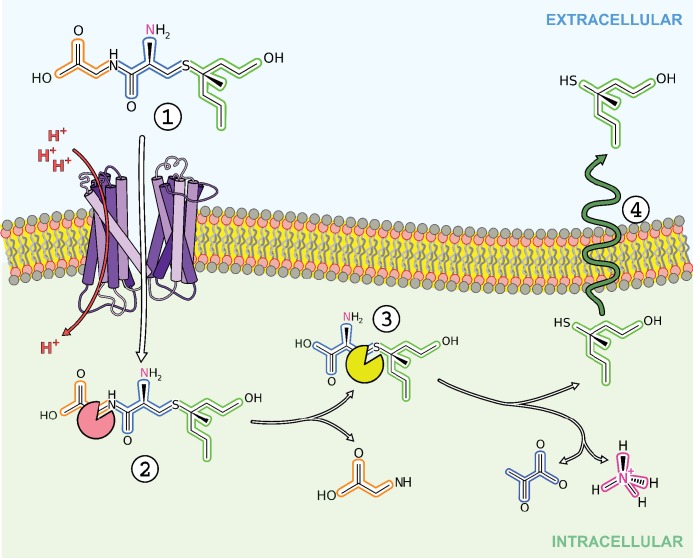
Mammals produce volatile odours that convey different types of societal information. In , this is now recognised as body odour, a key chemical component of which is the sulphurous thioalcohol, 3-methyl-3-sulfanylhexan-1-ol (3M3SH). Volatile 3M3SH is produced in the underarm as a result of specific microbial activity, which act on the odourless dipeptide-containing malodour precursor molecule, S-Cys-Gly-3M3SH, secreted in the axilla (underarm) during colonisation. The mechanism by which these bacteria recognise S-Cys-Gly-3M3SH and produce body odour is still poorly understood. Here we report the structural and biochemical basis of bacterial transport of S-Cys-Gly-3M3SH by , which is converted to the sulphurous thioalcohol component 3M3SH in the bacterial cytoplasm, before being released into the environment. Knowledge of the molecular basis of precursor transport, essential for body odour formation, provides a novel opportunity to design specific inhibitors of malodour production in humans.
哺乳动物会产生挥发性气味,这些气味传递着不同类型的社会信息。如今,人们认识到这就是体臭,其主要的化学成分为含硫的硫醇,即 3-甲基-3-巯基己-1-醇(3M3SH)。3M3SH 是在腋下由于特定的微生物活动而产生的,这些微生物作用于无味的二肽含臭味前体分子 S-Cys-Gly-3M3SH,这种分子在定植时分泌于腋下(腋窝)。这些细菌识别 S-Cys-Gly-3M3SH 并产生体臭的机制仍知之甚少。在这里,我们报告了 通过 转运 S-Cys-Gly-3M3SH 的结构和生化基础,该转运将 S-Cys-Gly-3M3SH 转化为细菌细胞质中的含硫硫醇成分 3M3SH,然后再释放到环境中。了解前体转运的分子基础对于体臭的形成至关重要,这为设计人体异味产生的特异性抑制剂提供了新的机会。