Laboratory of Genetics and Genomics, National Institute on Aging Intramural Research Program, National Institutes of Health, Baltimore, Maryland 21224, USA.
Laboratory of Molecular Biology and Immunology, National Institute on Aging Intramural Research Program, National Institutes of Health, Baltimore, Maryland 21224, USA.
Genes Dev. 2018 Jul 1;32(13-14):909-914. doi: 10.1101/gad.313270.118.
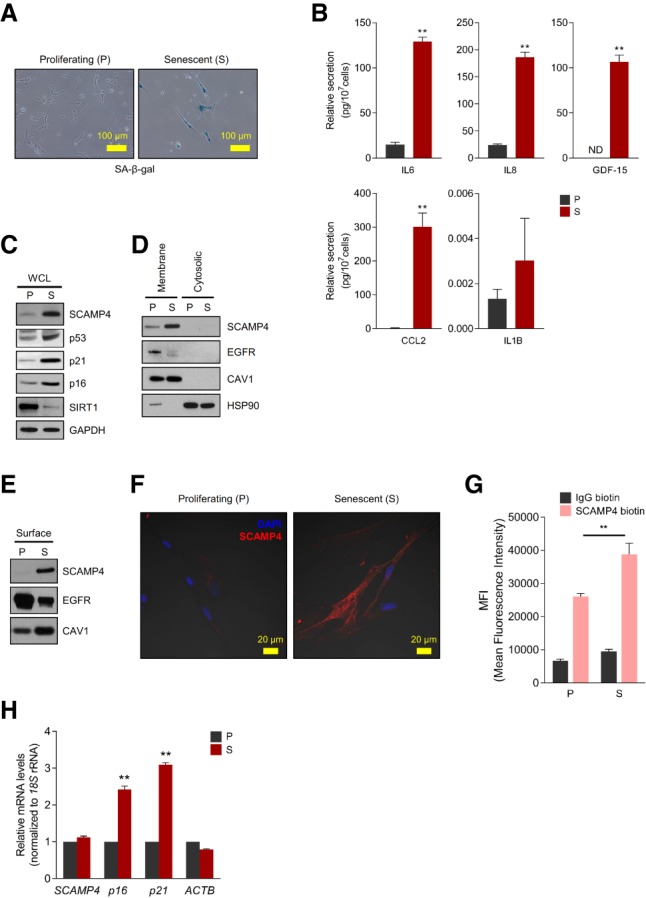
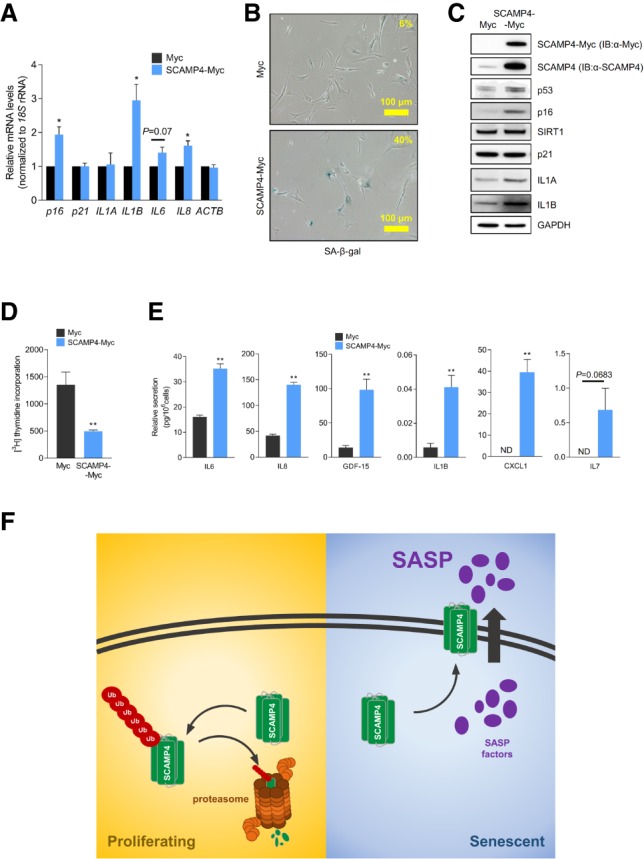
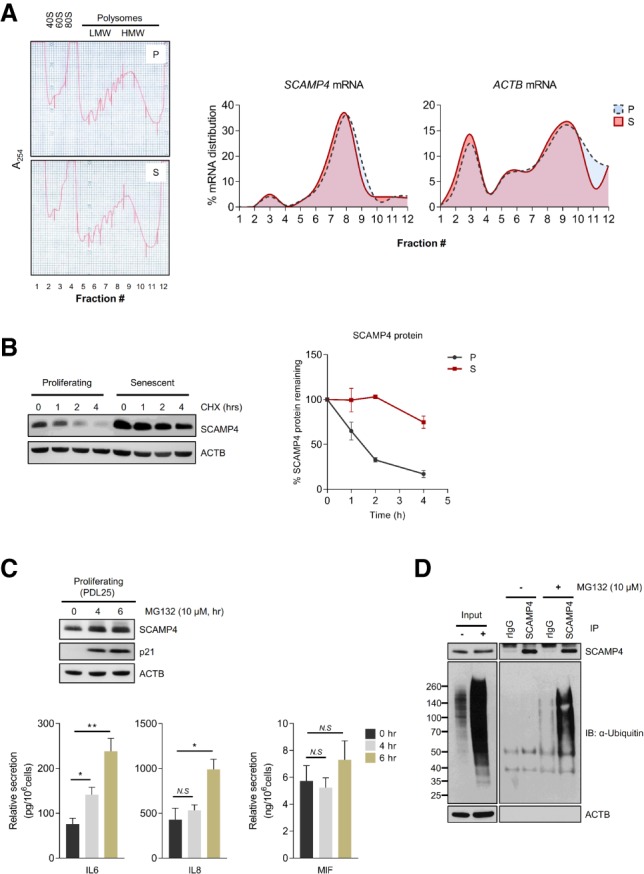
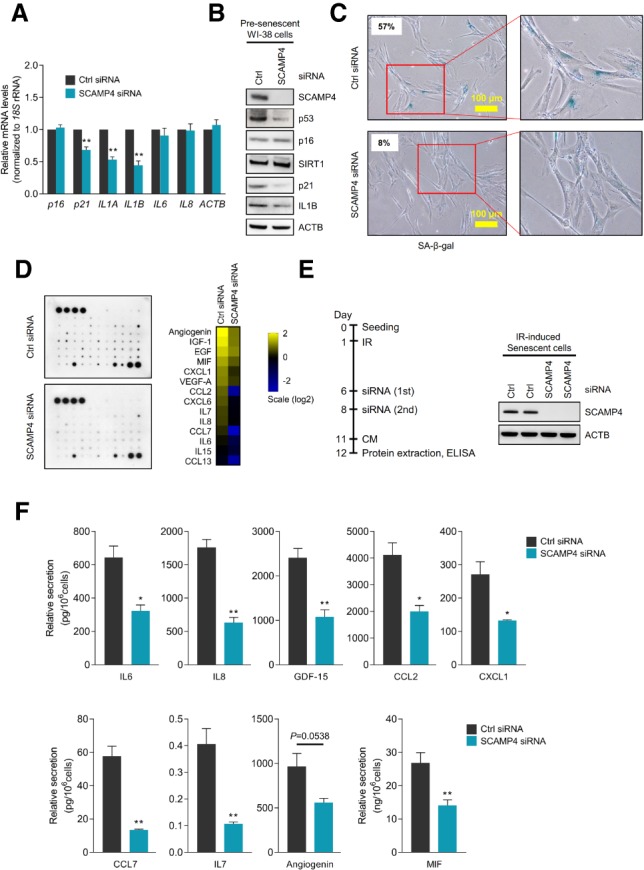
The senescence-associated secretory phenotype (SASP) is a major trait of senescent cells, but the molecular regulators of SASP factor secretion are poorly understood. Mass spectrometry analysis revealed that secretory carrier membrane protein 4 (SCAMP4) levels were strikingly elevated on the surface of senescent cells compared with proliferating cells. Interestingly, silencing SCAMP4 in senescent fibroblasts reduced the secretion of SASP factors, including interleukin 6 (IL6), IL8, growth differentiation factor 15 (GDF-15), C-X-C motif chemokine ligand 1 (CXCL1), and IL7, while, conversely, SCAMP4 overexpression in proliferating fibroblasts increased SASP factor secretion. Our results indicate that SCAMP4 accumulates on the surface of senescent cells, promotes SASP factor secretion, and critically enhances the SASP phenotype.
衰老相关分泌表型(SASP)是衰老细胞的一个主要特征,但 SASP 因子分泌的分子调控机制还知之甚少。质谱分析显示,与增殖细胞相比,衰老细胞表面的分泌载体膜蛋白 4(SCAMP4)水平显著升高。有趣的是,沉默衰老成纤维细胞中的 SCAMP4 可减少 SASP 因子的分泌,包括白细胞介素 6(IL6)、白细胞介素 8(IL8)、生长分化因子 15(GDF-15)、C-X-C 基序趋化因子配体 1(CXCL1)和白细胞介素 7(IL7),而相反,在增殖成纤维细胞中过表达 SCAMP4 会增加 SASP 因子的分泌。我们的结果表明,SCAMP4 在衰老细胞表面积累,促进 SASP 因子的分泌,并显著增强 SASP 表型。