Kim Kyoung Mi, Noh Ji Heon, Bodogai Monica, Martindale Jennifer L, Yang Xiaoling, Indig Fred E, Basu Sandip K, Ohnuma Kei, Morimoto Chikao, Johnson Peter F, Biragyn Arya, Abdelmohsen Kotb, Gorospe Myriam
National Institute on Aging, National Institutes of Health, Baltimore, Maryland 21224, USA.
National Cancer Institute, National Institutes of Health, Frederick, Maryland 21702, USA.
Genes Dev. 2017 Aug 1;31(15):1529-1534. doi: 10.1101/gad.302570.117. Epub 2017 Sep 6.
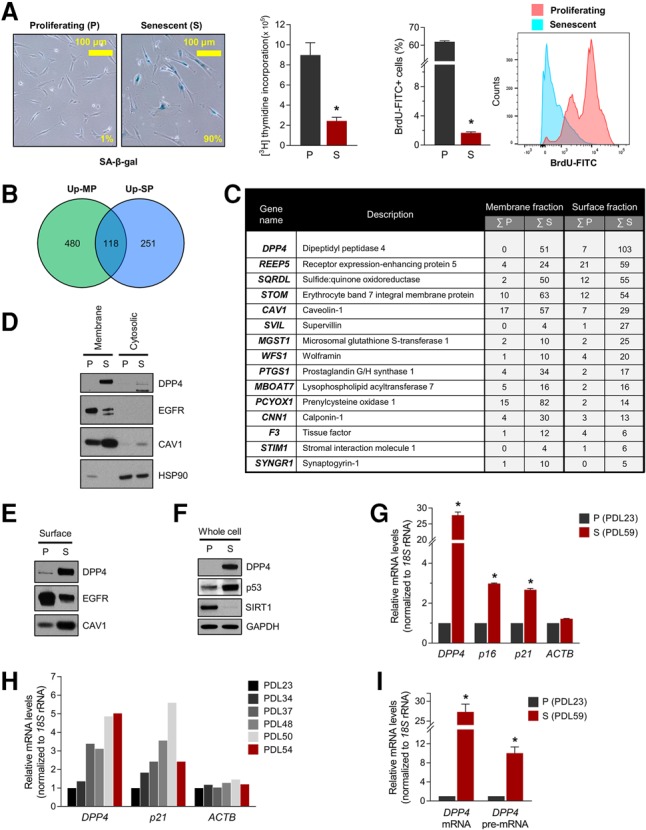
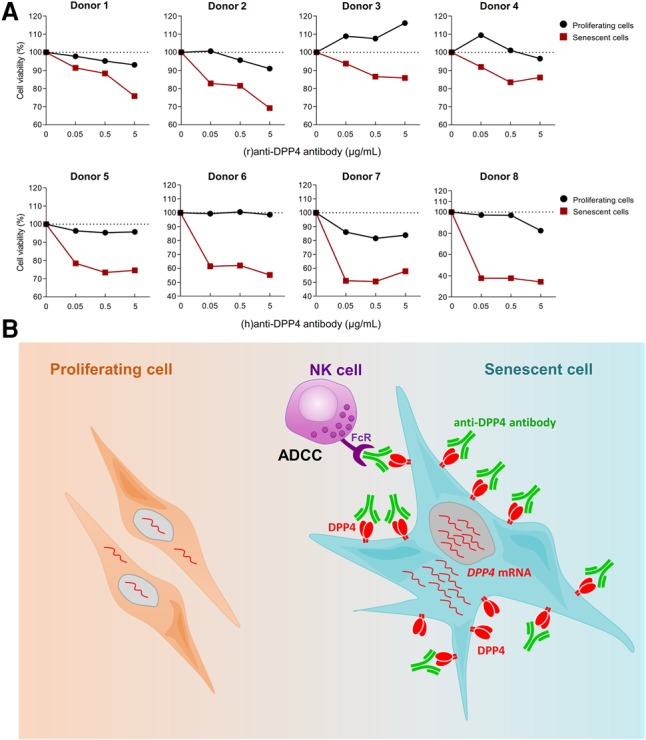
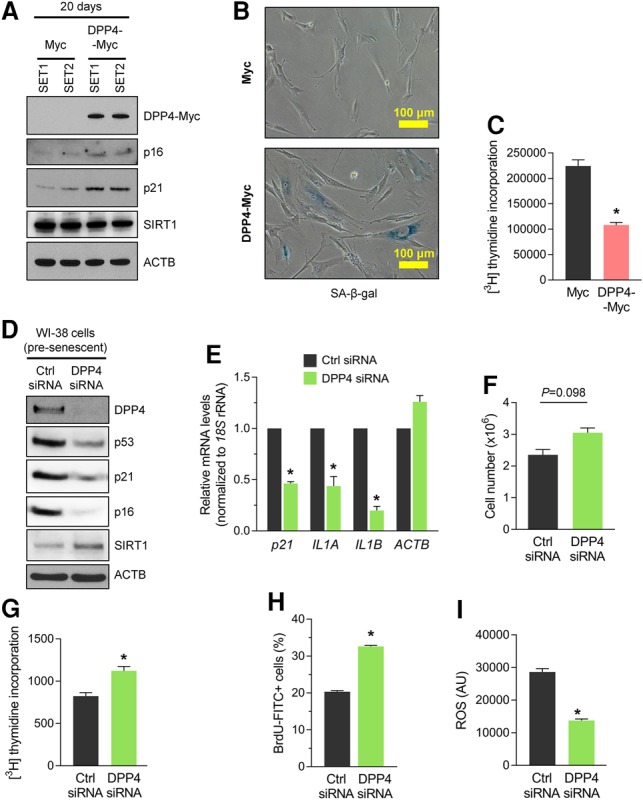
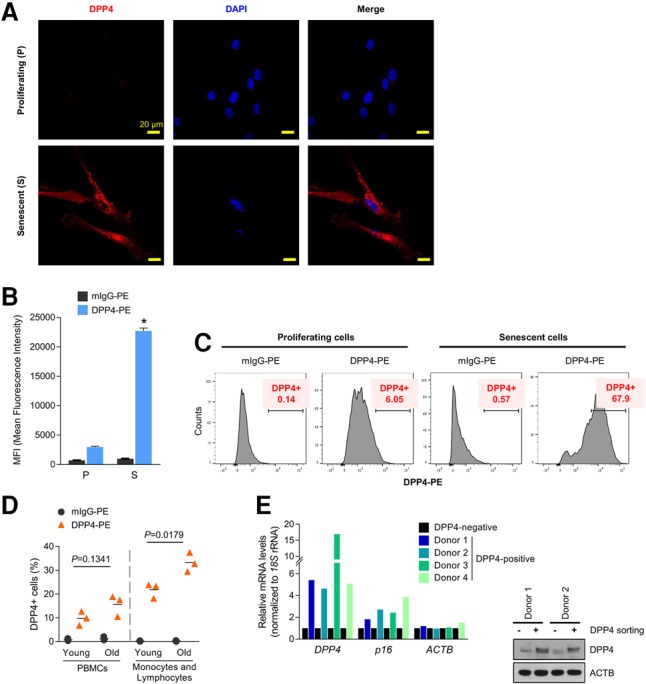
Senescent cell accumulation in aging tissues is linked to age-associated diseases and declining function, prompting efforts to eliminate them. Mass spectrometry analysis revealed that DPP4 (dipeptidyl peptidase 4) was selectively expressed on the surface of senescent, but not proliferating, human diploid fibroblasts. Importantly, the differential presence of DPP4 allowed flow cytometry-mediated isolation of senescent cells using anti-DPP4 antibodies. Moreover, antibody-dependent cell-mediated cytotoxicity (ADCC) assays revealed that the cell surface DPP4 preferentially sensitized senescent, but not dividing, fibroblasts to cytotoxicity by natural killer cells. In sum, the selective expression of DPP4 on the surface of senescent cells enables their preferential elimination.
衰老组织中衰老细胞的积累与年龄相关疾病和功能衰退有关,这促使人们努力消除这些细胞。质谱分析显示,二肽基肽酶4(DPP4)在衰老的人类二倍体成纤维细胞表面选择性表达,而在增殖细胞表面不表达。重要的是,DPP4的差异表达使得利用抗DPP4抗体通过流式细胞术介导分离衰老细胞成为可能。此外,抗体依赖性细胞介导的细胞毒性(ADCC)分析表明,细胞表面的DPP4优先使衰老的而非分裂的成纤维细胞对自然杀伤细胞的细胞毒性敏感。总之,DPP4在衰老细胞表面的选择性表达使其能够被优先清除。