Department of Microbiology, School of Medicine, Gachon University, Incheon, 21999, Korea.
Department of Clinical Microbiology and Immunology, The Sackler School of Medicine, Tel-Aviv University, Ramat Aviv, 69978, Israel.
Sci Rep. 2018 Jul 2;8(1):9894. doi: 10.1038/s41598-018-28371-4.
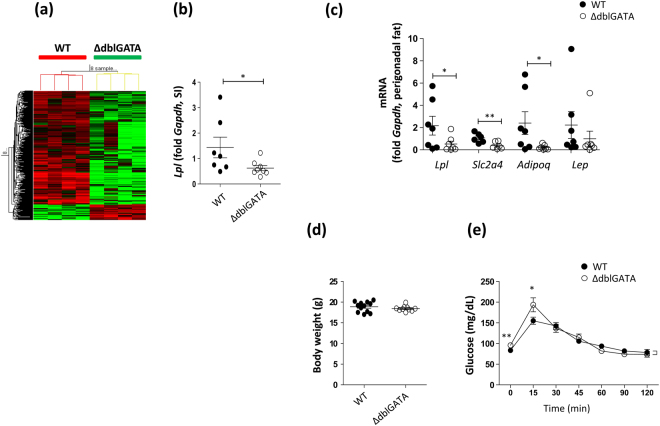
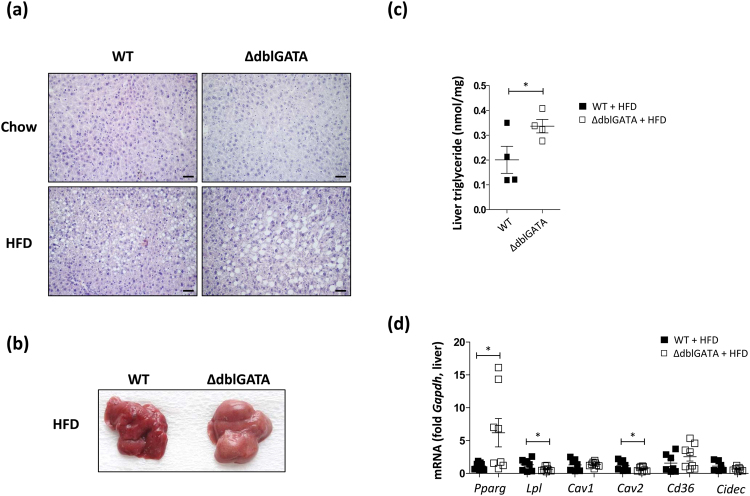
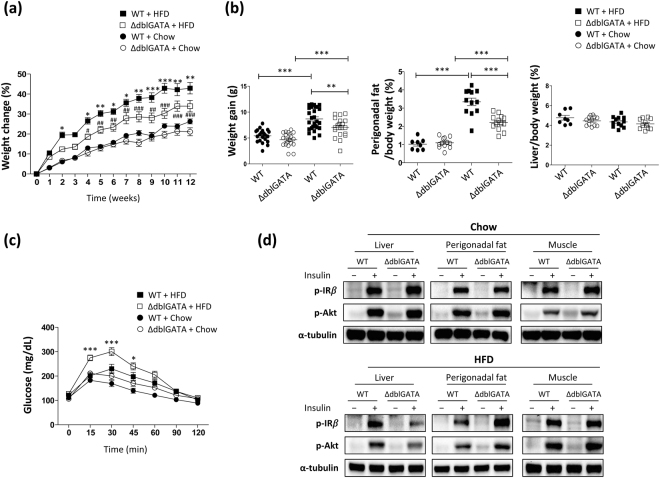
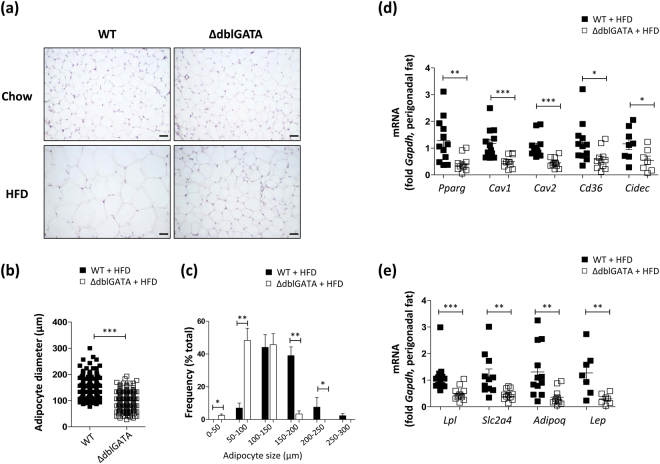
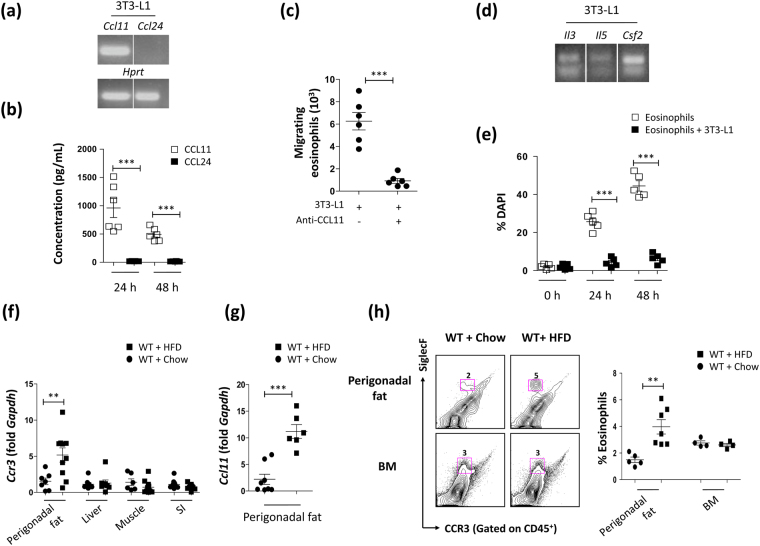
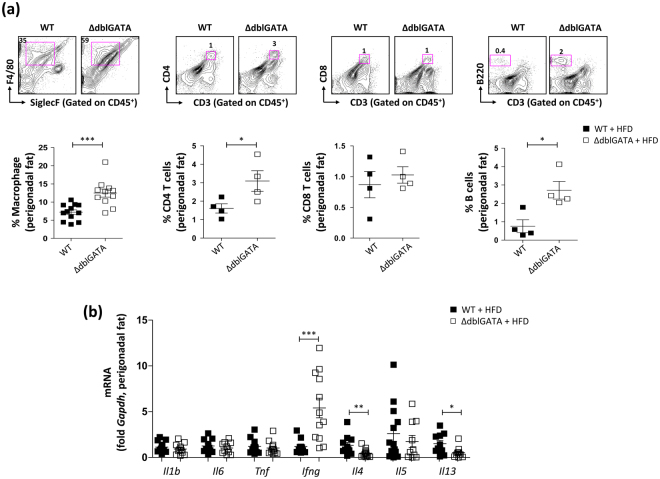
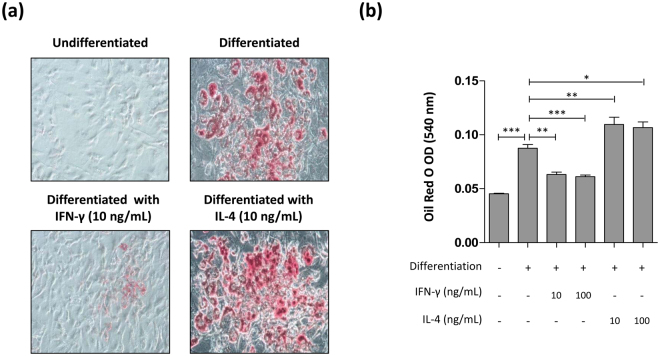
Accumulating data have indicated a fundamental role of eosinophils in regulating adipose tissue homeostasis. Here, we performed whole-genome RNA sequencing of the small intestinal tract, which suggested the presence of impaired lipid metabolism in eosinophil-deficient ΔdblGATA mice. ΔdblGATA mice fed a high-fat diet (HFD) showed reduced body fat mass, impaired enlargement of adipocytes, decreased expression of adipogenic genes, and developed glucose intolerance. HFD induced accumulation of eosinophils in the perigonadal white adipose tissue. Concordantly, adipocyte-differentiated 3T3-L1 cells promoted the migration of eosinophils through the expression of CCL11 (eotaxin-1) and likely promoted their survival through the expression of interleukin (IL)-3, IL-5, and granulocyte-macrophage colony-stimulating factor. HFD-fed ΔdblGATA mice showed increased infiltration of macrophages, CD4 T-cells, and B-cells, increased expression of interferon-γ, and decreased expression of IL-4 and IL-13 in white adipose tissue. Interferon-γ treatment significantly decreased lipid deposition in adipocyte-differentiated 3T3-L1 cells, while IL-4 treatment promoted lipid accumulation. Notably, HFD-fed ΔdblGATA mice showed increased lipid storage in the liver as compared with wild-type mice. We propose that obesity promotes the infiltration of eosinophils into adipose tissue that subsequently contribute to the metabolic homeostasis by promoting adipocyte maturation.
越来越多的数据表明,嗜酸性粒细胞在调节脂肪组织稳态方面发挥着重要作用。在这里,我们对小肠进行了全基因组 RNA 测序,结果表明在嗜酸性粒细胞缺失的 ΔdblGATA 小鼠中存在脂质代谢受损的情况。用高脂肪饮食喂养的 ΔdblGATA 小鼠表现出体脂肪量减少、脂肪细胞增大受损、脂肪生成基因表达减少,并出现葡萄糖不耐受。高脂肪饮食诱导了周围性腺白色脂肪组织中嗜酸性粒细胞的积累。与此一致的是,脂肪细胞分化的 3T3-L1 细胞通过表达 CCL11(嗜酸粒细胞趋化因子-1)促进了嗜酸性粒细胞的迁移,并可能通过表达白细胞介素(IL)-3、IL-5 和粒细胞-巨噬细胞集落刺激因子促进其存活。用高脂肪饮食喂养的 ΔdblGATA 小鼠表现出白色脂肪组织中巨噬细胞、CD4 T 细胞和 B 细胞浸润增加、干扰素-γ表达增加以及 IL-4 和 IL-13 表达减少。干扰素-γ 处理显著减少了脂肪细胞分化的 3T3-L1 细胞中的脂质沉积,而 IL-4 处理则促进了脂质积累。值得注意的是,与野生型小鼠相比,用高脂肪饮食喂养的 ΔdblGATA 小鼠的肝脏脂质储存增加。我们提出,肥胖促进了嗜酸性粒细胞浸润到脂肪组织中,随后通过促进脂肪细胞成熟来促进代谢稳态。