Ruiz Anne, Gautschi Ivan, Schild Laurent, Bonny Olivier
Department of Pharmacology and Toxicology, University of Lausanne, Lausanne, Switzerland.
Service of Nephrology, Department of Medicine, Lausanne University Hospital, Lausanne, Switzerland.
Front Physiol. 2018 Jun 18;9:476. doi: 10.3389/fphys.2018.00476. eCollection 2018.
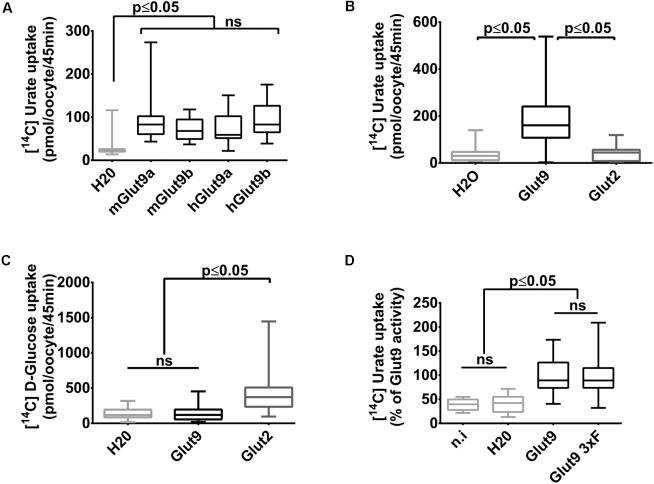
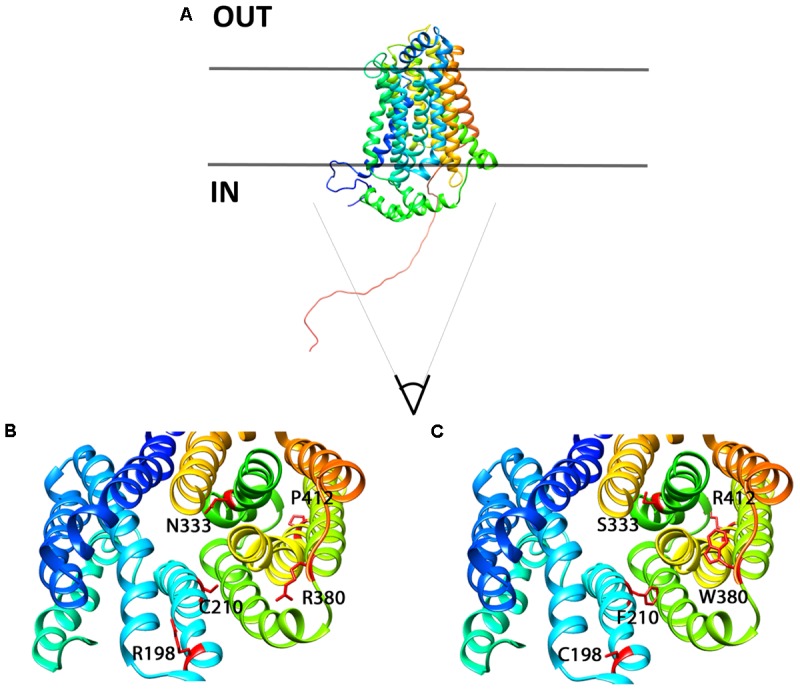
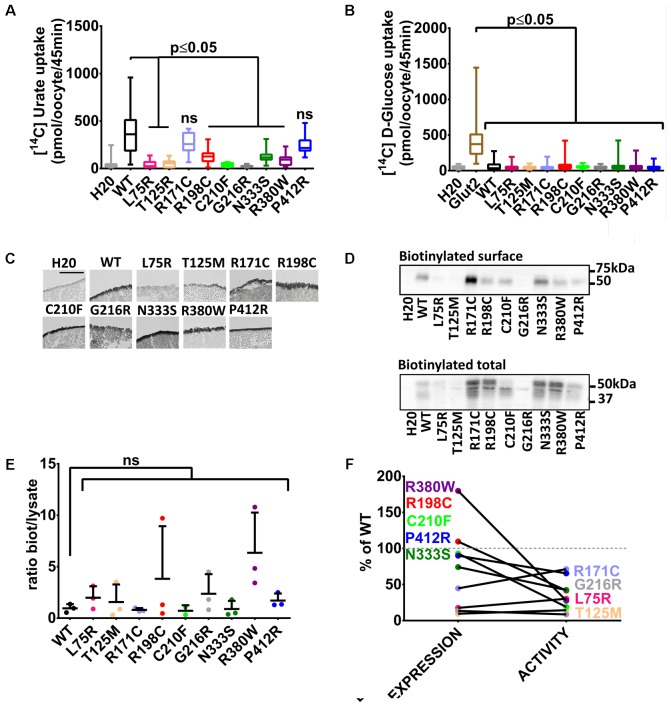
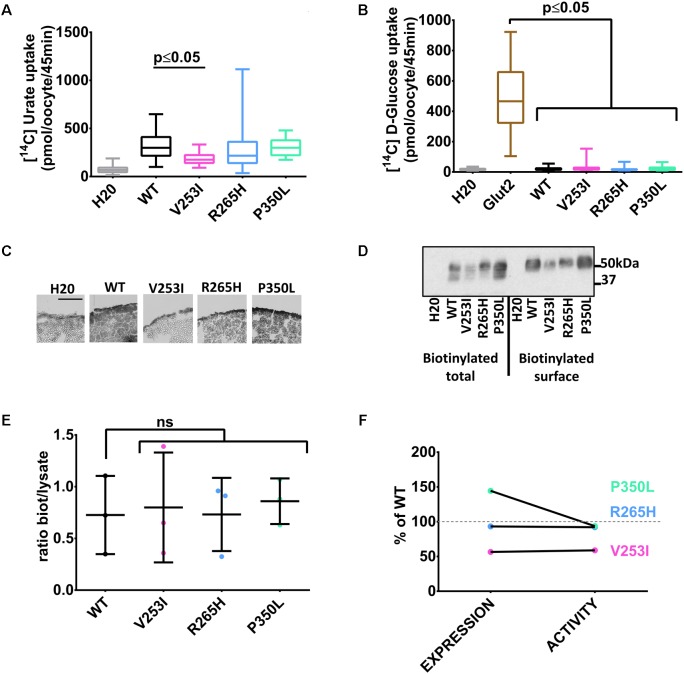
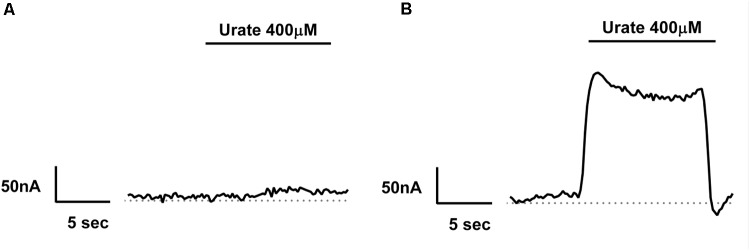
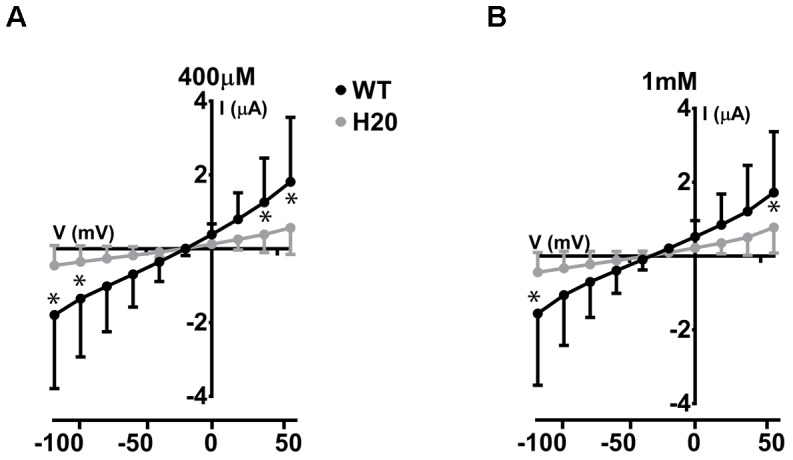
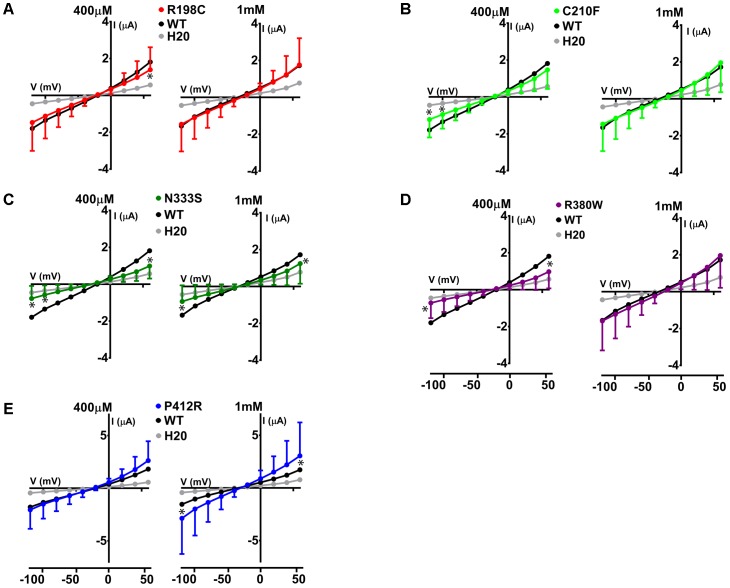
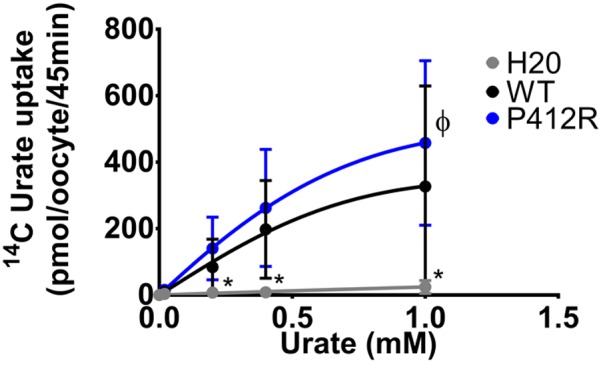
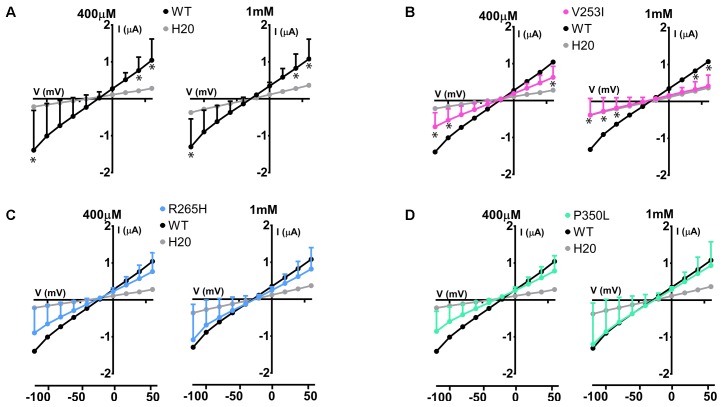
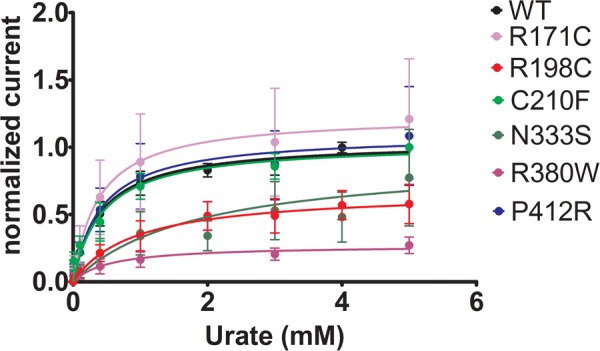
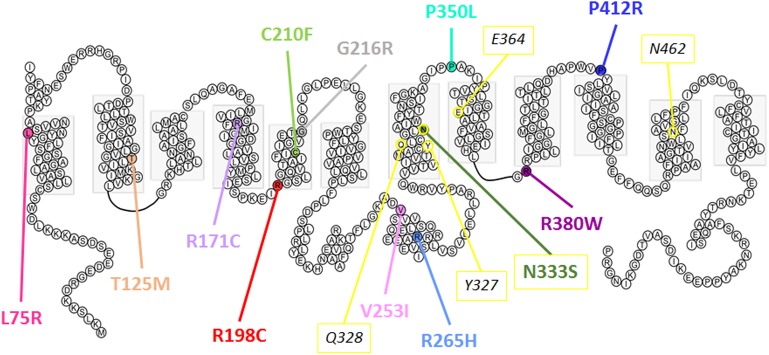
SLC2A9 or Glut9 is a voltage sensitive urate transporter, mainly expressed in the kidneys, the liver, and the intestine. Human Glut9 loss-of-function mutations were identified in familial hypouricemia, and several single nucleotide polymorphisms (SNPs) were associated with lower serum urate, further indicating that Glut9 is a major determinant of serum uric acid level. To get insights in Glut9 transport characteristics, we systematically analyzed the function of known human Glut9 mutants using C-urate uptake assay and two-electrode voltage clamp (TEVC) in the oocyte expression system. Surface expression was assessed by immunostaining and biotinylation. We found decreased urate transport by flux studies for most of the variants. No variant was permissive for glucose transport. We could further differentiate two behaviors among the mutants: those harboring poor overall and cell-surface expression leading to low activity and those fully expressed at the cell surface, but presenting decreased activity. We studied the latter by TEVC and observed, in depolarized conditions, decreased inward currents measured in presence of 400 μM urate, partially reversed in 1 mM urate. In addition, we showed that C210F displays lower transport ability. By contrast, N333S showed decreased urate transport activity and urate affinity, suggesting that it may belong to the urate binding pocket. Systematic analysis of Glut9 mutants confirms Glut9 as putative target for the treatment of hyperuricemia and brings new insights in Glut9 structure - function.
溶质载体家族2成员9(SLC2A9)或葡萄糖转运蛋白9(Glut9)是一种电压敏感性尿酸转运体,主要在肾脏、肝脏和肠道中表达。在家族性低尿酸血症中发现了人类Glut9功能丧失突变,并且一些单核苷酸多态性(SNP)与较低的血清尿酸水平相关,这进一步表明Glut9是血清尿酸水平的主要决定因素。为了深入了解Glut9的转运特性,我们在卵母细胞表达系统中使用C - 尿酸摄取试验和双电极电压钳(TEVC)系统地分析了已知人类Glut9突变体的功能。通过免疫染色和生物素化评估表面表达。我们通过通量研究发现大多数变体的尿酸转运减少。没有变体允许葡萄糖转运。我们可以进一步区分突变体中的两种行为:那些整体和细胞表面表达不佳导致活性低的突变体,以及那些在细胞表面完全表达但活性降低的突变体。我们通过TEVC研究了后者,并观察到在去极化条件下,在存在400μM尿酸的情况下测量的内向电流减少,在1mM尿酸中部分逆转。此外,我们表明C210F表现出较低的转运能力。相比之下,N333S显示尿酸转运活性和尿酸亲和力降低,表明它可能属于尿酸结合口袋。对Glut9突变体的系统分析证实Glut9是治疗高尿酸血症的推定靶点,并为Glut9的结构 - 功能带来了新的见解。