Division of Physical Therapy and Division of Rehabilitation Science, Department of Rehabilitation Medicine, Medical School, University of Minnesota, Minneapolis, MN, USA.
Department of Neurosurgery, School of Medicine, University of Virginia, Charlottesville, VA, United States.
Sci Rep. 2018 Jul 3;8(1):10007. doi: 10.1038/s41598-018-28320-1.
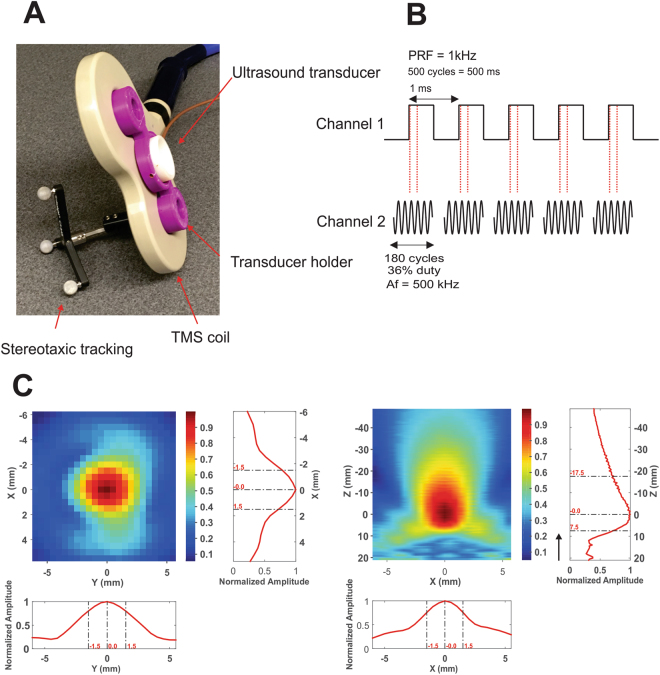
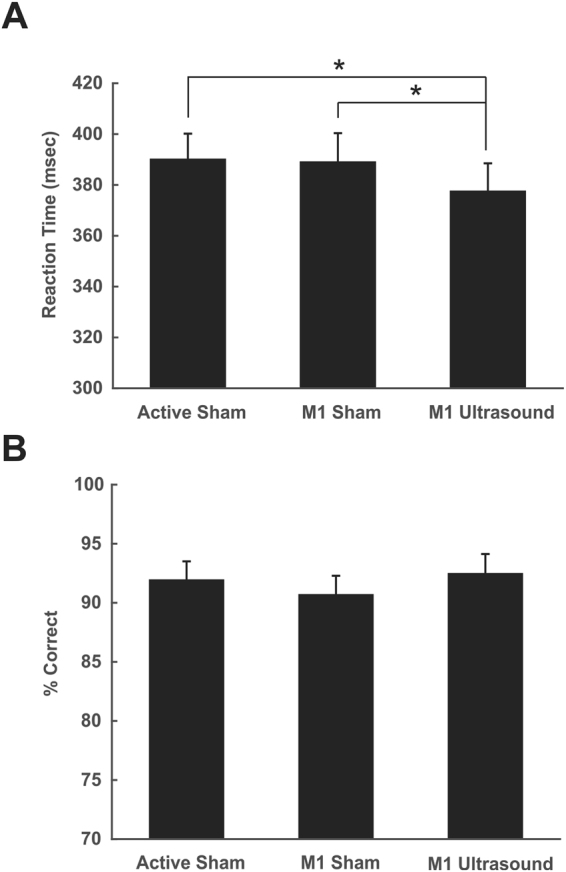
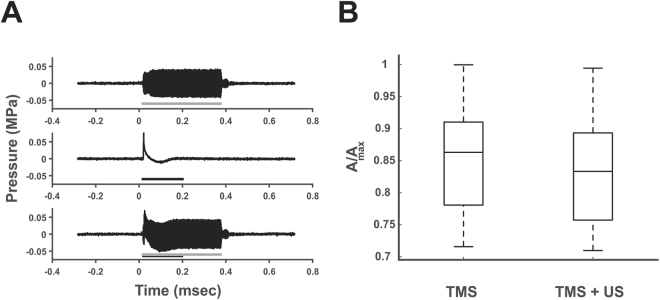
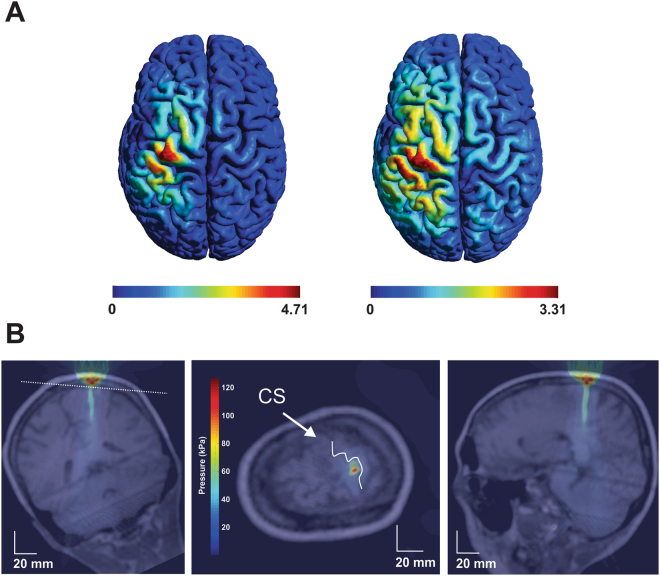
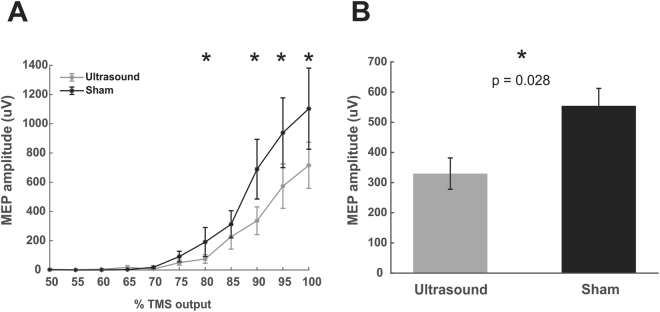
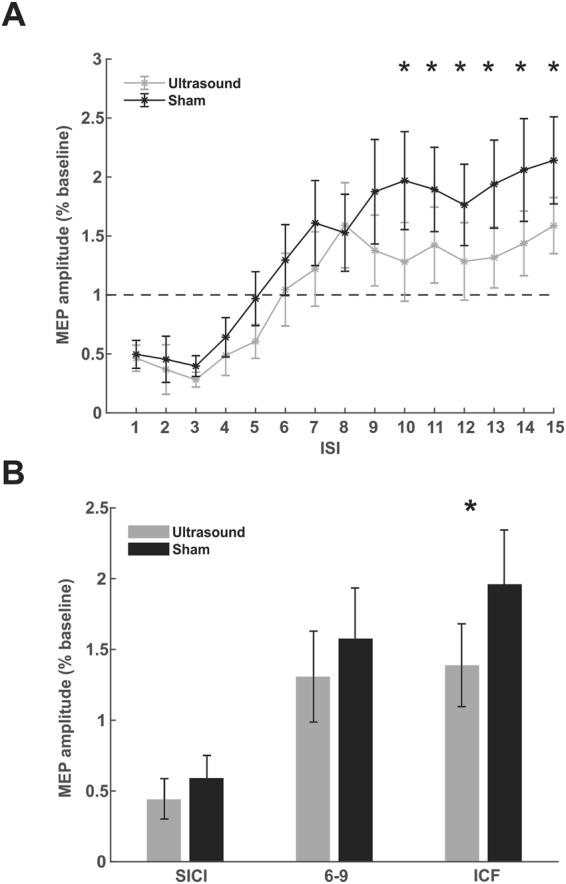
Transcranial focused ultrasound is an emerging form of non-invasive neuromodulation that uses acoustic energy to affect neuronal excitability. The effect of ultrasound on human motor cortical excitability and behavior is currently unknown. We apply ultrasound to the primary motor cortex in humans using a novel simultaneous transcranial ultrasound and magnetic stimulation paradigm that allows for concurrent and concentric ultrasound stimulation with transcranial magnetic stimulation (TMS). This allows for non-invasive inspection of the effect of ultrasound on motor neuronal excitability using the motor evoked potential (MEP). We test the effect of ultrasound on single pulse MEP recruitment curves and paired pulse protocols including short interval intracortical inhibition (SICI) and intracortical facilitation (ICF). In addition, we test the effect of ultrasound to motor cortex on a stimulus response reaction time task. Results show ultrasound inhibits the amplitude of single-pulse MEPs and attenuates intracortical facilitation but does not affect intracortical inhibition. Ultrasound also reduces reaction time on a simple stimulus response task. This is the first report of the effect of ultrasound on human motor cortical excitability and motor behavior and confirms previous results in the somatosensory cortex that ultrasound results in effective neuronal inhibition that confers a performance advantage.
经颅聚焦超声是一种新兴的非侵入性神经调节形式,它利用声能来影响神经元的兴奋性。超声对人类运动皮质兴奋性和行为的影响目前尚不清楚。我们使用一种新的同时经颅超声和磁刺激范式将超声应用于人类的初级运动皮质,该范式允许与经颅磁刺激(TMS)同时和同心地进行超声刺激。这允许使用运动诱发电位(MEP)对超声对运动神经元兴奋性的影响进行非侵入性检查。我们测试了超声对单脉冲 MEP 募集曲线和双脉冲方案的影响,包括短间隔皮质内抑制(SICI)和皮质内易化(ICF)。此外,我们还测试了超声对运动皮质对刺激反应时间任务的影响。结果表明,超声抑制了单脉冲 MEP 的振幅,并减弱了皮质内易化,但不影响皮质内抑制。超声还减少了简单刺激反应任务的反应时间。这是超声对人类运动皮质兴奋性和运动行为影响的首次报道,证实了先前在躯体感觉皮质中的结果,即超声导致有效的神经元抑制,从而带来性能优势。