Department of Clinical Microbiology/Virology, and, the Laboratory for Molecular Infection Medicine Sweden, Umeå University, Umeå, Sweden.
Department of Molecular Biology, Umeå University, Umeå, Sweden.
Sci Rep. 2018 Jul 3;8(1):10019. doi: 10.1038/s41598-018-28255-7.
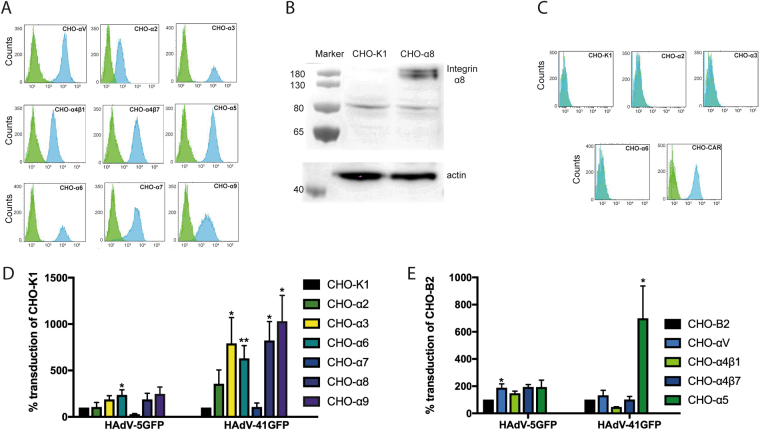
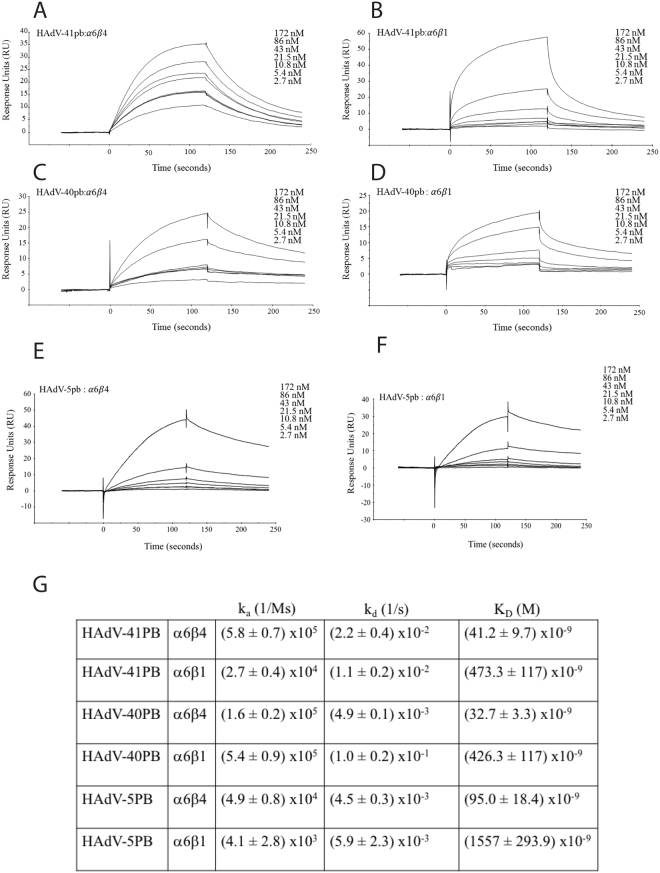
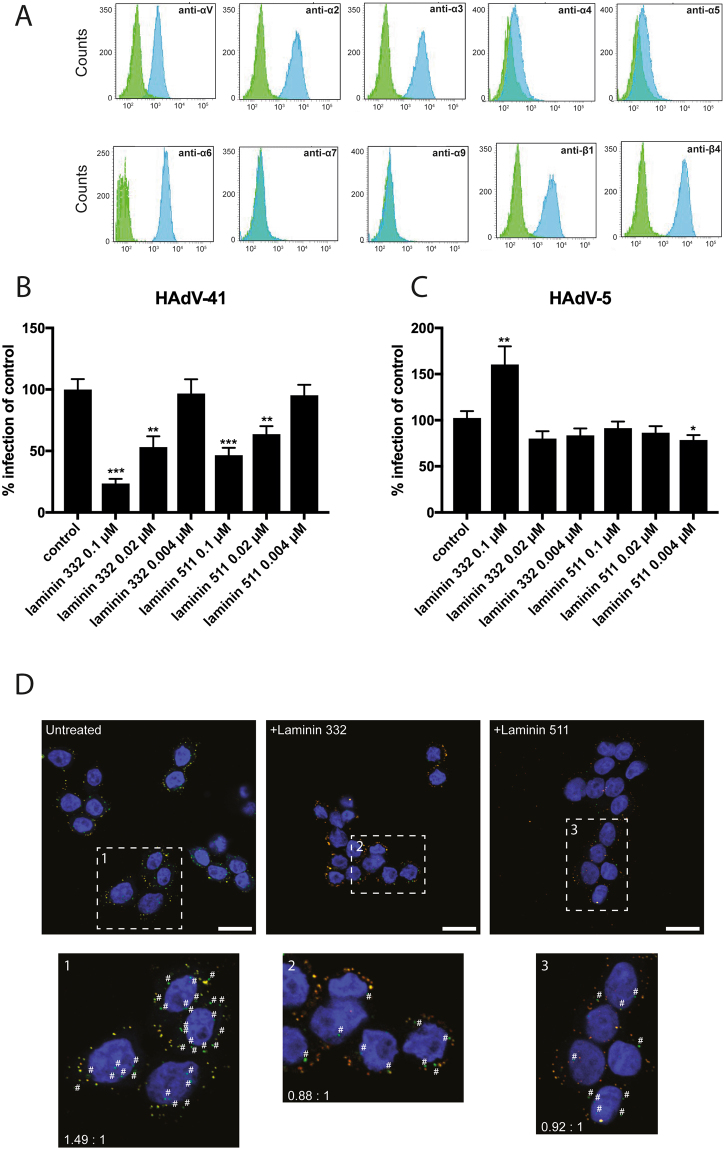
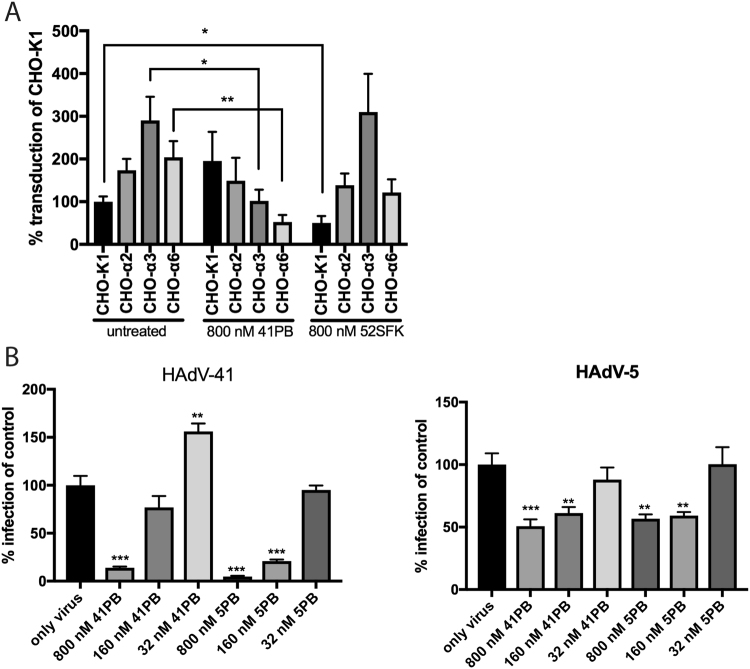
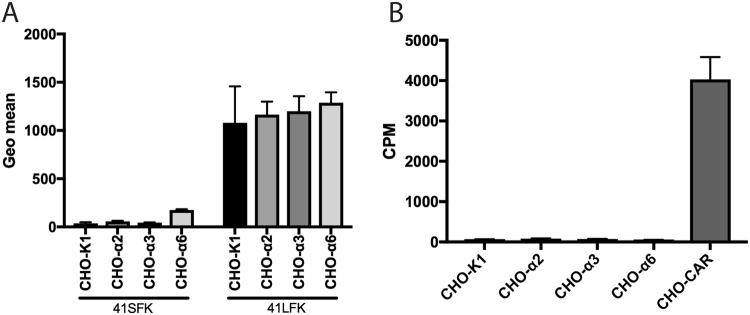
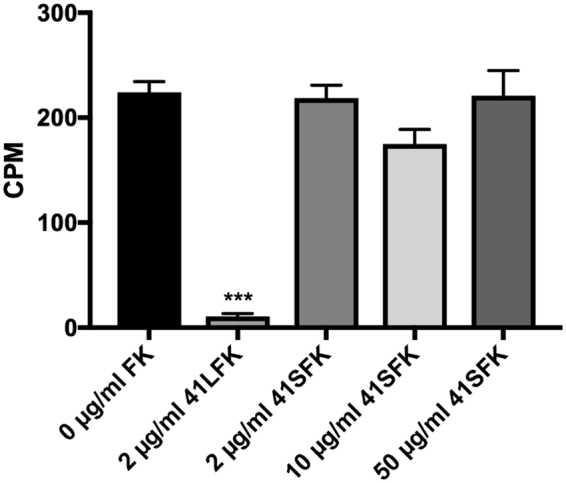
The enteric species F human adenovirus types 40 and 41 (HAdV-40 and -41) are the third most common cause of infantile gastroenteritis in the world. Knowledge about HAdV-40 and -41 cellular infection is assumed to be fundamentally different from that of other HAdVs since HAdV-40 and -41 penton bases lack the αV-integrin-interacting RGD motif. This motif is used by other HAdVs mainly for internalization and endosomal escape. We hypothesised that the penton bases of HAdV-40 and -41 interact with integrins independently of the RGD motif. HAdV-41 transduction of a library of rodent cells expressing specific human integrin subunits pointed to the use of laminin-binding α2-, α3- and α6-containing integrins as well as other integrins as candidate co-receptors. Specific laminins prevented internalisation and infection, and recombinant, soluble HAdV-41 penton base proteins prevented infection of human intestinal HT-29 cells. Surface plasmon resonance analysis demonstrated that HAdV-40 and -41 penton base proteins bind to α6-containing integrins with an affinity similar to that of previously characterised penton base:integrin interactions. With these results, we propose that laminin-binding integrins are co-receptors for HAdV-40 and -41.
肠道型人类腺病毒 40 型和 41 型(HAdV-40 和 -41)是世界上导致婴幼儿肠胃炎的第三大常见病原体。人们认为 HAdV-40 和 -41 衣壳五邻体基底部缺乏αV-整联蛋白相互作用的 RGD 基序,其细胞感染的相关知识与其他 HAdV 有根本区别。该基序主要被其他 HAdV 用于内化和内体逃逸。我们假设 HAdV-40 和 -41 的衣壳五邻体基底部与整联蛋白的相互作用不依赖于 RGD 基序。HAdV-41 对表达特定人整联蛋白亚基的啮齿动物细胞文库的转导表明,层粘连蛋白结合的 α2、α3 和 α6 整联蛋白以及其他整联蛋白可作为候选共受体。特定的层粘连蛋白可阻止内化和感染,重组可溶性 HAdV-41 衣壳五邻体基蛋白可阻止人肠 HT-29 细胞的感染。表面等离子体共振分析表明,HAdV-40 和 -41 衣壳五邻体基蛋白与包含 α6 的整联蛋白的亲和力与先前表征的衣壳五邻体:整联蛋白相互作用相似。有了这些结果,我们提出层粘连蛋白结合整联蛋白是 HAdV-40 和 -41 的共受体。