Department of Molecular Life Sciences, University of Zurich, Zurich, Switzerland.
Molecular Life Sciences Graduate School, ETH and University Of Zurich, Switzerland.
PLoS Pathog. 2021 Dec 15;17(12):e1010083. doi: 10.1371/journal.ppat.1010083. eCollection 2021 Dec.
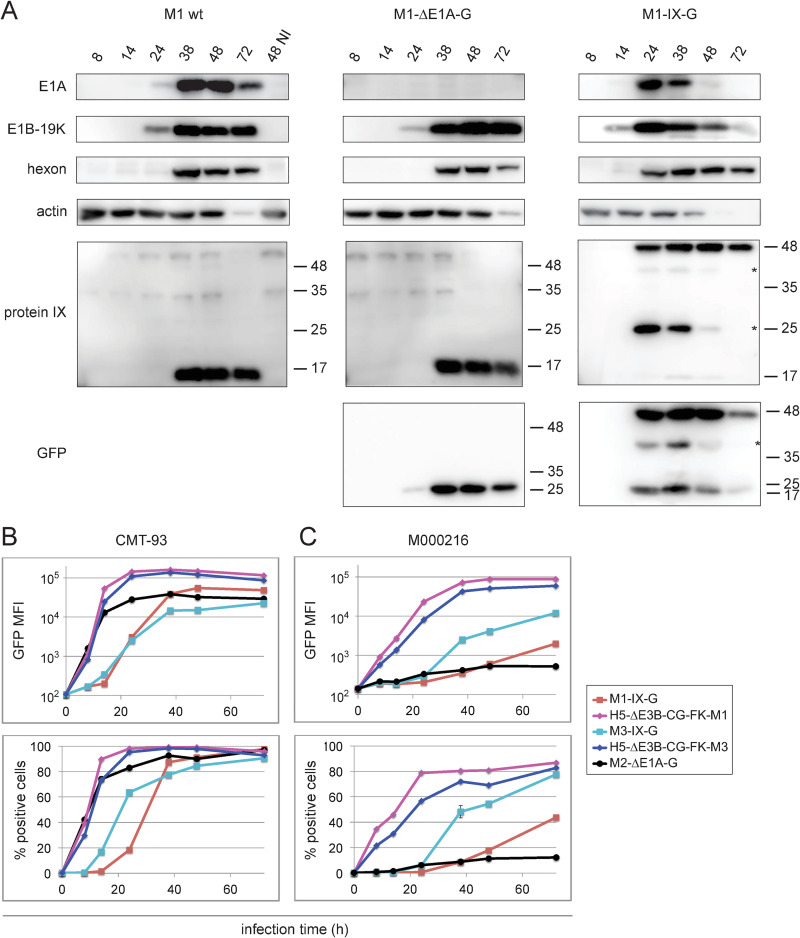
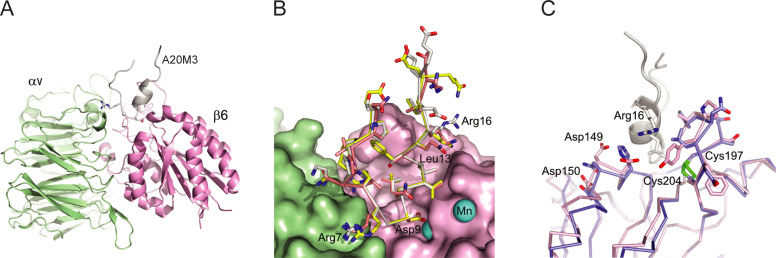
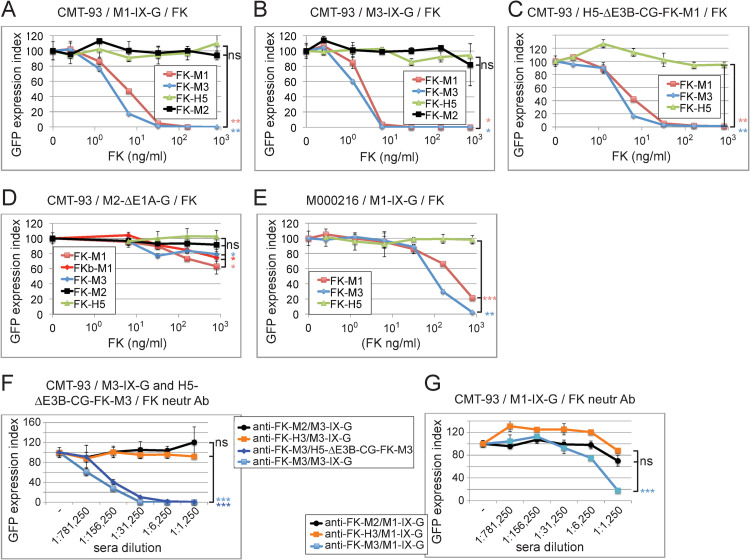
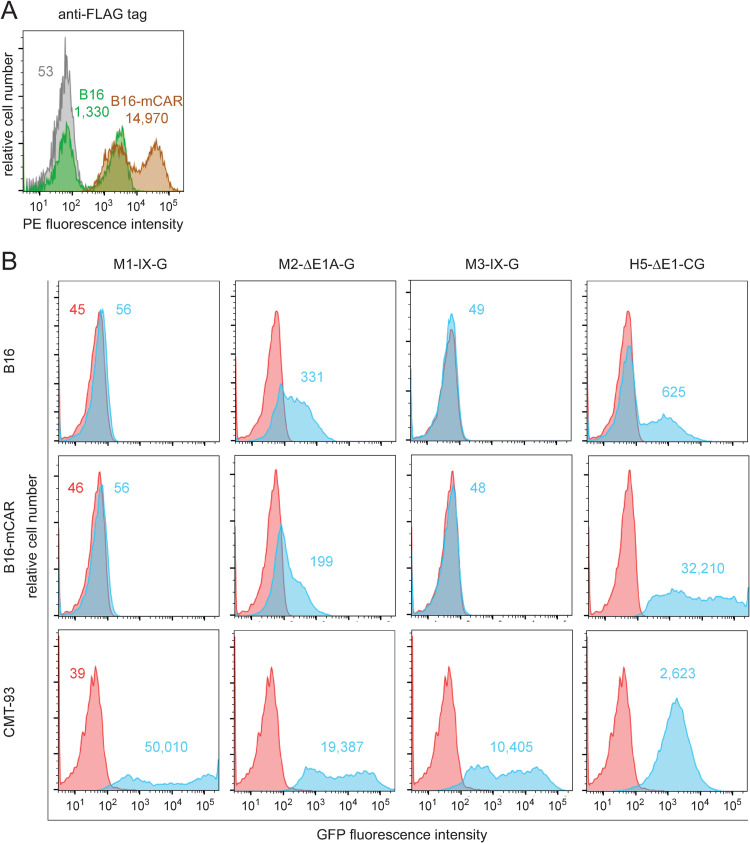
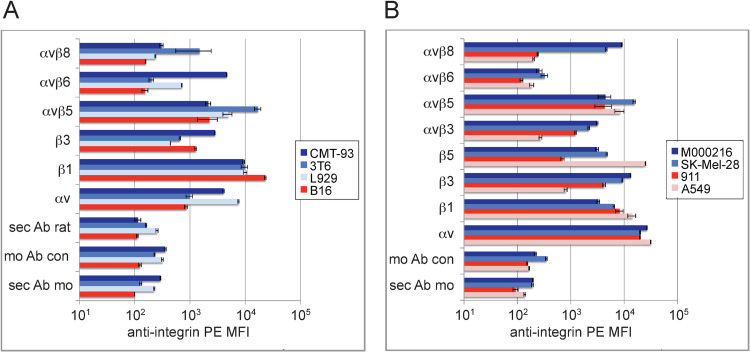
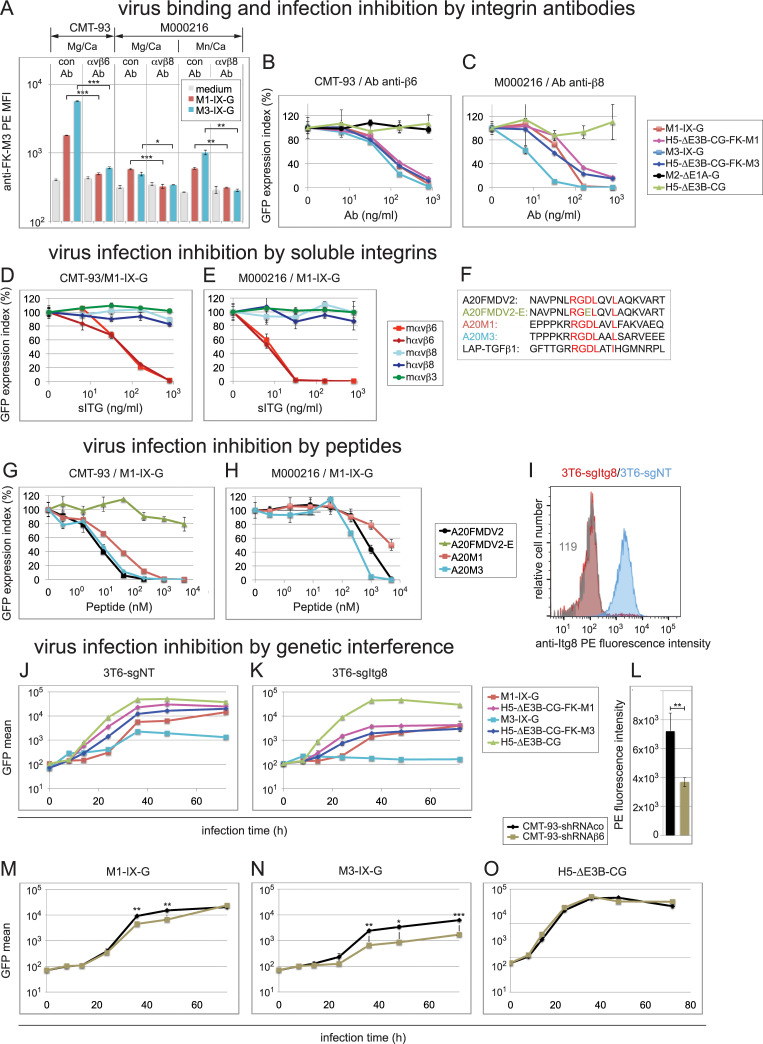
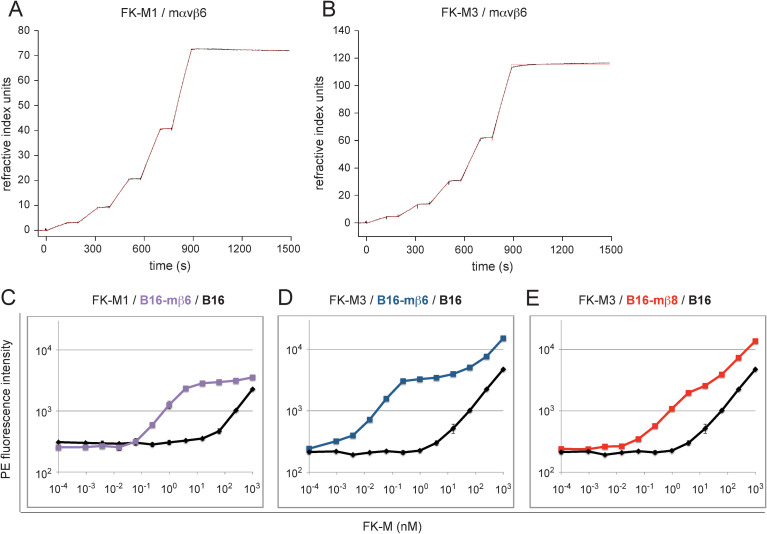
Mammalian adenoviruses (AdVs) comprise more than ~350 types including over 100 human (HAdVs) and just three mouse AdVs (MAdVs). While most HAdVs initiate infection by high affinity/avidity binding of their fiber knob (FK) protein to either coxsackievirus AdV receptor (CAR), CD46 or desmoglein (DSG)-2, MAdV-1 (M1) infection requires arginine-glycine-aspartate (RGD) binding integrins. To identify the receptors mediating MAdV infection we generated five novel reporter viruses for MAdV-1/-2/-3 (M1, M2, M3) transducing permissive murine (m) CMT-93 cells, but not B16 mouse melanoma cells expressing mCAR, human (h) CD46 or hDSG-2. Recombinant M1 or M3 FKs cross-blocked M1 and M3 but not M2 infections. Profiling of murine and human cells expressing RGD-binding integrins suggested that αvβ6 and αvβ8 heterodimers are associated with M1 and M3 infections. Ectopic expression of mβ6 in B16 cells strongly enhanced M1 and M3 binding, infection, and progeny production comparable with mαvβ6-positive CMT-93 cells, whereas mβ8 expressing cells were more permissive to M1 than M3. Anti-integrin antibodies potently blocked M1 and M3 binding and infection of CMT-93 cells and hαvβ8-positive M000216 cells. Soluble integrin αvβ6, and synthetic peptides containing the RGDLXXL sequence derived from FK-M1, FK-M3 and foot and mouth disease virus coat protein strongly interfered with M1/M3 infections, in agreement with high affinity interactions of FK-M1/FK-M3 with αvβ6/αvβ8, determined by surface plasmon resonance measurements. Molecular docking simulations of ternary complexes revealed a bent conformation of RGDLXXL-containing FK-M3 peptides on the subunit interface of αvβ6/β8, where the distal leucine residue dips into a hydrophobic pocket of β6/8, the arginine residue ionically engages αv aspartate215, and the aspartate residue coordinates a divalent cation in αvβ6/β8. Together, the RGDLXXL-bearing FKs are part of an essential mechanism for M1/M3 infection engaging murine and human αvβ6/8 integrins. These integrins are highly conserved in other mammals, and may favour cross-species virus transmission.
哺乳动物腺病毒(AdV)包含超过 350 种类型,包括超过 100 种人类(HAdV)和仅 3 种小鼠 AdV(MAdV)。虽然大多数 HAdV 通过其纤维旋钮(FK)蛋白与柯萨奇病毒 AdV 受体(CAR)、CD46 或桥粒芯糖蛋白 2(DSG-2)的高亲和力/高亲合力结合来启动感染,但 MAdV-1(M1)感染需要精氨酸-甘氨酸-天冬氨酸(RGD)结合整合素。为了鉴定介导 MAdV 感染的受体,我们生成了五种用于 MAdV-1/-2/-3(M1、M2、M3)转导允许的小鼠(m)CMT-93 细胞但不表达 mCAR、人(h)CD46 或 hDSG-2 的新型报告病毒。重组 M1 或 M3 FK 可交叉阻断 M1 和 M3 感染,但不能阻断 M2 感染。对表达 RGD 结合整合素的小鼠和人类细胞的分析表明,αvβ6 和 αvβ8 异二聚体与 M1 和 M3 感染有关。在 B16 细胞中外源性表达 mβ6 可强烈增强 M1 和 M3 的结合、感染和后代产生,与 mαvβ6 阳性 CMT-93 细胞相当,而表达 mβ8 的细胞比 M3 更允许 M1 感染。抗整合素抗体可有效阻断 M1 和 M3 与 CMT-93 细胞和 hαvβ8 阳性 M000216 细胞的结合和感染。可溶性整合素 αvβ6 以及源自 FK-M1、FK-M3 和口蹄疫病毒衣壳蛋白的含有 RGDLXXL 序列的合成肽强烈干扰 M1/M3 感染,这与通过表面等离子体共振测量确定的 FK-M1/FK-M3 与 αvβ6/αvβ8 的高亲和力相互作用一致。三元复合物的分子对接模拟显示,含 RGDLXXL 的 FK-M3 肽在 αvβ6/β8 的亚基界面上呈弯曲构象,其中远端亮氨酸残基浸入β6/8 的疏水性口袋中,精氨酸残基离子结合 αv 的天冬氨酸 215,天冬氨酸残基在 αvβ6/β8 中配位二价阳离子。总之,携带 RGDLXXL 的 FK 是 M1/M3 感染的基本机制的一部分,该机制涉及小鼠和人类的αvβ6/8 整合素。这些整合素在其他哺乳动物中高度保守,可能有利于跨物种病毒传播。