Laboratory of Herbal Medicine and Cancer Research, Institute of Oncology, Tel-Aviv Medical Center affiliated to the Faculty of Medicine, Tel-Aviv University, Tel-Aviv, Israel.
Institute of Radiotherapy, Tel-Aviv Medical Center affiliated to the Faculty of Medicine, Tel-Aviv University, Tel-Aviv, Israel.
PLoS One. 2018 Jul 3;13(7):e0198627. doi: 10.1371/journal.pone.0198627. eCollection 2018.
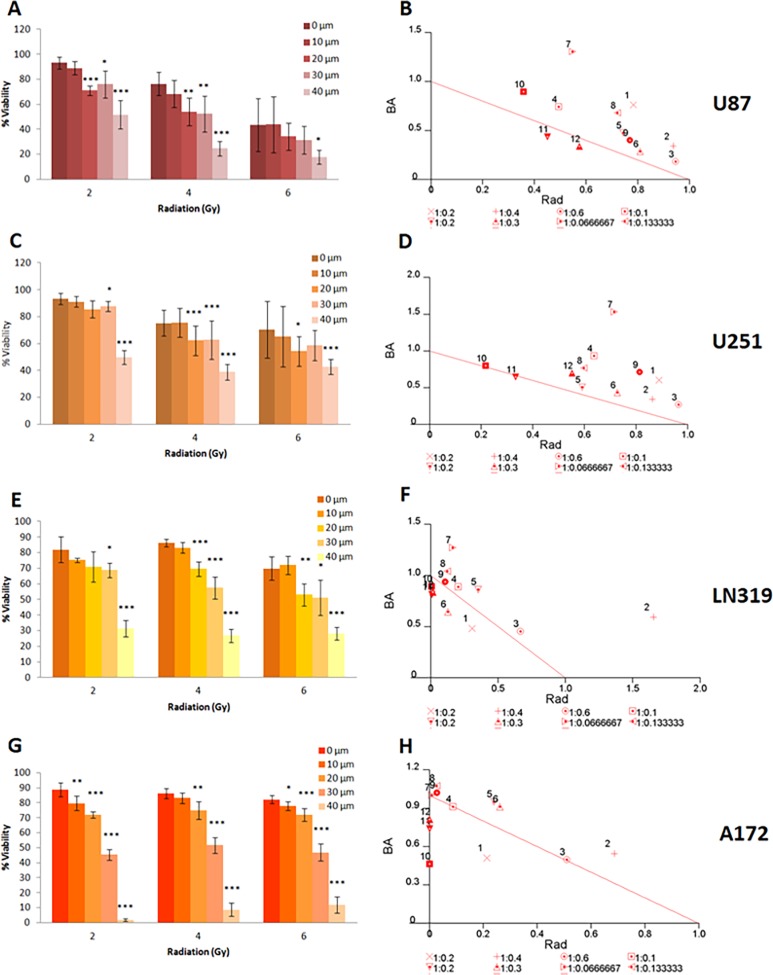
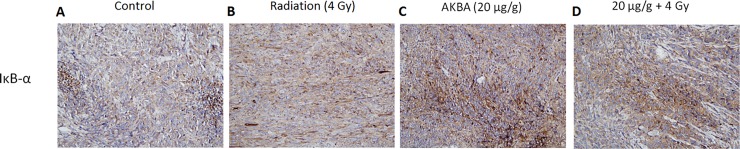
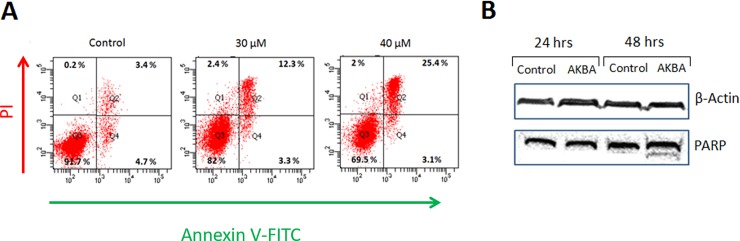
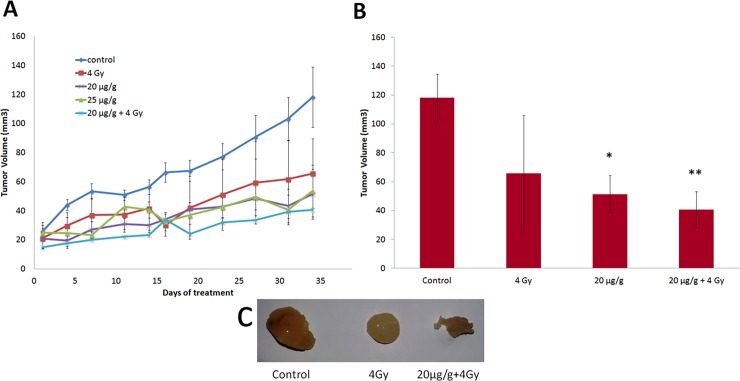
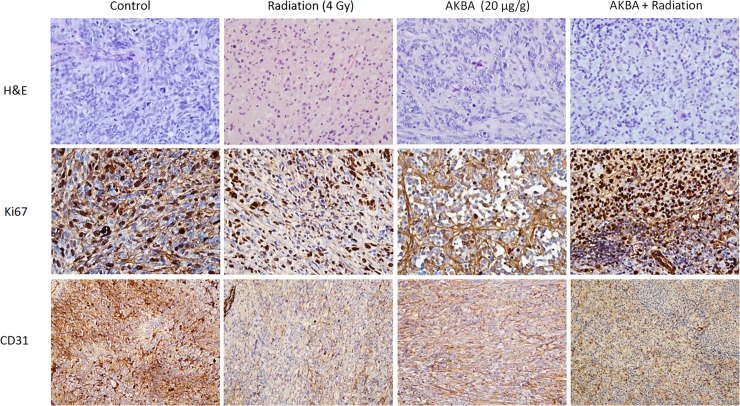
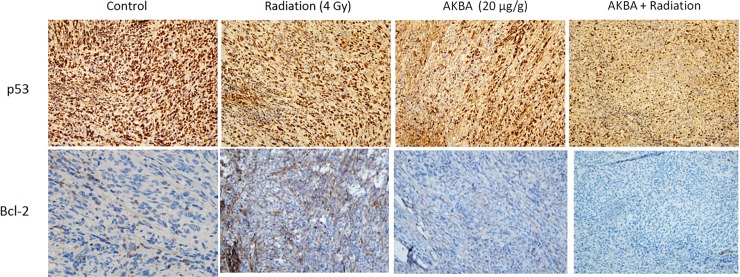
Glioblastoma multiforme (GBM) is the most common and most aggressive subtype of malignant gliomas. The current standard of care for newly diagnosed GBM patients involves maximal surgical debulking, followed by radiation therapy and temozolomide chemotherapy. Despite the advances in GBM therapy, its outcome remains poor with a median survival of less than two years. This poor outcome is partly due to the ability of GBM tumors to acquire adaptive resistance to therapy and in particular to radiation. One of the mechanisms contributing to GBM tumor progression and resistance is an aberrant activation of NF-ĸB, a family of inducible transcription factors that play a pivotal role in regulation of many immune, inflammatory and carcinogenic responses. Acetyl-11-keto-β-boswellic acid (AKBA) is a pentacyclic terpenoid extracted from the gum Ayurvedic therapeutic plant Boswellia serrata. AKBA is anti-inflammatory agent that exhibits potent cytotoxic activities against various types of tumors including GBM. One of the mechanisms underlying AKBA anti-tumor activity is its ability to modulate the NF-ĸB signaling pathway. The present study investigated in vitro and in vivo the effect of combining AKBA with ionizing radiation in the treatment of GBM and assessed AKBA anti-tumor activity and radio-enhancing potential. The effect of AKBA and/or radiation on the survival of cultured glioblastoma cancer cells was evaluated by XTT assay. The mode of interaction of treatments tested was calculated using CalcuSyn software. Inducing of apoptosis following AKBA treatment was evaluated using flow cytometry. The effect of combined treatment on the expression of PARP protein was analysed by Western blot assay. Ectopic (subcutaneous) GBM model in nude mice was used for the evaluation of the effect of combined treatment on tumor growth. Immunohistochemical analysis of formalin-fixed paraffin-embedded tumor sections was used to assess treatment-related changes in Ki-67, CD31, p53, Bcl-2 and NF-ĸB-inhibitor IĸB-α. AKBA treatment was found to inhibit the survival of all four tested cell lines in a dose dependent manner. The combined treatment resulted in a more significant inhibitory effect compared to the effect of treatment with radiation alone. A synergistic effect was detected in some of the tested cell lines. Flow cytometric analysis with Annexin V-FITC/PI double staining of AKBA treated cells indicated induction of apoptosis. AKBA apoptotic activity was also confirmed by PARP cleavage detected by Western blot analysis. The combined treatment suppressed tumor growth in vivo compared to no treatment and each treatment alone. Immunohistochemical analysis showed anti-angiogenic and anti-proliferative activity of AKBA in vivo. It also demonstrated a decrease in p53 nuclear staining and in Bcl-2 staining and an increase in IĸB-α staining following AKBA treatment both alone and in combination with radiotherapy. In this study, we demonstrated that AKBA exerts potent anti-proliferative and apoptotic activity, and significantly inhibits both the survival of glioblastoma cells in vitro and the growth of tumors generated by these cells. Combination of AKBA with radiotherapy was found to inhibit factors which involved in cell death regulation, tumor progression and radioresistence, therefore it may serve as a novel approach for GBM patients.
多形性胶质母细胞瘤(GBM)是最常见和最具侵袭性的恶性神经胶质瘤亚型。新诊断的 GBM 患者的当前标准治疗包括最大限度的手术减瘤,随后进行放射治疗和替莫唑胺化疗。尽管 GBM 治疗取得了进展,但由于 GBM 肿瘤能够获得对治疗的适应性耐药性,特别是对放射治疗的耐药性,其预后仍然很差,中位生存期不到两年。这种不良预后部分归因于 NF-ĸB 的异常激活,NF-ĸB 是一组诱导型转录因子,在调节许多免疫、炎症和致癌反应中发挥关键作用。乙酰-11-酮-β-乳香酸(AKBA)是从印度阿育吠陀治疗植物乳香树中提取的五环萜烯。AKBA 是一种抗炎剂,对包括 GBM 在内的多种类型的肿瘤具有强烈的细胞毒性活性。AKBA 抗肿瘤活性的机制之一是其调节 NF-ĸB 信号通路的能力。本研究在体外和体内研究了 AKBA 与电离辐射联合治疗 GBM 的效果,并评估了 AKBA 的抗肿瘤活性和放射增强潜力。通过 XTT 测定评估 AKBA 和/或辐射对培养的神经胶质瘤癌细胞存活的影响。使用 CalcuSyn 软件计算测试处理的相互作用模式。用流式细胞术评估 AKBA 处理后细胞凋亡的诱导。通过 Western blot 分析评估联合治疗对 PARP 蛋白表达的影响。使用裸鼠异位(皮下)GBM 模型评估联合治疗对肿瘤生长的影响。用免疫组化分析福尔马林固定石蜡包埋肿瘤切片,评估治疗相关的 Ki-67、CD31、p53、Bcl-2 和 NF-ĸB 抑制剂 IKB-α 变化。AKBA 处理发现以剂量依赖的方式抑制所有四种测试细胞系的存活。与单独接受放射治疗相比,联合治疗导致更显著的抑制作用。在一些测试的细胞系中检测到协同作用。用 Annexin V-FITC/PI 双重染色的 AKBA 处理细胞的流式细胞术分析表明诱导细胞凋亡。通过 Western blot 分析检测到 PARP 切割,也证实了 AKBA 的凋亡活性。与未治疗和单独治疗相比,联合治疗在体内抑制肿瘤生长。免疫组化分析显示 AKBA 在体内具有抗血管生成和抗增殖活性。它还表明,AKBA 单独和与放射治疗联合治疗后,p53 核染色减少,Bcl-2 染色减少,IKB-α 染色增加。在这项研究中,我们证明了 AKBA 具有强大的抗增殖和凋亡活性,并显著抑制体外神经胶质瘤细胞的存活和这些细胞产生的肿瘤的生长。AKBA 与放射治疗的联合使用被发现抑制了参与细胞死亡调节、肿瘤进展和放射抵抗的因素,因此它可能成为 GBM 患者的一种新方法。