College of Laboratory Medicine, Dalian Medical University, Dalian, 116044, Liaoning Province, China.
Medical College, Dalian University, Dalian, 116622, Liaoning Province, China.
J Hematol Oncol. 2018 Jul 3;11(1):89. doi: 10.1186/s13045-018-0632-2.
Colorectal cancer (CRC) arises in a multistep molecular network process, which is from either discrete genetic perturbation or epigenetic dysregulation. The long non-coding RNAs (lncRNAs), emerging as key molecules in human malignancy, has become one of the hot topics in RNA biology. Aberrant O-glycosylation is a well-described hallmark of many cancers. GALNT7 acts as a glycosyltransferase in protein O-glycosylation, involving in the occurrence and development of CRC.
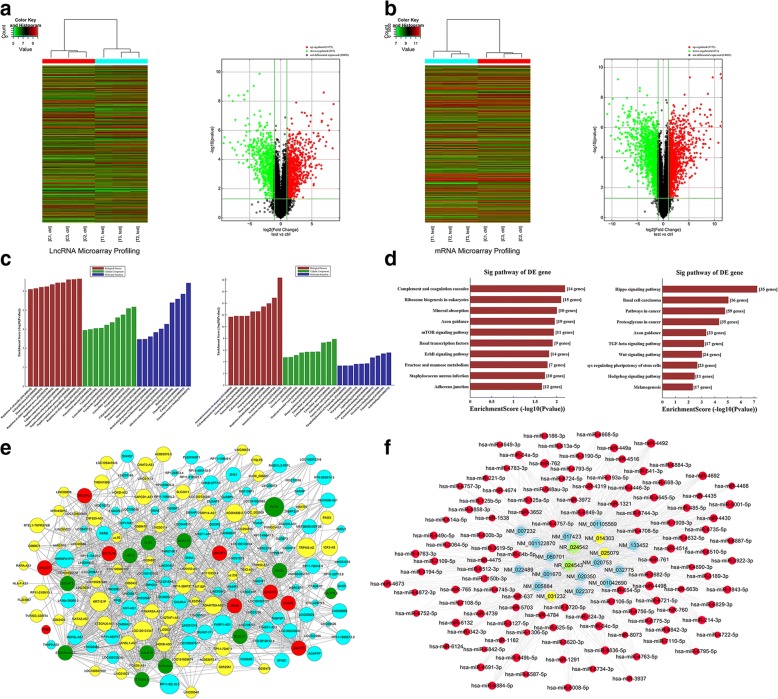
The microarrays were used to survey the lncRNA and mRNA expression profiles of primary CRC cell line SW480 and metastatic CRC cell line SW620. Cell proliferation, migration, invasion, and apoptosis were assayed. Xenograft mouse models were used to determine the role of lncRNA-SNHG7 in CRC in vivo. In addition, CNC analysis and competing endogenous analysis were used to detect differential SNHG7 and relational miRNAs expression in CRC cell lines.
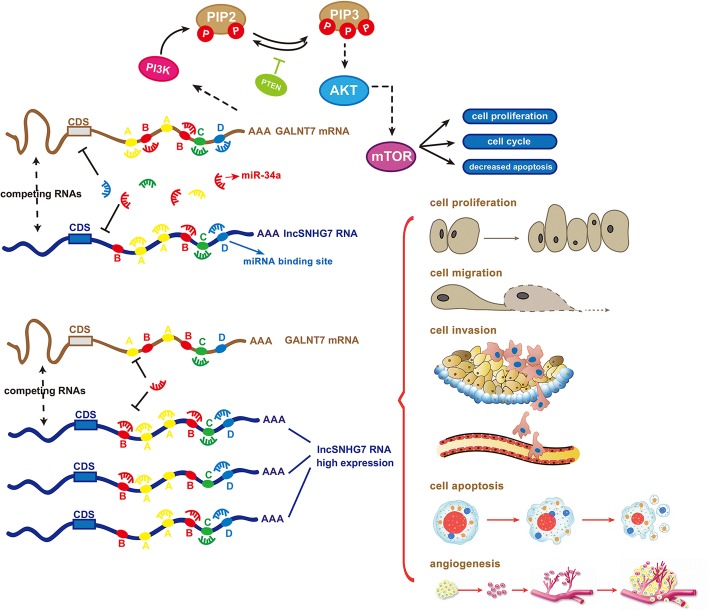
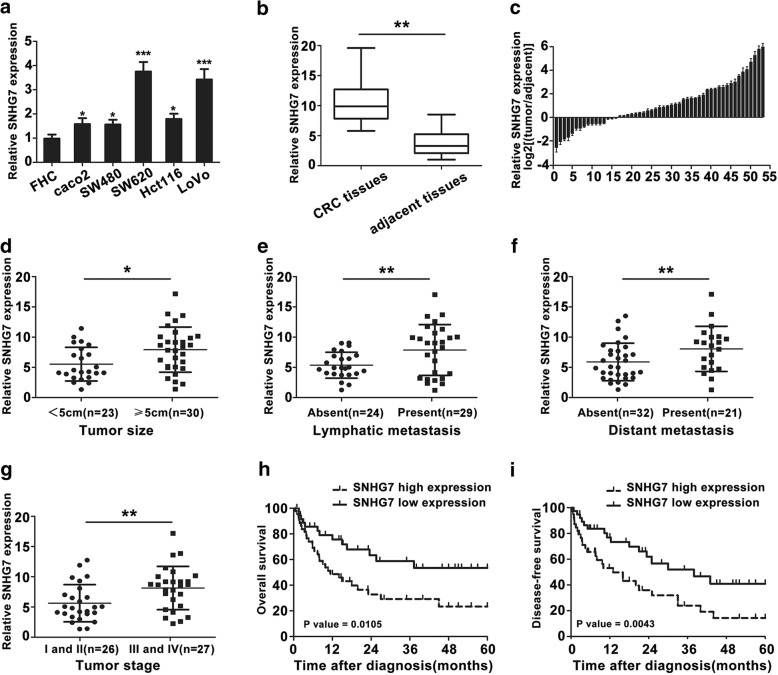
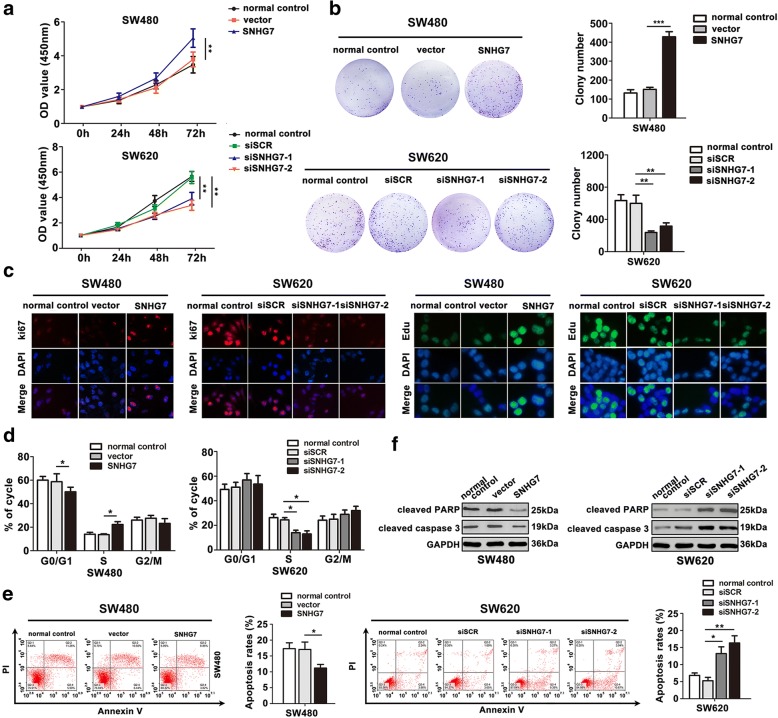
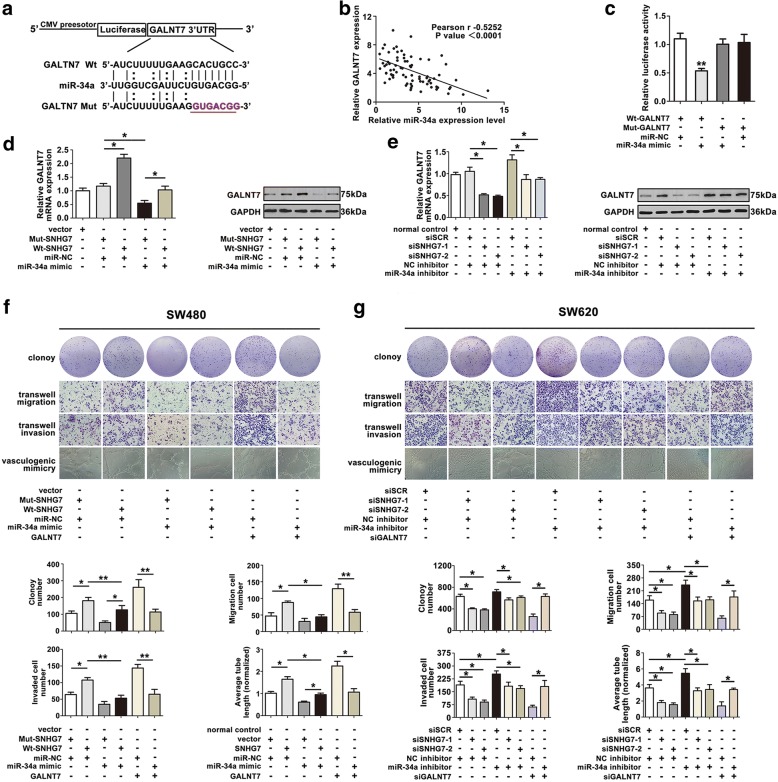
SNHG7 expression showed a high fold (SW620/SW480) in CRC microarrays. The CRC patients with high expression of SNHG7 had a significantly poor prognosis. Furthermore, SNHG7 promoted CRC cell proliferation, metastasis, mediated cell cycle, and inhibited apoptosis. SNHG7 and GALNT7 were observed for co-expression by CNC analysis, and a negative correlation of SNHG7 and miR-34a were found by competing endogenous RNA (ceRNA) analysis. Further results indicated that SNHG7 facilitated the proliferation and metastasis as a competing endogenous RNA to regulate GALNT7 expression by sponging miR-34a in CRC cell lines. SNHG7 also played the oncogenic role in regulating PI3K/Akt/mTOR pathway by competing endogenous miR-34a and GALNT7.
The CRC-related SNHG7 and miR-34a might be implicated in CRC progression via GALNT7, suggesting the potential usage of SNHG7/miR-34a/GALNT7 axis in CRC treatment.
结直肠癌(CRC)是一种多步骤的分子网络过程,其起源于离散的遗传扰动或表观遗传失调。长链非编码 RNA(lncRNA)作为人类恶性肿瘤的关键分子之一,已成为 RNA 生物学的热门话题之一。异常的 O-糖基化是许多癌症的一个显著特征。GALNT7 作为蛋白质 O-糖基化的糖基转移酶,参与 CRC 的发生和发展。
使用微阵列检测原发性 CRC 细胞系 SW480 和转移性 CRC 细胞系 SW620 的 lncRNA 和 mRNA 表达谱。测定细胞增殖、迁移、侵袭和凋亡。使用异种移植小鼠模型在体内确定 lncRNA-SNHG7 在 CRC 中的作用。此外,CNC 分析和竞争性内源性分析用于检测 CRC 细胞系中差异表达的 SNHG7 和相关 miRNA。
SNHG7 在 CRC 微阵列中表达呈高倍数(SW620/SW480)。SNHG7 高表达的 CRC 患者预后明显较差。此外,SNHG7 促进 CRC 细胞增殖、转移、调节细胞周期并抑制细胞凋亡。CNC 分析观察到 SNHG7 和 GALNT7 共表达,竞争性内源性 RNA(ceRNA)分析发现 SNHG7 和 miR-34a 呈负相关。进一步的结果表明,SNHG7 通过作为竞争性内源性 RNA 来调节 miR-34a 来调节 GALNT7 的表达,从而促进 CRC 细胞中的增殖和转移。SNHG7 还通过竞争内源性 miR-34a 和 GALNT7 调节 PI3K/Akt/mTOR 通路发挥致癌作用。
CRC 相关的 SNHG7 和 miR-34a 可能通过 GALNT7 参与 CRC 进展,提示 SNHG7/miR-34a/GALNT7 轴在 CRC 治疗中的潜在应用。