Manchester Centre for Synthetic Biology of Fine and Speciality Chemicals (SYNBIOCHEM), Manchester Institute of Biotechnology, School of Chemistry, Faculty of Science and Engineering, University of Manchester, 131 Princess Street, Manchester, M1 7DN, UK.
BMC Genomics. 2018 Jul 4;19(1):519. doi: 10.1186/s12864-018-4905-5.
Streptomyces species produce a vast diversity of secondary metabolites of clinical and biotechnological importance, in particular antibiotics. Recent developments in metabolic engineering, synthetic and systems biology have opened new opportunities to exploit Streptomyces secondary metabolism, but achieving industry-level production without time-consuming optimization has remained challenging. Genome-scale metabolic modelling has been shown to be a powerful tool to guide metabolic engineering strategies for accelerated strain optimization, and several generations of models of Streptomyces metabolism have been developed for this purpose.
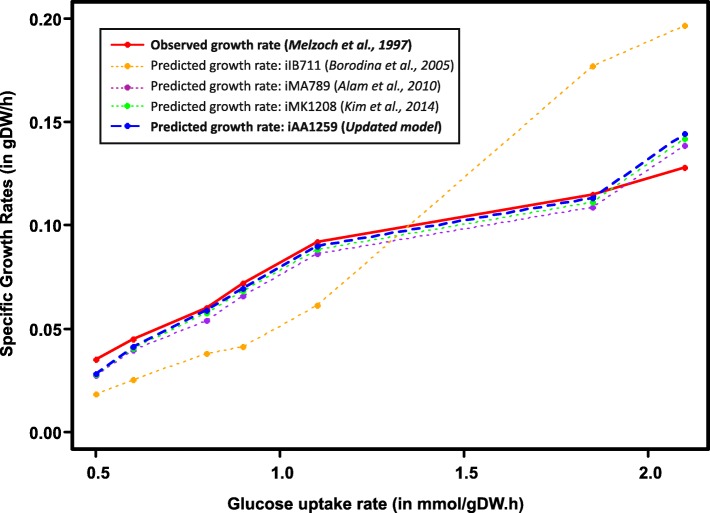
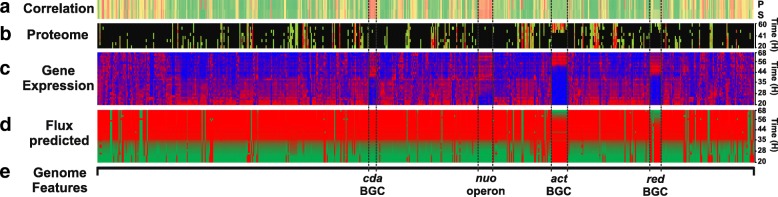
Here, we present the most recent update of a genome-scale stoichiometric constraint-based model of the metabolism of Streptomyces coelicolor, the major model organism for the production of antibiotics in the genus. We show that the updated model enables better metabolic flux and biomass predictions and facilitates the integrative analysis of multi-omics data such as transcriptomics, proteomics and metabolomics.
The updated model presented here provides an enhanced basis for the next generation of metabolic engineering attempts in Streptomyces.
链霉菌属产生了大量具有临床和生物技术重要性的次级代谢产物,特别是抗生素。代谢工程、合成和系统生物学的最新发展为开发链霉菌次级代谢开辟了新的机会,但在不耗费大量时间进行优化的情况下实现工业级生产仍然具有挑战性。基因组规模的代谢建模已被证明是指导代谢工程策略以加速菌株优化的有力工具,为此已经开发了几代链霉菌代谢模型。
在这里,我们展示了链霉菌协同色链霉菌代谢的最新基因组规模化学计量约束基模型更新,该模型是该属抗生素生产的主要模型生物。我们表明,更新后的模型可以更好地预测代谢通量和生物量,并促进转录组学、蛋白质组学和代谢组学等多组学数据的综合分析。
这里提出的更新模型为链霉菌的下一代代谢工程尝试提供了更好的基础。