School of Health Sciences Building 2242, Central Michigan University, Mount Pleasant, MI, 48859, USA.
Division of Maternal Fetal Medicine, BC Women's Hospital, Vancouver, Canada.
BMC Pregnancy Childbirth. 2018 Jul 4;18(1):285. doi: 10.1186/s12884-018-1896-9.
Placenta plays a central role in mediating growth and development of fetuses. Sex-specific placentas may complicate this role.
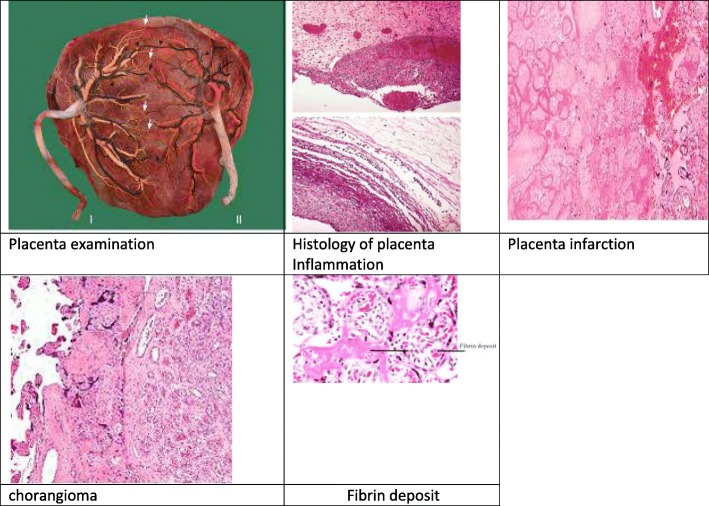
The study aimed at investigating the association between fetal sex and placental pathological findings in twin gestations using generalized estimating equation modeling. We used a large population-based clinical data born in British Columbia (BC) and linked the fetal-maternal data to hand-searched pathology reports of 1493 twin placentas from twins born in BC Women hospital. We analyzed the data using generalized estimating equations taking the cluster nature of twins into consideration.
About 26.5% of twins were monochorionic and 73.5% were dizygotic. Most twins were male (51.3%). About 2/3 of twins were sex concordant (66.6%). Of the sex concordant twins, similar percentages were male-male (34.7%) and female-female (31.2%). Of the sex discordant twins, the male-female (33.3%) group constituted about 1/3 of the whole population. Adjusted for chorionicity, birth weight discordance ≥30% and gestational age, the odds of chorionitis (1.38, 95% CI = 1.04-1.84), anastomosis (1.63, 95% CI = 1.22-2.19), unequal sharing of placenta (1.72, 95% CI = 1.11-2.64), placental inflammation (1.30, 95% CI = 1.05-1.62) and lesions (1.83, 95% CI = 1.02-3.31) were higher in male twins compared with females. Twins of either sex from sex-discordant pairs were less likely to have placental anastomosis compared to the reference category. Males from male-male pairs had higher odds of unequal placental sharing (74% higher) and composite inflammation (52% higher) compared with the reference twins.
Our findings suggest a relationship between sex and placental pathological results.
胎盘在介导胎儿生长发育中起着核心作用。性别的胎盘可能会使这种作用复杂化。
本研究旨在使用广义估计方程模型研究双胞胎妊娠中胎儿性别与胎盘病理结果之间的关系。我们使用了一项基于人群的大型临床数据,该数据来自不列颠哥伦比亚省(BC)出生的婴儿,并将胎儿-母体数据与在 BC 妇女医院出生的双胞胎的 1493 份胎盘的手工搜索病理报告进行了关联。我们使用广义估计方程分析数据,考虑了双胞胎的聚类性质。
约 26.5%的双胞胎为单绒毛膜,73.5%为双绒毛膜。大多数双胞胎为男性(51.3%)。大约 2/3的双胞胎为性别一致(66.6%)。在性别一致的双胞胎中,男性-男性(34.7%)和女性-女性(31.2%)的比例相似。在性别不一致的双胞胎中,男性-女性(33.3%)组约占总人口的 1/3。调整绒毛膜性、出生体重差异≥30%和胎龄后,绒毛膜炎(比值比 1.38,95%置信区间 = 1.04-1.84)、吻合(比值比 1.63,95%置信区间 = 1.22-2.19)、胎盘不均等共享(比值比 1.72,95%置信区间 = 1.11-2.64)、胎盘炎症(比值比 1.30,95%置信区间 = 1.05-1.62)和病变(比值比 1.83,95%置信区间 = 1.02-3.31)的风险在男性双胞胎中高于女性双胞胎。与参考类别相比,来自性别不一致对的双胞胎中任何性别的双胞胎吻合的可能性较低。与参考双胞胎相比,来自男性-男性对的男性双胞胎的胎盘不均等共享(高 74%)和复合炎症(高 52%)的可能性更高。
我们的研究结果表明,性别与胎盘病理结果之间存在关联。