Food Microbiology, Wageningen University & Research, P.O. Box 17, 6700AA, Wageningen, The Netherlands.
Arla Innovation Centre, Arla Foods Amba, Agro Food Park 19, 8200, Aarhus N, Denmark.
Microb Cell Fact. 2018 Jul 4;17(1):104. doi: 10.1186/s12934-018-0950-7.
Cheese ripening is a complex, time consuming and expensive process, which involves the generation of precursors from carbohydrates, proteins and fats and their subsequent conversion into a wide range of compounds responsible for the flavour and texture of the cheese. This study aims to investigate production of cheese aroma compounds outside the cheese matrix that could be applied for instance as food supplements in dairy or non-dairy products.
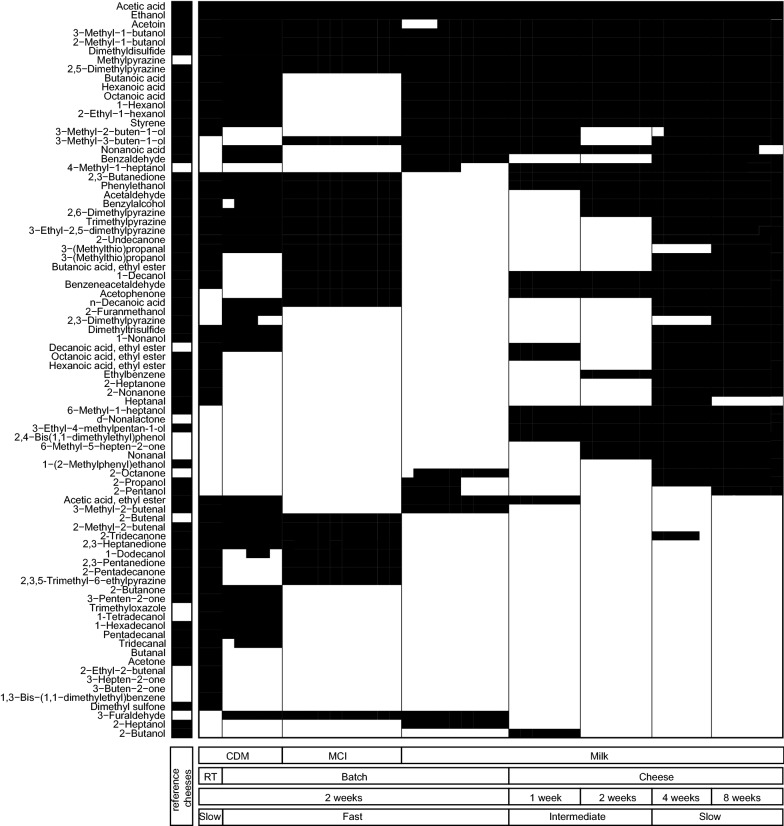
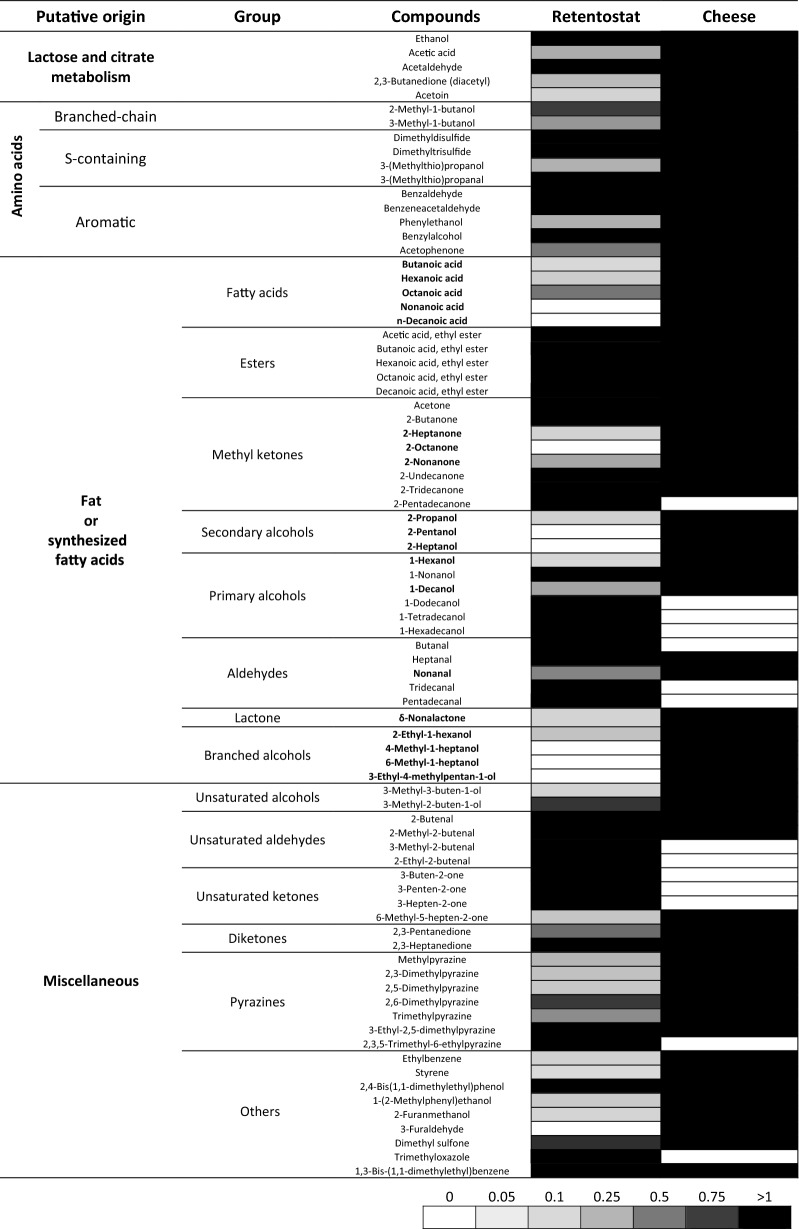
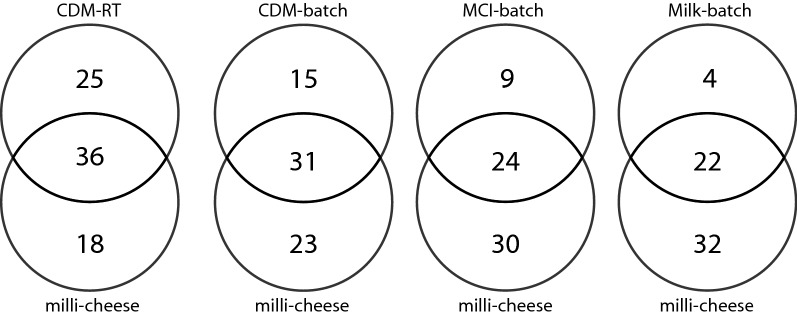
In this study, aroma formation by a dairy Lactococcus lactis was analysed as a function of the growth medium [milk, hydrolysed micellar casein isolate (MCI) and chemically defined medium (CDM)] and the cultivation conditions (batch culture, retentostat culture and a milli-cheese model system). In the retentostat cultures, the nutrient supply was severely restricted resulting in low growth rates (~ 0.001 h), thereby mimicking cheese ripening conditions in which nutrients are scarce and bacteria hardly grow. In total 82 volatile organic compounds were produced by the bacteria. Despite the use of a chemically defined medium, retentostat cultures had the biggest qualitative overlap in aroma production with the milli-cheese model system (36 out of 54 compounds). In the retentostat cultures, 52 known cheese compounds were produced and several important cheese aroma compounds and/or compounds with a buttery or cheese-like aroma increased in retentostat cultures compared to batch cultures and milli-cheeses, such as esters, methyl ketones, diketones and unsaturated ketones. In cultures on CDM and MCI, free fatty acids and their corresponding degradation products were underrepresented compared to what was found in the milli-cheeses. Addition of a mixture of free fatty acids to CDM and MCI could help to enhance flavour formation in these media, thereby even better resembling flavour formation in cheese.
This study demonstrates that retentostat cultivation is the preferred method to produce cheese flavours outside the cheese matrix by mimicking the slow growth of bacteria during cheese ripening.
奶酪的成熟是一个复杂、耗时且昂贵的过程,涉及碳水化合物、蛋白质和脂肪的前体生成,以及随后将其转化为负责奶酪风味和质地的广泛化合物。本研究旨在研究奶酪基质外产生奶酪香气化合物的方法,例如将其作为食品补充剂应用于乳制品或非乳制品中。
在这项研究中,分析了乳球菌(Lactococcus lactis)在不同生长培养基(牛奶、水解微胶束酪蛋白分离物(MCI)和化学定义培养基(CDM))和培养条件(分批培养、恒化器培养和毫奶酪模型系统)下的香气形成情况。在恒化器培养中,营养供应受到严重限制,导致生长速度非常缓慢(~0.001 h),从而模拟了奶酪成熟过程中营养物质稀缺且细菌几乎不生长的条件。细菌总共产生了 82 种挥发性有机化合物。尽管使用了化学定义培养基,但恒化器培养与毫奶酪模型系统在香气产生方面具有最大的定性重叠(54 种化合物中有 36 种)。在恒化器培养中,产生了 52 种已知的奶酪化合物,并且与分批培养和毫奶酪相比,几种重要的奶酪香气化合物和/或具有黄油或奶酪样香气的化合物在恒化器培养中增加,例如酯类、甲基酮、二酮和不饱和酮。在 CDM 和 MCI 培养物中,与毫奶酪相比,游离脂肪酸及其相应的降解产物含量较低。在 CDM 和 MCI 中添加游离脂肪酸混合物可以帮助增强这些培养基中的风味形成,从而更好地模拟奶酪中的风味形成。
本研究表明,恒化器培养是通过模拟奶酪成熟过程中细菌缓慢生长来在奶酪基质外产生奶酪风味的首选方法。