Centre for Brain Research, Faculty of Medical and Health Sciences, University of Auckland, Auckland 1023, New Zealand.
Department of Molecular Medicine and Pathology, School of Medical Sciences, Faculty of Medical and Health Sciences, University of Auckland, Auckland 1023, New Zealand.
Biosensors (Basel). 2018 Jul 4;8(3):64. doi: 10.3390/bios8030064.
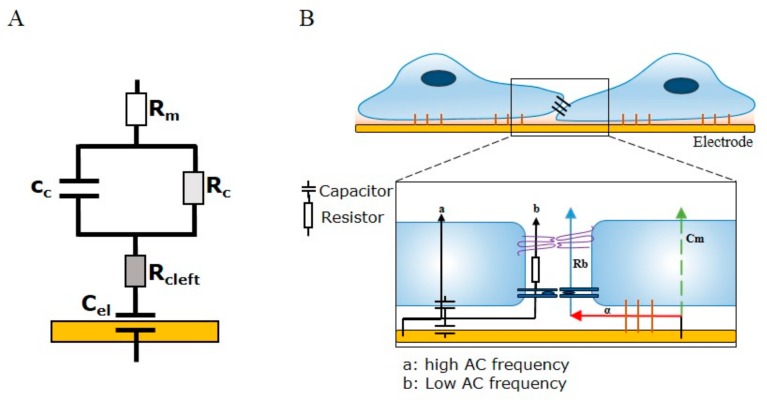
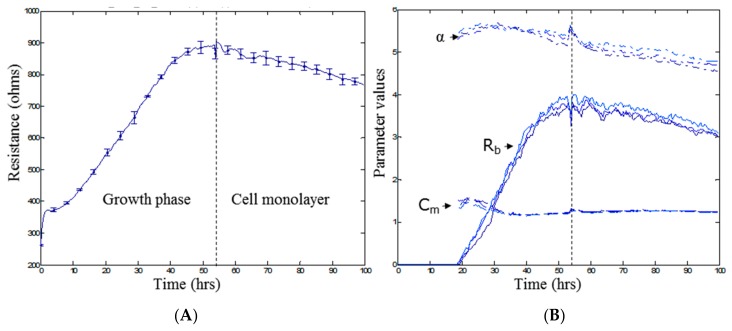
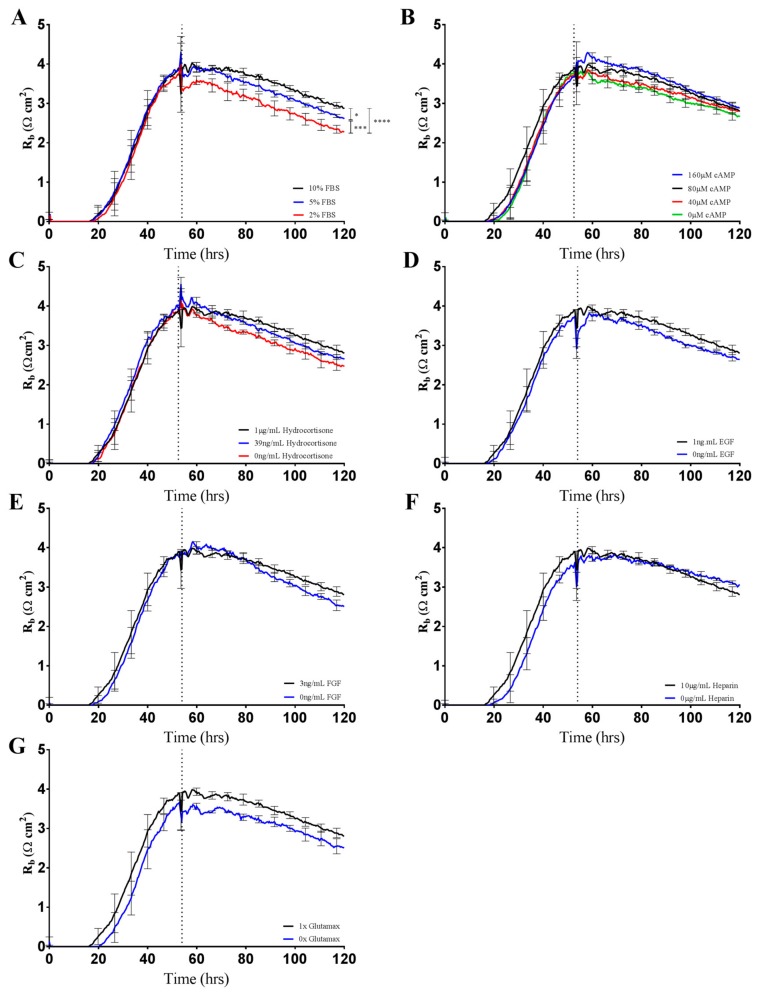
In this paper, we demonstrate the application of electrical cell-substrate impedance sensing (ECIS) technology for measuring differences in the formation of a strong and durable endothelial barrier model. In addition, we highlight the capacity of ECIS technology to model the parameters of the physical barrier associated with (I) the paracellular space (referred to as R) and (II) the basal adhesion of the endothelial cells (α, alpha). Physiologically, both parameters are very important for the correct formation of endothelial barriers. ECIS technology is the only commercially available technology that can measure and model these parameters independently of each other, which is important in the context of ascertaining whether a change in overall barrier resistance (R) occurs because of molecular changes in the paracellular junctional molecules or changes in the basal adhesion molecules. Finally, we show that the temporal changes observed in the paracellular R can be associated with changes in specific junctional proteins (CD144, ZO-1, and catenins), which have major roles in governing the overall strength of the junctional communication between neighbouring endothelial cells.
在本文中,我们展示了电细胞-基质阻抗传感 (ECIS) 技术在测量形成强大而持久的内皮屏障模型方面的应用。此外,我们强调了 ECIS 技术模拟与(I)细胞旁空间(称为 R)和(II)内皮细胞基底附着相关的物理屏障参数的能力(α,α)。从生理上讲,这两个参数对于正确形成内皮屏障都非常重要。ECIS 技术是唯一可商用的能够独立测量和模拟这些参数的技术,这在确定整体屏障电阻 (R) 的变化是否是由于细胞旁连接分子的分子变化或基底附着分子的变化而发生的方面非常重要。最后,我们表明,观察到的细胞旁 R 的时间变化可以与特定连接蛋白(CD144、ZO-1 和连接蛋白)的变化相关联,这些蛋白在调节相邻内皮细胞之间的连接通讯的整体强度方面起着重要作用。