Department of Radiation Oncology, Qilu Hospital of Shandong University, Jinan, Shandong, P.R. China.
Department of Radiation Oncology, Shandong Provincial Cancer Hospital, Jinan, Shandong, P.R. China.
Sci Rep. 2018 Jul 4;8(1):10101. doi: 10.1038/s41598-018-28268-2.
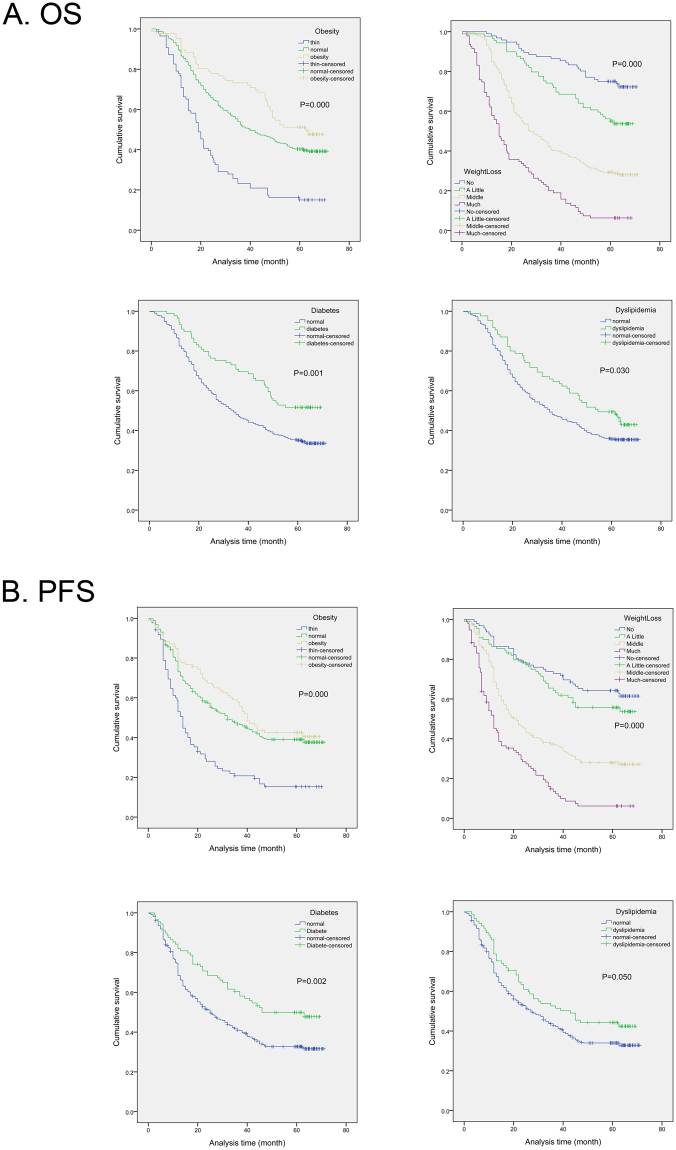
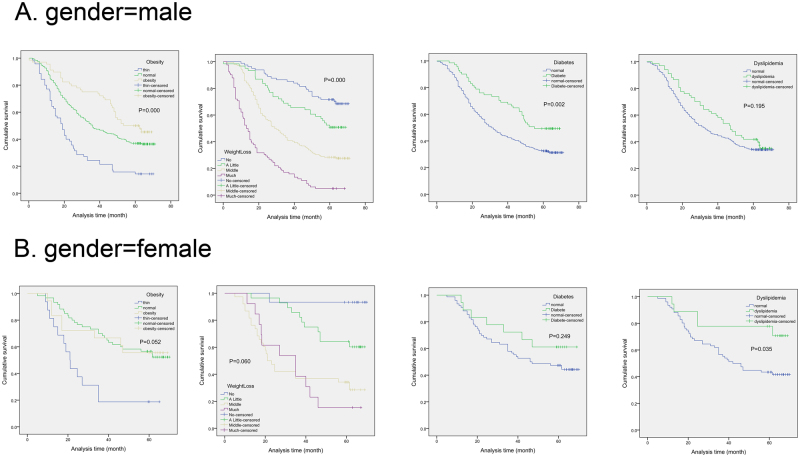
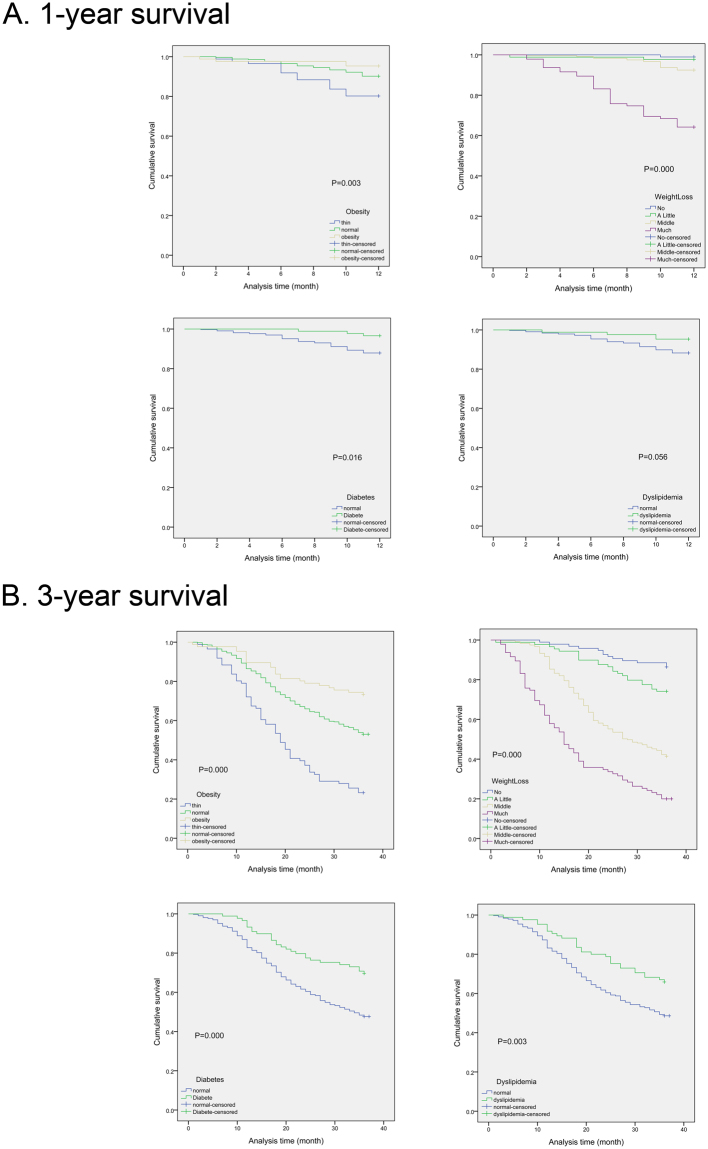
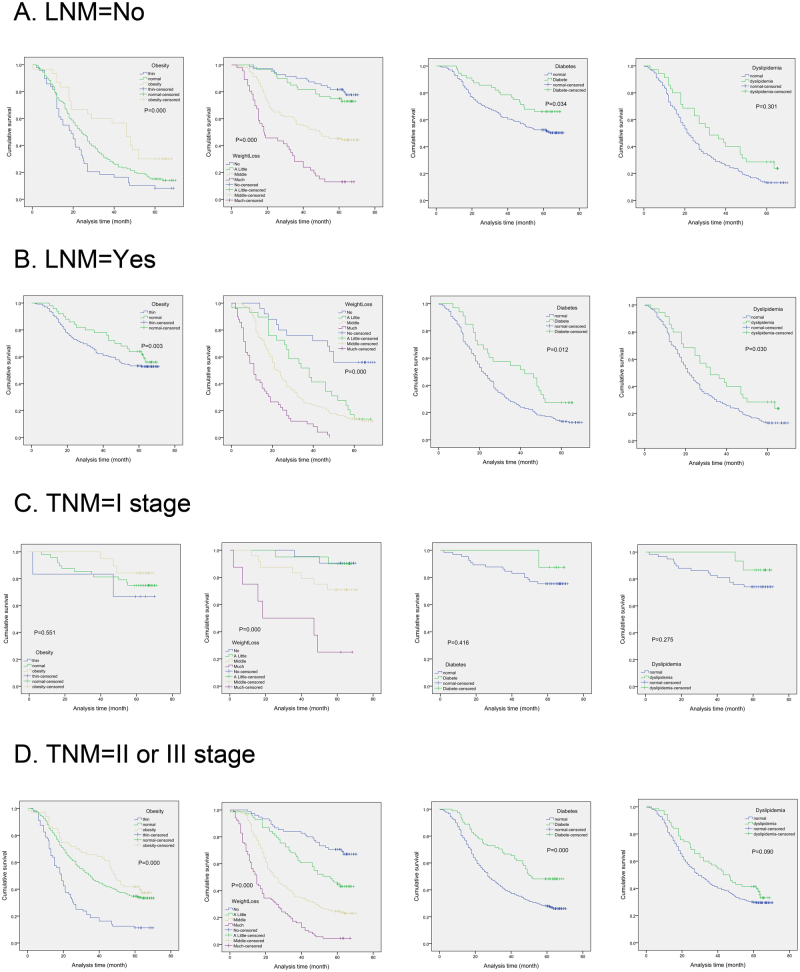
Our study aimed to investigate the association between metabolic syndrome and postoperative survival in patients with esophageal squamous cell carcinoma, and evaluate whether metabolic syndrome can predict the prognosis in esophageal cancer patients. The retrospective study reviewed 519 patients with esophageal squamous cell carcinoma who had received esophagetomy and lymphnode dissections in the Department of Thoracic Surgery, Qilu Hospital of Shandong University between January 2007 and December 2011. All patients were followed up until December 2016. The median follow-up time was 39.59 months (range 0.25-72 months). The 3-year and 5-year survival rate was 51.4% and 37.0%, respectively. Kaplan-Meier survival analysis revealed a significant correlation between OS and obesity (P = 0.000), weight loss (P = 0.000), diabetes (P = 0.001) and dyslipidemia (P = 0.030). Multivariate analysis indicated that advanced TNM staging (P = 0.007, HR: 1.760, 95% CI: 1.167-2.654) and more weight loss (P = 0.000, HR: 1.961, 95% CI: 1.697-2.267) were independent factors for adverse prognosis of esophageal squamous carcinoma patients. In contrast, diabetes was a protective factor in the prognosis of patients with esophageal cancer (P = 0.018, HR: 0.668, 95% CI: 0.478-0.933). Our findings suggest that TNM staging, weight changes and diabetes were independent predictors for the prognosis of esophageal cancer patients.
我们的研究旨在探讨代谢综合征与食管鳞状细胞癌患者术后生存的关系,并评估代谢综合征是否能预测食管癌患者的预后。这项回顾性研究回顾了 2007 年 1 月至 2011 年 12 月期间在山东大学齐鲁医院胸外科接受食管切除术和淋巴结清扫术的 519 例食管鳞状细胞癌患者。所有患者均随访至 2016 年 12 月。中位随访时间为 39.59 个月(范围 0.25-72 个月)。3 年和 5 年生存率分别为 51.4%和 37.0%。Kaplan-Meier 生存分析显示 OS 与肥胖(P=0.000)、体重减轻(P=0.000)、糖尿病(P=0.001)和血脂异常(P=0.030)显著相关。多因素分析表明,晚期 TNM 分期(P=0.007,HR:1.760,95%CI:1.167-2.654)和更多的体重减轻(P=0.000,HR:1.961,95%CI:1.697-2.267)是食管鳞状细胞癌患者不良预后的独立因素。相比之下,糖尿病是食管癌患者预后的保护因素(P=0.018,HR:0.668,95%CI:0.478-0.933)。我们的研究结果表明,TNM 分期、体重变化和糖尿病是食管癌患者预后的独立预测因素。