Diagnostic and Research Center, Institute of Pathology, Medical University of Graz, Neue Stiftingtalstraße 6, Graz, 8036, Austria.
BMC Cancer. 2018 Jul 6;18(1):717. doi: 10.1186/s12885-018-4640-y.
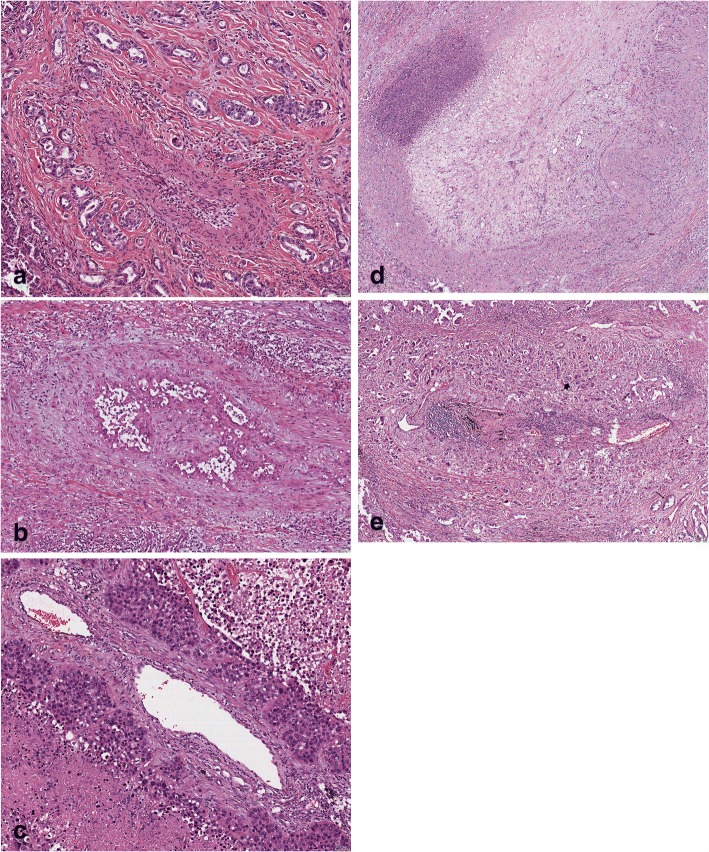
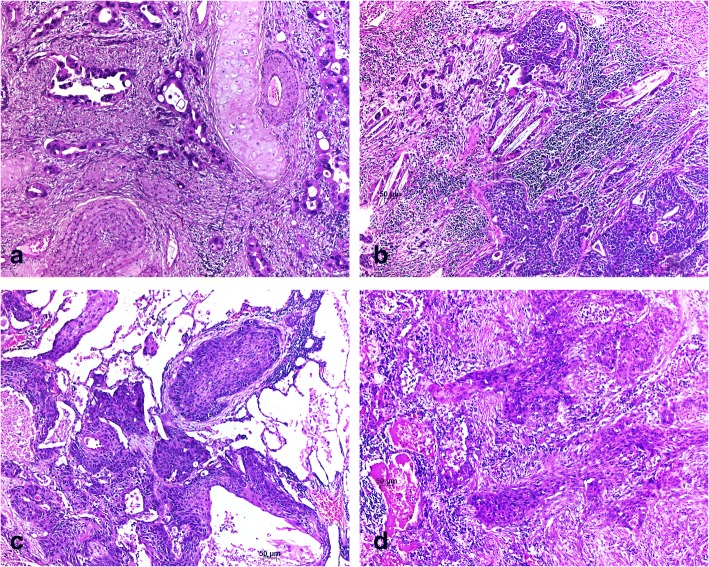
Epithelial-to-mesenchymal transition (EMT) is one mechanism of carcinoma migration, while complex tumour migration or bulk migration is another - best demontrated by tumour cells invading blood vessels.
Thirty cases of non-small cell lung carcinomas were used for identifying genes responsible for bulk cell migration, 232 squamous cell and adenocarcinomas to identify bulk migration rates. Genes expressed differently in the primary tumour and in the invasion front were regarded as relevant in migration and further validated in 528 NSCLC cases represented on tissue microarrays (TMAs) and metastasis TMAs.
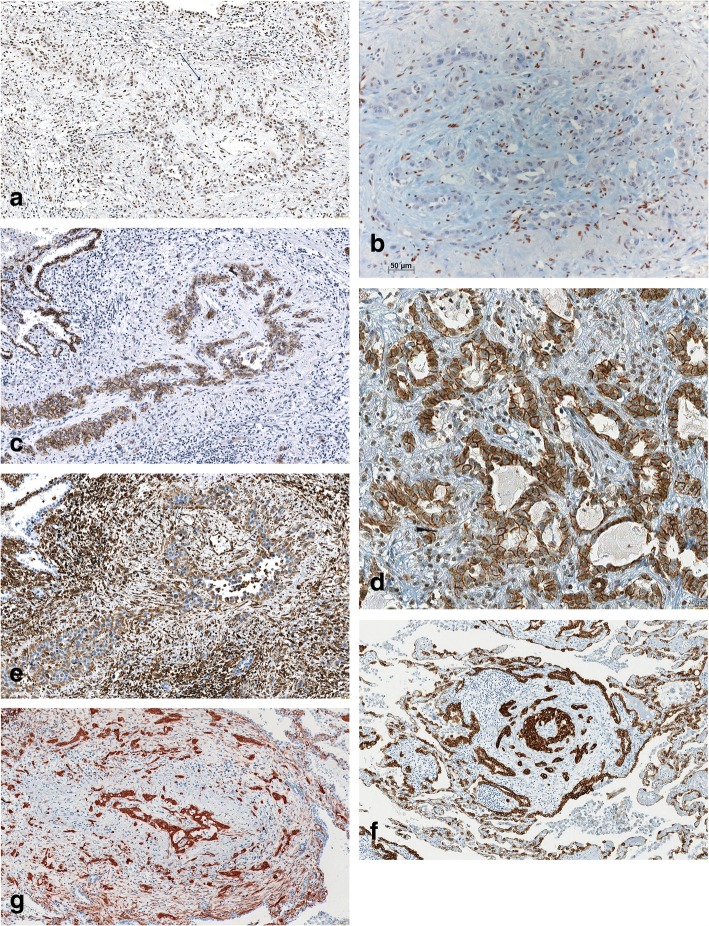
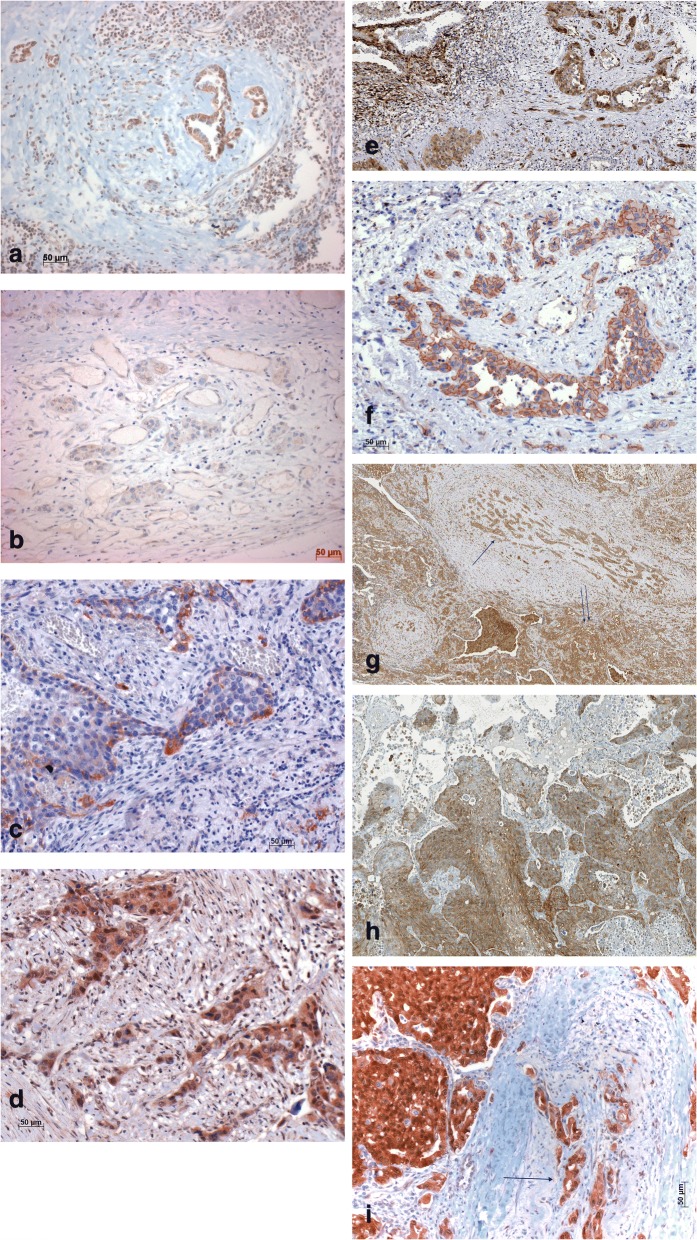
Markers relevant for bulk cancer cell migration were regulated differently when compared with EMT: Twist expressed in primary tumour, invasion front, and metastasis was not associated with TGFβ1 and canonical Wnt, as Slug, Snail, and Smads were negative and β-Catenin expressed membraneously. In the majority of tumours, E-Cadherin was downregulated at the invasive front, but not absent, but, coexpressed with N-Cadherin. Vimentin was coexpressed with cytokeratins at the invasion site in few cases, whereas fascin expression was seen in a majority. Expression of ERK1/2 was downregulated, PLCγ was only expressed at the invasive front and in metastasis. Brk and Mad, genes identified in Drosophila border cell migration, might be important for bulk migration and metastasis, together with invadipodia proteins Tks5 and Rab40B, which were only upregulated at the invasive front and in metastasis. CXCR1 was expressed equally in all carcinomas, as opposed to CXCR2 and 4, which were only expressed in few tumours.
Bulk cancer cell migration seems predominant in AC and SCC. Twist, vimentin, fascin, Mad, Brk, Tsk5, Rab40B, ERK1/2 and PLCγ are associated with bulk cancer cell migration. This type of migration requires an orchestrated activation of proteins to keep the cells bound to each other and to coordinate movement. This hypothesis needs to be proven experimentally.
上皮间质转化(EMT)是癌细胞迁移的一种机制,而肿瘤细胞侵袭血管所导致的复杂肿瘤迁移或整体迁移则是另一种机制。
使用 30 例非小细胞肺癌病例来鉴定负责整体细胞迁移的基因,使用 232 例鳞癌和腺癌来鉴定整体迁移率。在原发肿瘤和侵袭前沿表达差异的基因被认为与迁移有关,并在代表组织微阵列(TMA)和转移 TMA 的 528 例 NSCLC 病例中进一步验证。
与 EMT 相比,与整体癌细胞迁移相关的标志物的调节方式不同:在原发肿瘤、侵袭前沿和转移中表达的 Twist 与 TGFβ1 和经典 Wnt 无关,因为 Slug、Snail 和 Smads 为阴性,β-Catenin 则膜表达。在大多数肿瘤中,E-Cadherin 在侵袭前沿下调,但并非缺失,而是与 N-Cadherin 共表达。在少数情况下,波形蛋白与角蛋白在侵袭部位共表达,而 Fascin 表达则更为常见。ERK1/2 的表达下调,PLCγ 仅在侵袭前沿和转移中表达。在果蝇边界细胞迁移中鉴定出的 Brk 和 Mad 基因可能对整体迁移和转移很重要,与 invadipodia 蛋白 Tks5 和 Rab40B 一起,仅在侵袭前沿和转移中上调。CXCR1 在所有癌中表达均等,而 CXCR2 和 4 则仅在少数肿瘤中表达。
AC 和 SCC 中整体癌细胞迁移似乎更为常见。Twist、波形蛋白、Fascin、Mad、Brk、Tsk5、Rab40B、ERK1/2 和 PLCγ 与整体癌细胞迁移有关。这种类型的迁移需要协调激活蛋白,以保持细胞相互结合并协调运动。这一假设需要通过实验来证明。