The Florey Institute of Neuroscience and Mental Health, The University of Melbourne, Parkville, VIC, 3010, Australia.
The Department of Pharmacology and Therapeutics, The University of Melbourne, Parkville, VIC, 3010, Australia.
Acta Neuropathol Commun. 2018 Jul 5;6(1):57. doi: 10.1186/s40478-018-0560-y.
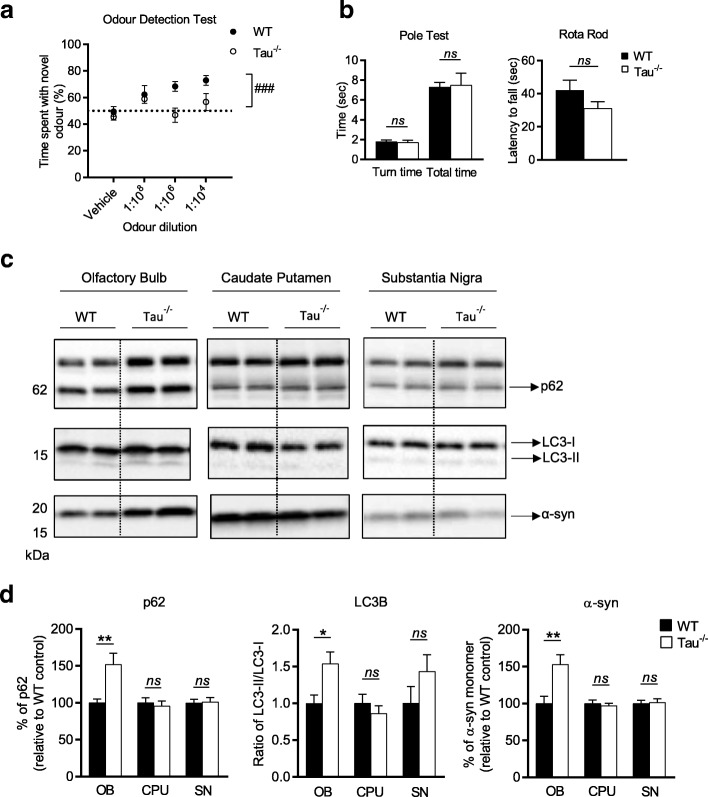
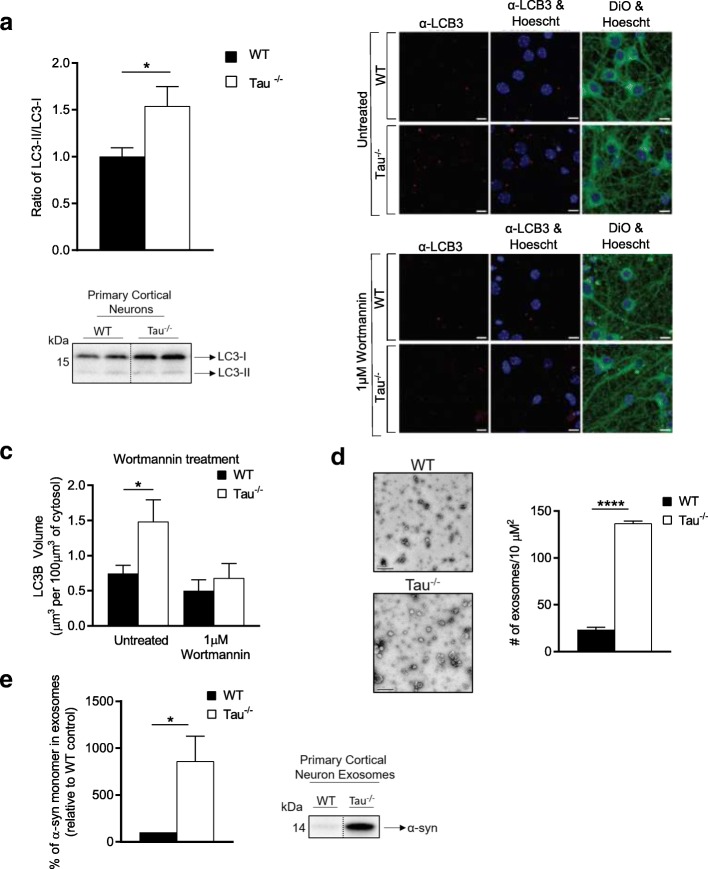
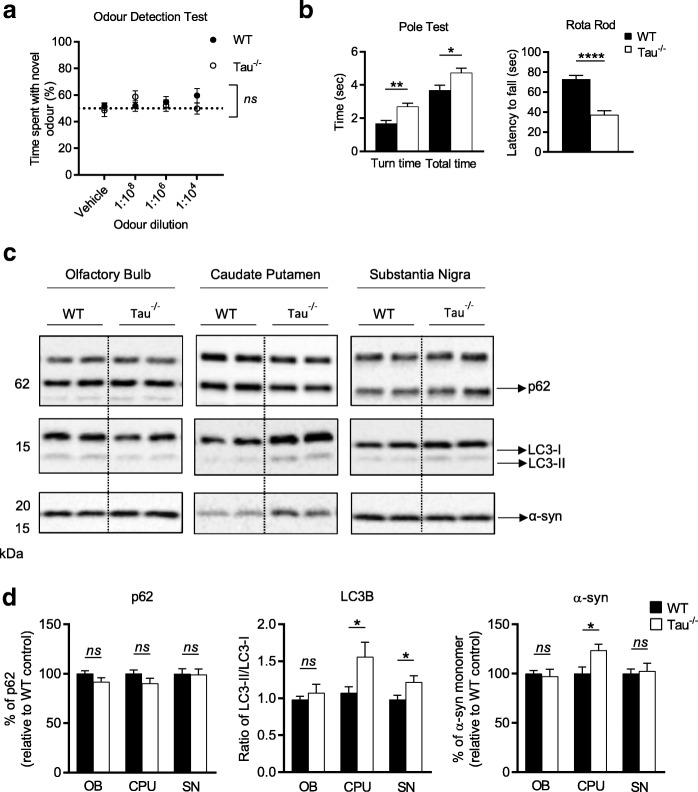
Parkinson's disease is diagnosed upon the presentation of motor symptoms, resulting from substantial degeneration of dopaminergic neurons in the midbrain. Prior to diagnosis, there is a lengthy prodromal stage in which non-motor symptoms, including olfactory deficits (hyposmia), develop. There is limited information about non-motor impairments and there is a need for directed research into these early pathogenic cellular pathways that precede extensive dopaminergic death in the midbrain. The protein tau has been identified as a genetic risk factor in the development of sporadic PD. Tau knockout mice have been reported as an age-dependent model of PD, and this study has demonstrated that they develop motor deficits at 15-months-old. We have shown that at 7-month-old tau knockout mice present with an overt hyposmic phenotype. This olfactory deficit correlates with an accumulation of α-synuclein, as well as autophagic impairment, in the olfactory bulb. This pathological feature becomes apparent in the striatum and substantia nigra of 15-month-old tau knockout mice, suggesting the potential for a spread of disease. Initial primary cell culture experiments have demonstrated that ablation of tau results in the release of α-synuclein enriched exosomes, providing a potential mechanism for disease spread. These alterations in α-synuclein level as well as a marked autophagy impairment in the tau knockout primary cells recapitulate results seen in the animal model. These data implicate a pathological role for tau in early Parkinson's disease.
帕金森病是在出现运动症状时诊断出来的,这些症状是由中脑多巴胺能神经元的大量退化引起的。在诊断之前,存在一个很长的前驱期,在此期间会出现非运动症状,包括嗅觉缺陷(嗅觉减退)。关于非运动障碍的信息有限,需要对这些早期的致病细胞途径进行有针对性的研究,这些途径在中脑多巴胺能神经元大量死亡之前就已经存在。蛋白 tau 已被确定为散发性帕金森病发展的遗传风险因素。tau 敲除小鼠被报道为一种与年龄相关的帕金森病模型,本研究表明它们在 15 个月大时出现运动缺陷。我们已经表明,在 7 个月大时,tau 敲除小鼠出现明显的嗅觉减退表型。这种嗅觉缺陷与嗅球中 α-突触核蛋白的积累以及自噬损伤有关。这种病理特征在 15 个月大的 tau 敲除小鼠的纹状体和黑质中变得明显,表明疾病可能会扩散。初步的原代细胞培养实验表明,tau 的缺失会导致富含 α-突触核蛋白的外泌体释放,为疾病的传播提供了一种潜在的机制。这些 α-突触核蛋白水平的改变以及 tau 敲除原代细胞中明显的自噬损伤,再现了动物模型中观察到的结果。这些数据表明 tau 在帕金森病早期发挥病理性作用。