Beauchamp Leah C, Ellett Laura J, Juan Sydney M A, Liu Xiang M, Hunt Cameron P J, Parish Clare L, Jacobson Laura H, Shepherd Claire E, Halliday Glenda M, Bush Ashley I, Vella Laura J, Finkelstein David I, Barnham Kevin J
Ann Romney Center for Neurologic Diseases, Brigham and Women's Hospital, Harvard Medical School, Boston, MA, 02115, USA.
The Florey Institute of Neuroscience and Mental Health, and The University of Melbourne, Parkville, VIC, 3052, Australia.
Acta Neuropathol. 2025 Mar 1;149(1):21. doi: 10.1007/s00401-025-02861-y.
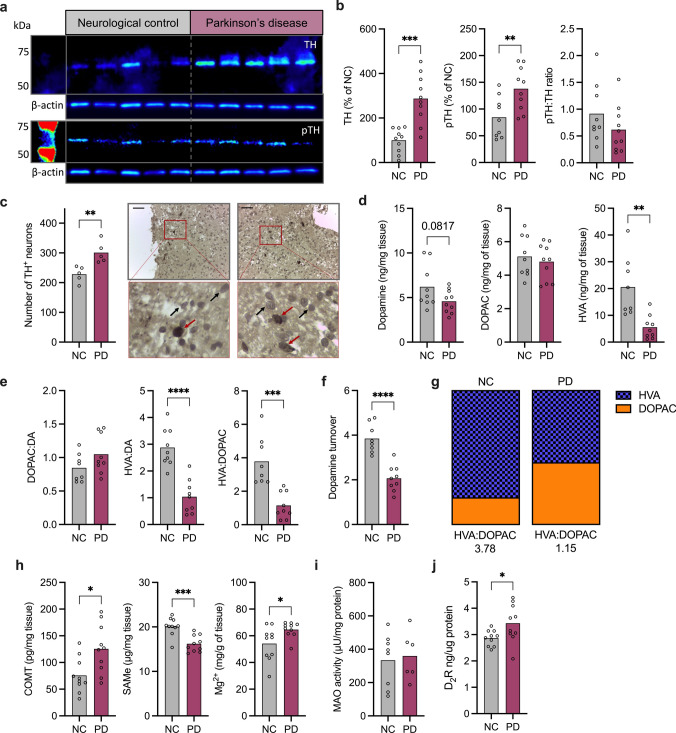
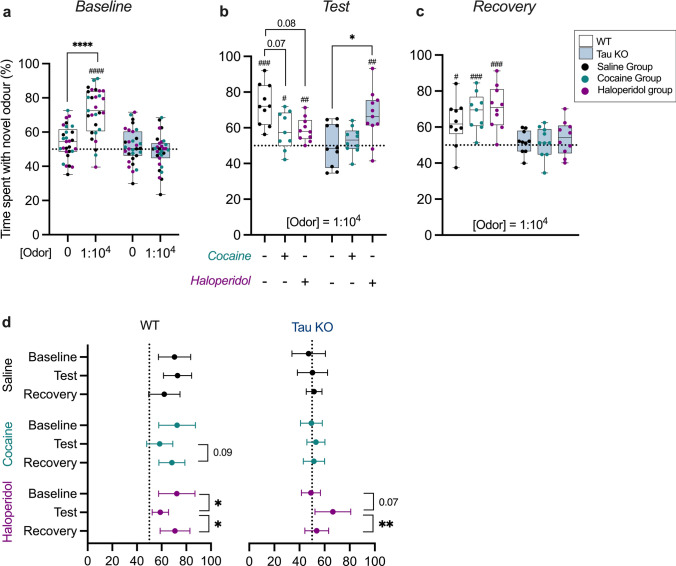
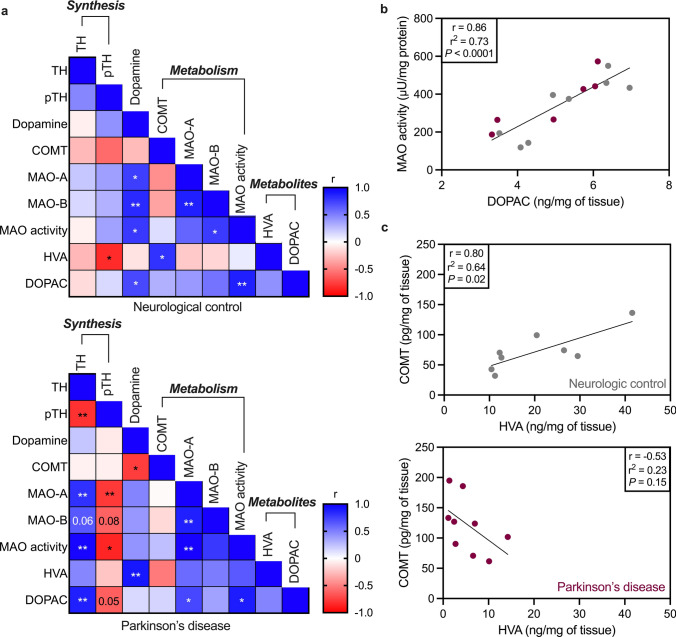
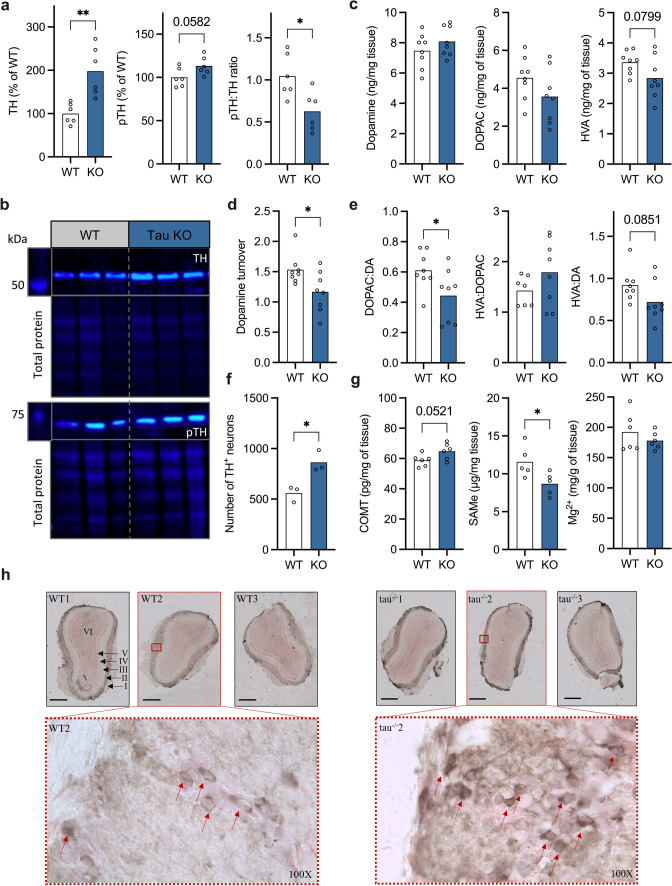
Hyposmia is one of the most prevalent non-motor symptoms of Parkinson's disease and antecedes motor dysfunction by up to a decade. However, the underlying pathophysiology remains poorly understood. In this study, we investigated the mechanisms of dopamine metabolism in post-mortem olfactory bulbs from ten Parkinson's disease and ten neurologic control subjects. In contrast to the loss of dopaminergic neurons in the midbrain, we observed an increase in tyrosine hydroxylase-positive neurons in the Parkinson's disease olfactory bulb, suggesting a potential role for dopamine in the hyposmia associated with the condition. Using immunohistochemistry, high-performance liquid chromatography, western blot, and enzyme-linked immunosorbent assays, we demonstrate a reduction in catechol-O-methyltransferase catabolism of dopamine to homovanillic acid, potentially due to a depletion of the methyl donor substrate S-adenosyl methionine. We hypothesized that reduction in catechol-O-methyltransferase activity would result in increased dopamine occupation of the D receptor, and consequent inhibition of olfactory processing. Next, we conducted pharmacological interventions to modify dopamine dynamics in hyposmic tau knockout mice, which exhibit altered dopamine metabolism. Our hypothesis was supported by the observation that the D receptor antagonist haloperidol temporarily alleviated olfactory deficits in these tau knockout mice. This study implicates a potential role of catechol-O-methyltransferase-mediated dopamine metabolism in the early olfactory impairments associated with Parkinson's disease.
嗅觉减退是帕金森病最常见的非运动症状之一,且比运动功能障碍早出现长达十年。然而,其潜在的病理生理学仍知之甚少。在本研究中,我们调查了10名帕金森病患者和10名神经科对照受试者死后嗅球中多巴胺代谢的机制。与中脑多巴胺能神经元的丧失相反,我们观察到帕金森病患者嗅球中酪氨酸羟化酶阳性神经元增加,这表明多巴胺在与该疾病相关的嗅觉减退中可能发挥作用。通过免疫组织化学、高效液相色谱、蛋白质印迹和酶联免疫吸附测定,我们证明多巴胺向高香草酸的儿茶酚-O-甲基转移酶分解代谢减少,这可能是由于甲基供体底物S-腺苷甲硫氨酸的消耗所致。我们推测儿茶酚-O-甲基转移酶活性降低会导致多巴胺对D受体的占据增加,从而抑制嗅觉处理。接下来,我们对嗅觉减退的tau基因敲除小鼠进行了药物干预,以改变多巴胺动力学,这些小鼠表现出多巴胺代谢改变。D受体拮抗剂氟哌啶醇可暂时缓解这些tau基因敲除小鼠的嗅觉缺陷,这一观察结果支持了我们的假设。本研究表明儿茶酚-O-甲基转移酶介导的多巴胺代谢在与帕金森病相关的早期嗅觉损伤中可能发挥作用。