Nemes Roland, Koltai Erika, Taylor Albert W, Suzuki Katsuhiko, Gyori Ferenc, Radak Zsolt
Faculty of Sports and Health Studies, Hosei University, Tokyo 194-0298, Japan.
Research Institute of Sport Science, University of Physical Education, Alkotas u. 44, H-1123 Budapest, Hungary.
Antioxidants (Basel). 2018 Jul 5;7(7):85. doi: 10.3390/antiox7070085.
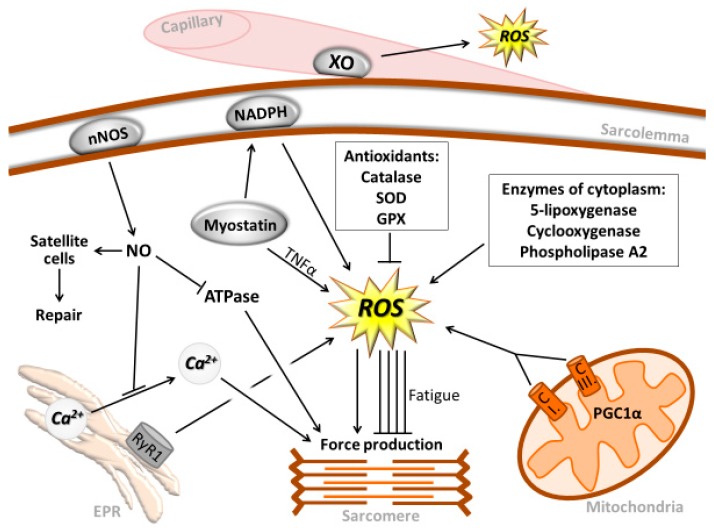
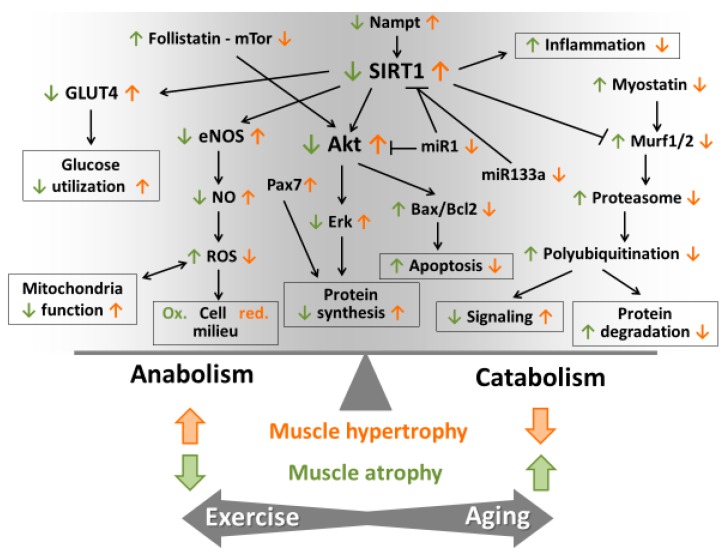
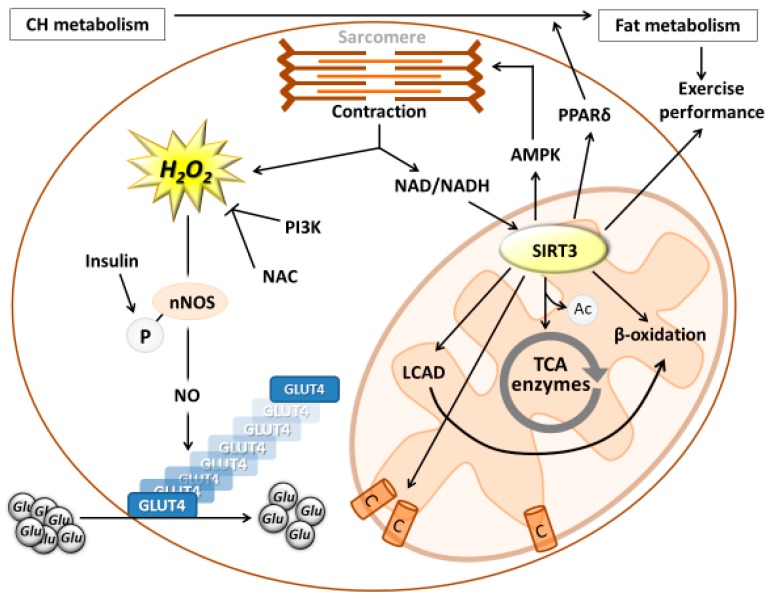
Reactive oxygen and nitrogen species (RONS) are important cellular regulators of key physiological processes in skeletal muscle. In this review, we explain how RONS regulate muscle contraction and signaling, and why they are important for membrane remodeling, protein turnover, gene expression, and epigenetic adaptation. We discuss how RONS regulate carbohydrate uptake and metabolism of skeletal muscle, and how they indirectly regulate fat metabolism through silent mating type information regulation 2 homolog 3 (SIRT3). RONS are causative/associative signaling molecules, which cause sarcopenia or muscle hypertrophy. Regular exercise influences redox biology, metabolism, and anabolic/catabolic pathways in skeletal muscle in an intensity dependent manner.
活性氧和氮物种(RONS)是骨骼肌关键生理过程的重要细胞调节因子。在本综述中,我们解释了RONS如何调节肌肉收缩和信号传导,以及它们为何对膜重塑、蛋白质周转、基因表达和表观遗传适应很重要。我们讨论了RONS如何调节骨骼肌的碳水化合物摄取和代谢,以及它们如何通过沉默交配型信息调节2同源物3(SIRT3)间接调节脂肪代谢。RONS是导致肌肉减少症或肌肉肥大的致病/相关信号分子。规律运动以强度依赖的方式影响骨骼肌中的氧化还原生物学、代谢以及合成代谢/分解代谢途径。