Centre for Behavioural Sciences and Mental Health, Istituto Superiore di Sanità, Roma, Italy.
Department of Cognitive Neuroscience, Donders Institute for Brain, Cognition and Behaviour, Radboud University Medical Center, Nijmegen, The Netherlands.
Sci Rep. 2018 Jul 5;8(1):10188. doi: 10.1038/s41598-018-28372-3.
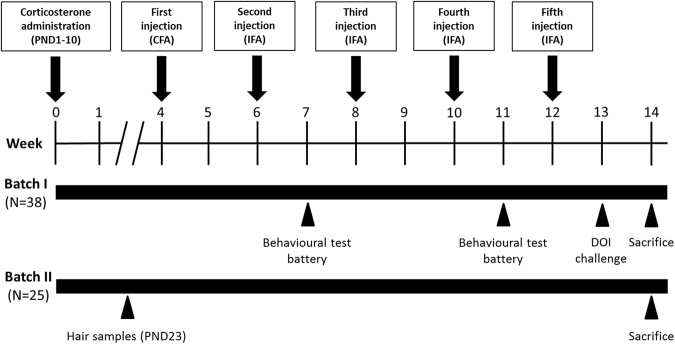
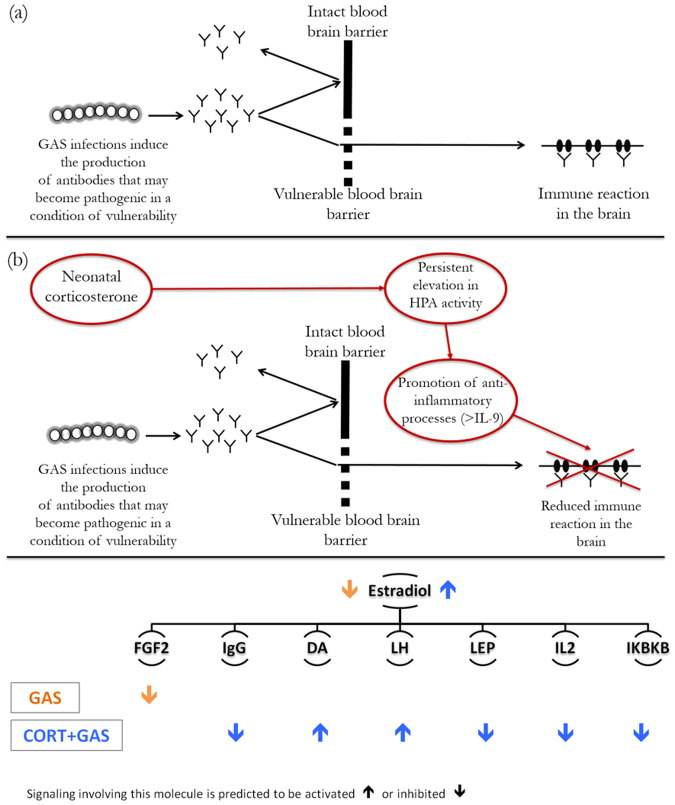
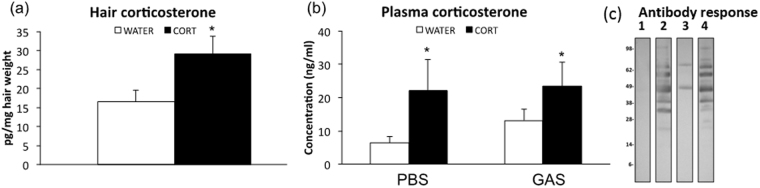
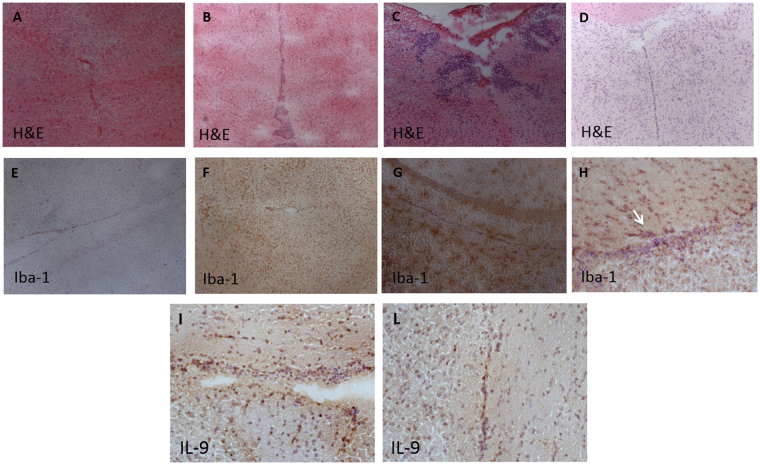
Increased glucocorticoid concentrations have been shown to favor resilience towards autoimmune phenomena. Here, we addressed whether experimentally induced elevations in circulating glucocorticoids mitigate the abnormalities exhibited by an experimental model of Pediatric Autoimmune Neuropsychiatric Disorders Associated with Streptococcus (PANDAS). This is a pathogenic hypothesis linking repeated exposures to Group-A-beta-hemolytic streptococcus (GAS), autoantibodies targeting selected brain nuclei and neurobehavioral abnormalities. To persistently elevate glucocorticoid concentrations, we supplemented lactating SJL/J mice with corticosterone (CORT; 80 mg/L) in the drinking water. Starting in adolescence (postnatal day 28), developing offspring were exposed to four injections - at bi-weekly intervals - of a GAS homogenate and tested for behavioral, immunological, neurochemical and molecular alterations. GAS mice showed increased perseverative behavior, impaired sensorimotor gating, reduced reactivity to a serotonergic agonist and inflammatory infiltrates in the anterior diencephalon. Neonatal CORT persistently increased circulating glucocorticoids concentrations and counteracted these alterations. Additionally, neonatal CORT increased peripheral and CNS concentrations of the anti-inflammatory cytokine IL-9. Further, upstream regulator analysis of differentially expressed genes in the striatum showed that the regulatory effect of estradiol is inhibited in GAS-treated mice and activated in GAS-treated mice exposed to CORT. These data support the hypothesis that elevations in glucocorticoids may promote central immunomodulatory processes.
糖皮质激素浓度的升高已被证明有利于抵抗自身免疫现象。在这里,我们研究了循环糖皮质激素的实验性升高是否减轻了儿科自身免疫性神经精神障碍与链球菌相关(PANDAS)的实验模型中表现出的异常。这是一个致病假说,将反复接触 A 组β溶血性链球菌(GAS)、针对选定脑核的自身抗体和神经行为异常联系起来。为了持续升高糖皮质激素浓度,我们在 SJL/J 哺乳期小鼠的饮用水中补充皮质酮(CORT;80mg/L)。从青春期(出生后第 28 天)开始,发育中的后代接受四次 GAS 匀浆注射(每两周一次),并进行行为、免疫、神经化学和分子改变的测试。GAS 小鼠表现出持续的坚持性行为、感觉运动门控受损、对 5-羟色胺激动剂的反应性降低以及前脑间脑的炎症浸润。新生 CORT 持续增加循环糖皮质激素浓度并对抗这些变化。此外,新生 CORT 增加了外周和中枢的抗炎细胞因子 IL-9 浓度。进一步的,纹状体中差异表达基因的上游调节因子分析表明,GAS 处理小鼠中雌激素的调节作用被抑制,而在暴露于 CORT 的 GAS 处理小鼠中被激活。这些数据支持糖皮质激素升高可能促进中枢免疫调节过程的假说。