Department of Psychiatry, Yale University, New Haven, CT, USA; 34 Park Street, 3rd floor, W306, New Haven, CT 06519, USA.
Department of Psychiatry, Yale University, New Haven, CT, USA; 34 Park Street, 3rd floor, W306, New Haven, CT 06519, USA; Department of Psychology, Yale University, New Haven, CT, USA; Department of Interdepartmental Neuroscience Program, Yale University, New Haven, CT, USA; Department of Child Study Center, Yale University, New Haven, CT, USA.
J Immunol Res. 2016;2016:8606057. doi: 10.1155/2016/8606057. Epub 2016 Dec 7.
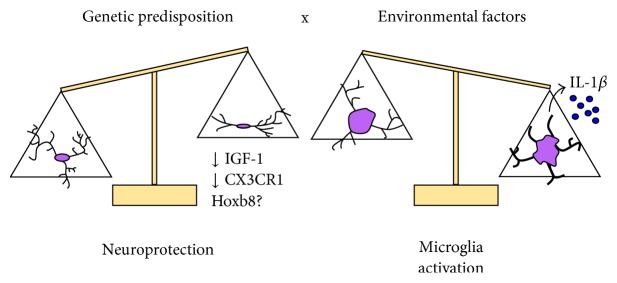
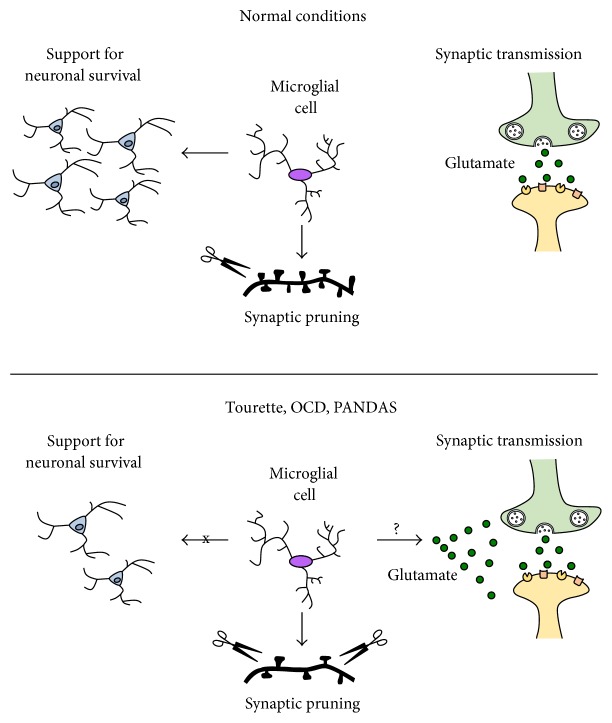
There is accumulating evidence that immune dysregulation contributes to the pathophysiology of obsessive-compulsive disorder (OCD), Tourette syndrome, and Pediatric Autoimmune Neuropsychiatric Disorders Associated with Streptococcal Infections (PANDAS). The mechanistic details of this pathophysiology, however, remain unclear. Here we focus on one particular component of the immune system: microglia, the brain's resident immune cells. The role of microglia in neurodegenerative diseases has been understood in terms of classic, inflammatory activation, which may be both a consequence and a cause of neuronal damage. In OCD and Tourette syndrome, which are not characterized by frank neural degeneration, the potential role of microglial dysregulation is much less clear. Here we review the evidence for a neuroinflammatory etiology and microglial dysregulation in OCD, Tourette syndrome, and PANDAS. We also explore new hypotheses as to the potential contributions of microglial abnormalities to pathophysiology, beyond neuroinflammation, including failures in neuroprotection, lack of support for neuronal survival, and abnormalities in synaptic pruning. Recent advances in neuroimaging and animal model work are creating new opportunities to elucidate these issues.
越来越多的证据表明,免疫失调导致强迫症 (OCD)、妥瑞氏症和与链球菌感染相关的小儿自身免疫性神经精神障碍 (PANDAS) 的病理生理学。然而,这种病理生理学的机制细节仍不清楚。在这里,我们专注于免疫系统的一个特定组成部分:小胶质细胞,大脑的常驻免疫细胞。小胶质细胞在神经退行性疾病中的作用已经从经典的炎症激活方面得到了理解,这种激活可能既是神经元损伤的结果,也是其原因。在 OCD 和妥瑞氏症中,并没有明显的神经退行性变特征,小胶质细胞失调的潜在作用就不那么明显了。在这里,我们回顾了 OCD、妥瑞氏症和 PANDAS 中神经炎症病因和小胶质细胞失调的证据。我们还探讨了除神经炎症之外,小胶质细胞异常对病理生理学的潜在贡献的新假设,包括神经保护失败、神经元存活缺乏支持以及突触修剪异常。神经影像学和动物模型工作的最新进展正在为阐明这些问题创造新的机会。