Best K P, Sullivan T R, Palmer D J, Gold M, Martin J, Kennedy D, Makrides M
1Healthy Mothers, Babies and Children, South Australian Health and Medical Research Institute, Adelaide, South Australia Australia.
2School of Medicine, University of Adelaide, Adelaide, South Australia Australia.
World Allergy Organ J. 2018 Jun 15;11(1):10. doi: 10.1186/s40413-018-0190-7. eCollection 2018.
Randomized controlled trials of prenatal omega (ω-3) long chain polyunsaturated fatty acid (LCPUFA) supplementation are suggestive of some protective effects on allergic sensitization and symptoms of allergic disease in childhood. Due to the nature of the atopic march, investigation of any effects of this prenatal intervention may be most informative when consistently assessed longitudinally during childhood.
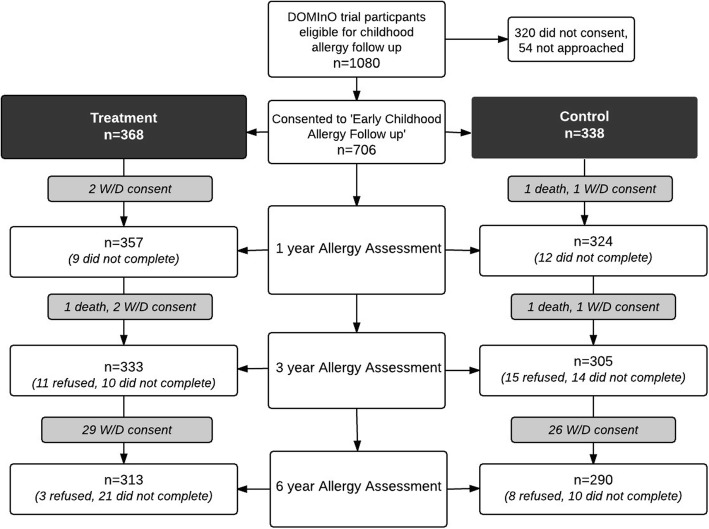
Follow-up of children ( = 706) with familial risk of allergy from the Docosahexaenoic Acid to Optimize Mother Infant Outcome (DOMInO) trial. The intervention group received fish oil capsules (900 mg of ω-3 LCPUFA) daily from <21 weeks' gestation until birth; the control group received vegetable oil capsules without ω-3 LCPUFA. This new longitudinal analysis reports previously unpublished data collected at 1 and 3 years of age. The allergic disease symptom data at 1, 3 and 6 years of age were consistently reported by parents using the "International Study of Asthma and Allergies in Childhood" (ISAAC) questionnaire. Sensitization was determined by skin prick test to age specific, common allergen extracts.
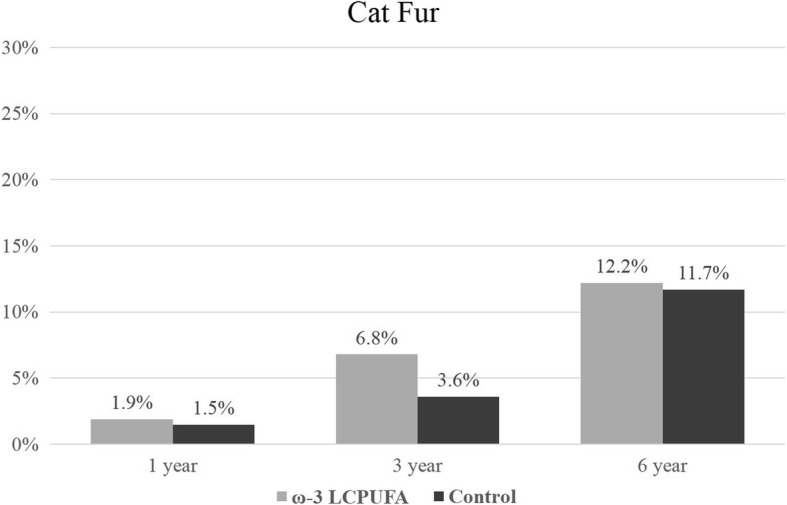
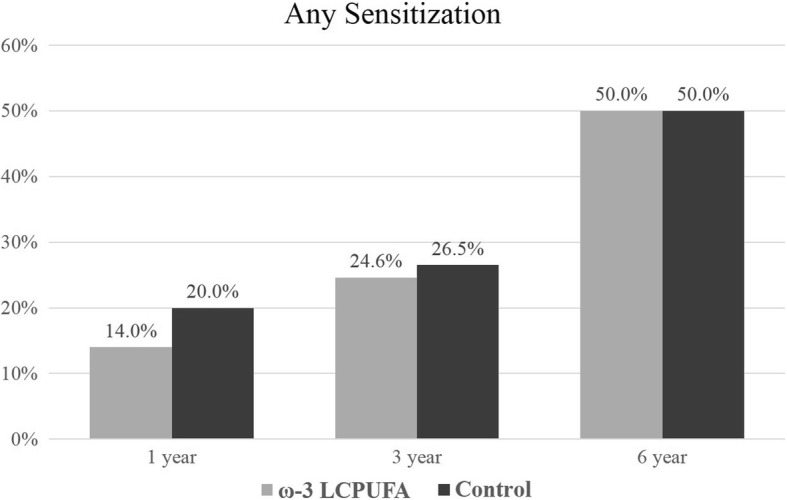
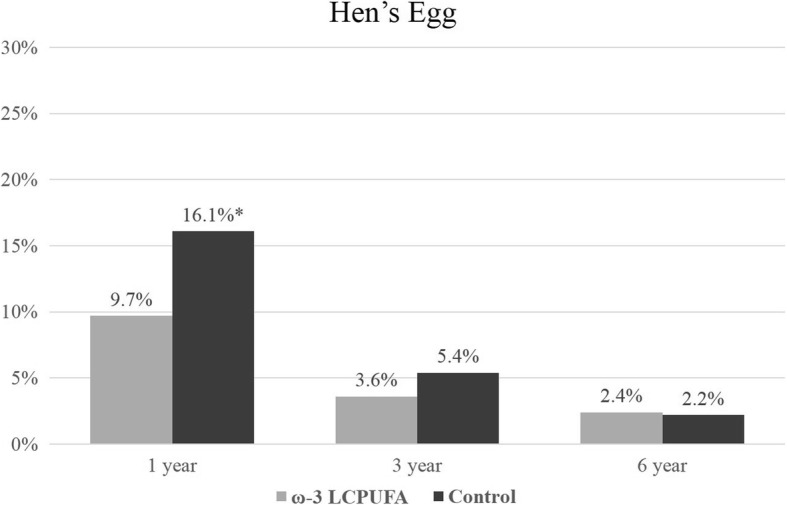
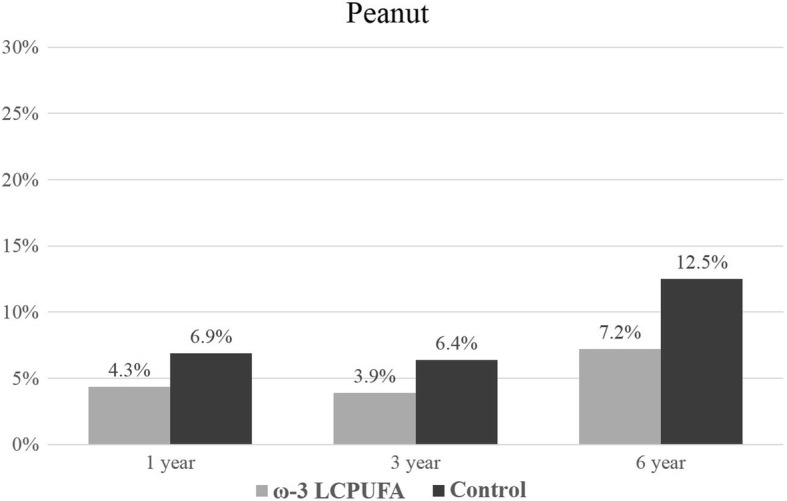
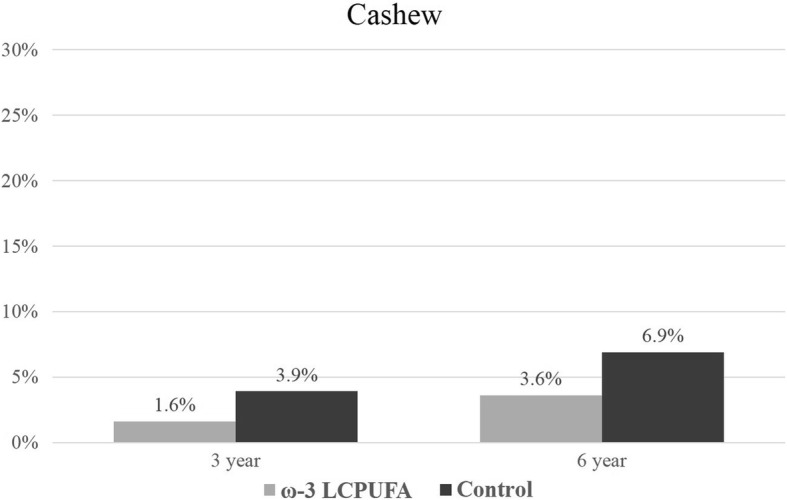
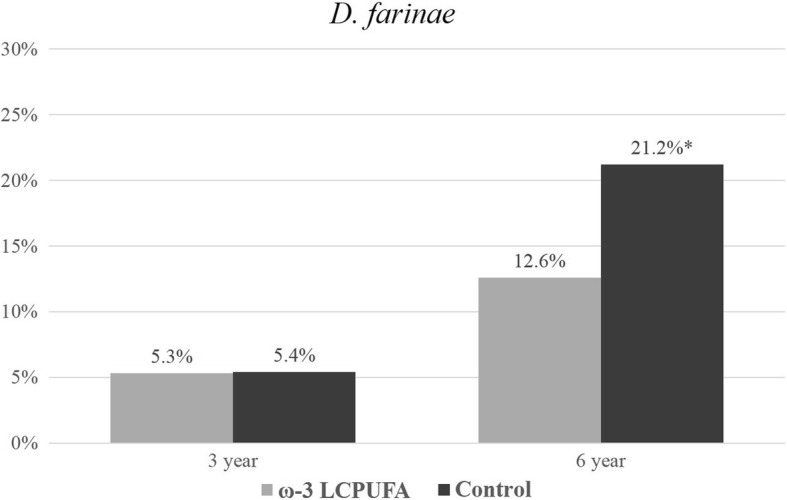
Changes over time in symptoms of allergic disease with sensitization (IgE-mediated) and sensitization did not differ between the groups; interaction = 0.49, = 0.10, respectively. Averaged across the 1, 3 and 6-year assessments, there were no significant effects of prenatal ω-3 LCPUFA supplementation on IgE-mediated allergic disease symptoms (adjusted relative risk 0.88 (95% CI 0.69, 1.12), = 0.29) or sensitization (adjusted relative risk 0.97 (95% CI 0.82, 1.15), = 0.76). Sensitization patterns to common allergens were consistent with the atopic march, with egg sensitization at 1 year strongly associated with house dust mite sensitization at 6 years, ( < 0.0001).
Although there is some evidence to suggest that maternal supplementation with 900mg ω-3 LCPUFA has a protective effect on early symptoms of allergic disease and sensitization in the offspring, we did not observe any differences in the progression of disease over time in this longitudinal analysis. Further investigation into the dose and timing of ω-3 LCPUFA supplementation, including long-term follow up of children using consistent outcome reporting, is essential to determine whether this intervention may be of benefit as a primary prevention strategy for allergic disease.
Maternal supplementation with 900 mg of ω-3 LCPUFA did not change the progression of IgE-mediated allergic disease symptoms or sensitization throughout childhood from 1 to 6 years.
Australian New Zealand Clinical Trials Registry (ACTRN); DOMInO trial ACTRN12605000569606, early childhood allergy follow up ACTRN12610000735055 and 6-year allergy follow up ACTRN12615000498594.
产前补充ω-3长链多不饱和脂肪酸(LCPUFA)的随机对照试验表明,其对儿童期过敏性致敏和过敏性疾病症状具有一定的保护作用。由于特应性进程的性质,当在儿童期进行纵向持续评估时,对这种产前干预措施的任何效果进行调查可能最具参考价值。
对来自二十二碳六烯酸优化母婴结局(DOMInO)试验中具有过敏家族风险的儿童(n = 706)进行随访。干预组从妊娠小于21周开始至出生每日服用鱼油胶囊(900毫克ω-3 LCPUFA);对照组服用不含ω-3 LCPUFA的植物油胶囊。这项新的纵向分析报告了之前未发表的1岁和3岁时收集的数据。父母使用“儿童哮喘和过敏国际研究”(ISAAC)问卷持续报告1岁、3岁和6岁时的过敏性疾病症状数据。通过对特定年龄的常见变应原提取物进行皮肤点刺试验来确定致敏情况。
两组之间,伴有致敏(IgE介导)的过敏性疾病症状和致敏情况随时间的变化无差异;交互作用P值分别为0.49和0.10。在1年、3年和6年的评估中,产前补充ω-3 LCPUFA对IgE介导的过敏性疾病症状(校正相对风险0.88(95%CI 0.69,1.12),P = 0.29)或致敏情况(校正相对风险0.97(95%CI 0.82,1.15),P = 0.76)均无显著影响。对常见变应原的致敏模式与特应性进程一致,1岁时对鸡蛋致敏与6岁时对屋尘螨致敏密切相关(P < 0.0001)。
尽管有证据表明母亲补充900毫克ω-3 LCPUFA对后代过敏性疾病的早期症状和致敏有保护作用,但在这项纵向分析中,我们未观察到疾病随时间进展的任何差异。进一步研究ω-3 LCPUFA补充的剂量和时间,包括使用一致的结局报告对儿童进行长期随访,对于确定这种干预措施作为过敏性疾病的一级预防策略是否有益至关重要。
母亲补充900毫克ω-3 LCPUFA并未改变1至6岁儿童期IgE介导的过敏性疾病症状或致敏的进展情况。
澳大利亚新西兰临床试验注册中心(ACTRN);DOMInO试验ACTRN12605000569606,幼儿过敏随访ACTRN12610000735055和6年过敏随访ACTRN12615000498594。