Hamza Dalia, Dorgham Sohad, Hakim Ashraf
Department of Zoonoses, Faculty of Veterinary Medicine, Cairo University, Giza 11221, Egypt.
Department of Microbiology and Immunology, National Research Centre, Giza 12622, Egypt.
J Vet Res. 2017 Apr 4;61(1):53-58. doi: 10.1515/jvetres-2017-0007. eCollection 2017 Mar.
The toxinotyping and antimicrobial susceptibility of strains isolated from processed chicken meat were determined.
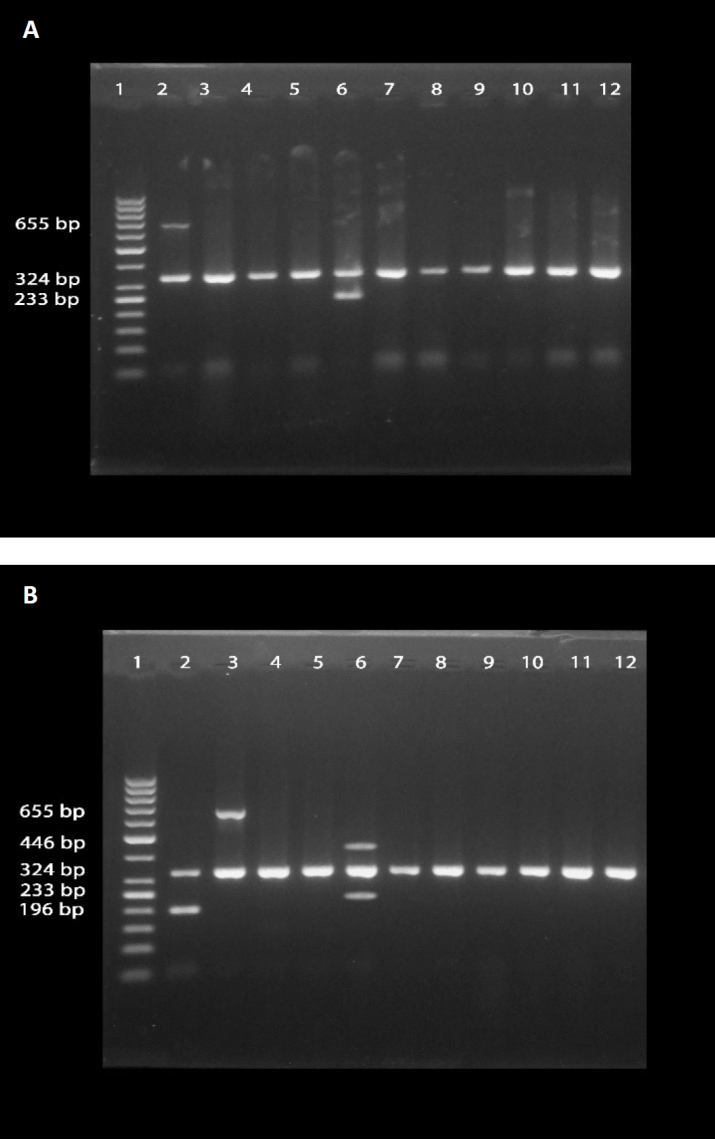
Two hundred processed chicken meat samples from luncheon meats, nuggets, burgers, and sausages were screened for by multiplex PCR assay for the presence of , and enterotoxin toxin genes. The isolates were examined against eight antibiotics (streptomycin, amoxicillin, ampicillin, ciprofloxacin, lincomycin, cefotaxime, rifampicin, and trimethoprim-sulfamethoxazole).
An overall of 32 strains (16%) were isolated from 200 processed chicken meat samples tested. The prevalence of was significantly dependent on the type of toxin genes detected (P = 0.0), being the highest in sausages (32%), followed by luncheon meats (24%), burgers (6%), and nuggets (2%). type A was the most frequently present toxinotype (24/32; 75%), followed by type D (21.9 %) and type E (3.1%). Of the 32 strains tested, only 9 (28%) were enterotoxin gene carriers, with most representing type A (n = 6). strains differed in their resistance/susceptibility to commonly used antibiotics. Most of the strains tested were sensitive to ampicillin (97%) and amoxicillin (94%), with 100% of the strains being resistant to streptomycin and lincomycin. It is noteworthy that the nine isolates with enterotoxigenic potential had a higher resistance than the non-enterotoxigenic ones.
The considerably high isolation rates from processed chicken meat samples and resistance to some of the commonly used antibiotics indicate a potential public health risk. Recent information about the isolation of enterotoxigenic type E from chicken sausage has been reported.
对从加工鸡肉中分离出的菌株进行毒素分型和抗菌药敏性测定。
采用多重聚合酶链反应(PCR)分析法,对200份来自午餐肉、鸡块、汉堡和香肠的加工鸡肉样本进行检测,以筛查是否存在[具体菌名未给出]、[具体菌名未给出]以及肠毒素基因。对分离出的[具体菌名未给出]菌株进行了针对8种抗生素(链霉素、阿莫西林、氨苄西林、环丙沙星、林可霉素、头孢噻肟、利福平以及甲氧苄啶 - 磺胺甲恶唑)的检测。
在检测的200份加工鸡肉样本中,共分离出32株[具体菌名未给出]菌株(16%)。[具体菌名未给出]的流行率显著取决于所检测到的毒素基因类型(P = 0.0),在香肠中最高(32%),其次是午餐肉(24%)、汉堡(6%)和鸡块(2%)。A型是最常见的毒素型(24/32;75%),其次是D型(21.9%)和E型(3.1%)。在检测的32株[具体菌名未给出]菌株中,只有9株(28%)是肠毒素基因携带者,其中大多数为A型(n = 6)。[具体菌名未给出]菌株对常用抗生素的耐药性/敏感性存在差异。大多数检测菌株对氨苄西林(97%)和阿莫西林(94%)敏感,100%的菌株对链霉素和林可霉素耐药。值得注意的是,具有产肠毒素潜力的9株分离株比不产肠毒素的分离株具有更高的耐药性。
从加工鸡肉样本中分离出[具体菌名未给出]的比例相当高,且对一些常用抗生素具有耐药性,这表明存在潜在的公共卫生风险。最近已有关于从鸡肉香肠中分离出产肠毒素E型[具体菌名未给出]的报道。