Lai Hung-Wen, Chen Shou-Tung, Lin Shih-Lung, Lin Ya-Ling, Wu Hwa-Koon, Pai Shu-Hsin, Chen Dar-Ren, Kuo Shou-Jen
Endoscopic and Oncoplastic Breast Surgery Center Division of General Surgery Comprehensive Breast Cancer Center School of Medicine, National Yang Ming University, Taipei Division of Breast Surgery, Yuanlin Christian Hospital, Yuanlin Division of Plastic and Reconstructive Surgery, Department of Surgery Minimal Invasive Surgery Research Center Department of Radiology, Changhua Christian Hospital, Changhua Kaohsiung Medical University, Kaohsiung School of Medicine, Chung Shan Medical University, Taichung, Taiwan.
Medicine (Baltimore). 2018 Jul;97(27):e11373. doi: 10.1097/MD.0000000000011373.
The clinical application of robotic surgery in breast conserving surgery or volume replacement with robotic latissimus dorsi flap harvest (RLDFH) has been rarely reported. In this study, we report the preliminary experience and clinical outcome of robotic assisted quadrantectomy (RAQ) and immediate partial breast reconstruction (IPBR) with RLDFH.
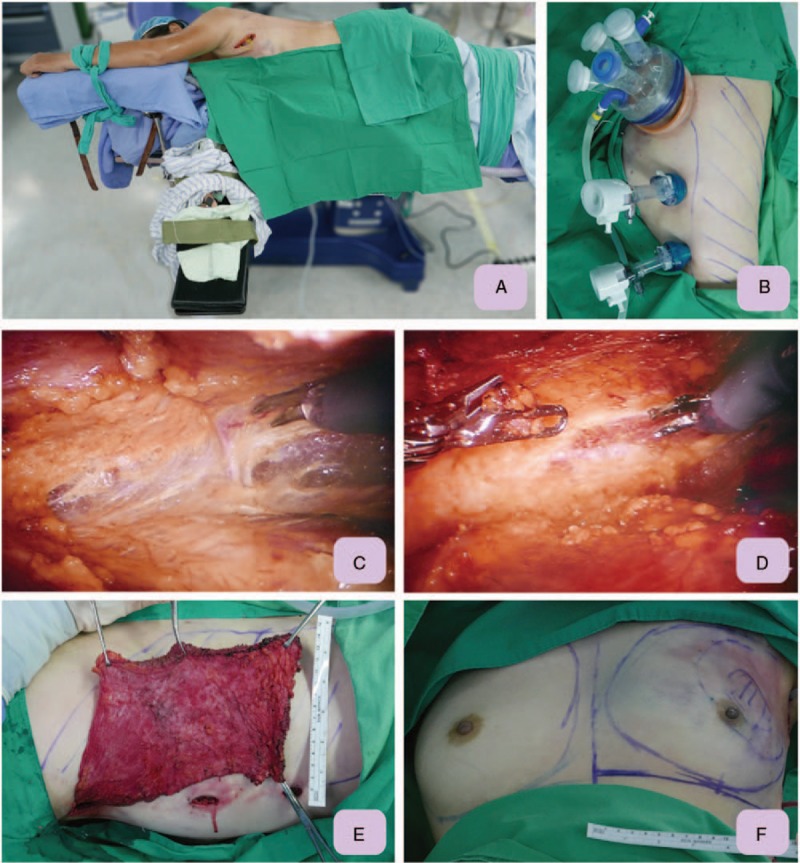
Decreasing and avoid back scar length after latissimus dorsi flap harvest.
One 28 years old female with left breast cancer underwent RAQ and IPBR with RLDFH. Initially, she was diagnosed with left breast infiltrating carcinoma that was clinical stage T3N1M0 and triple negative.
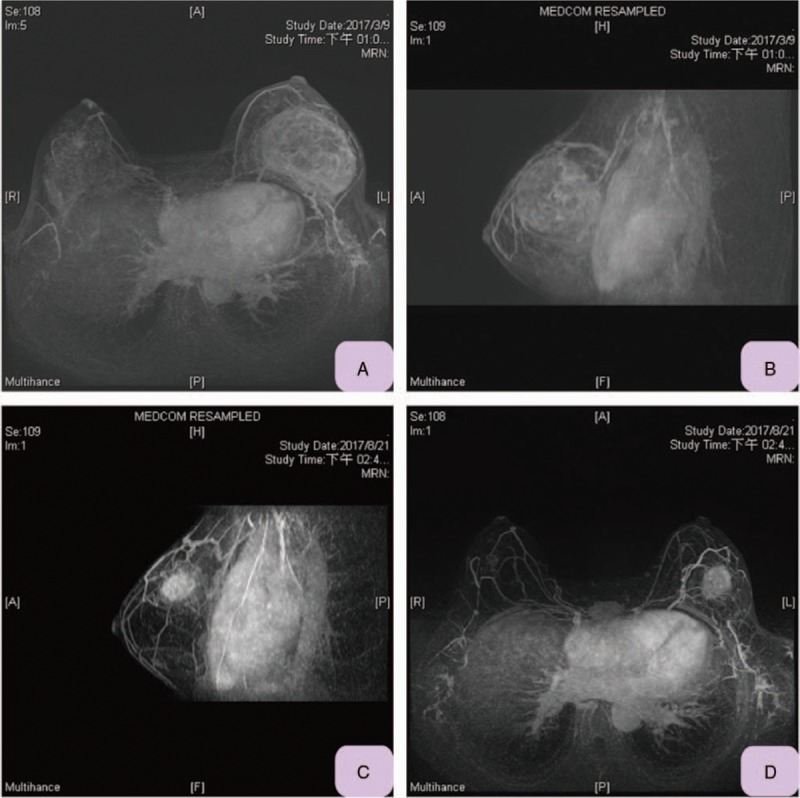
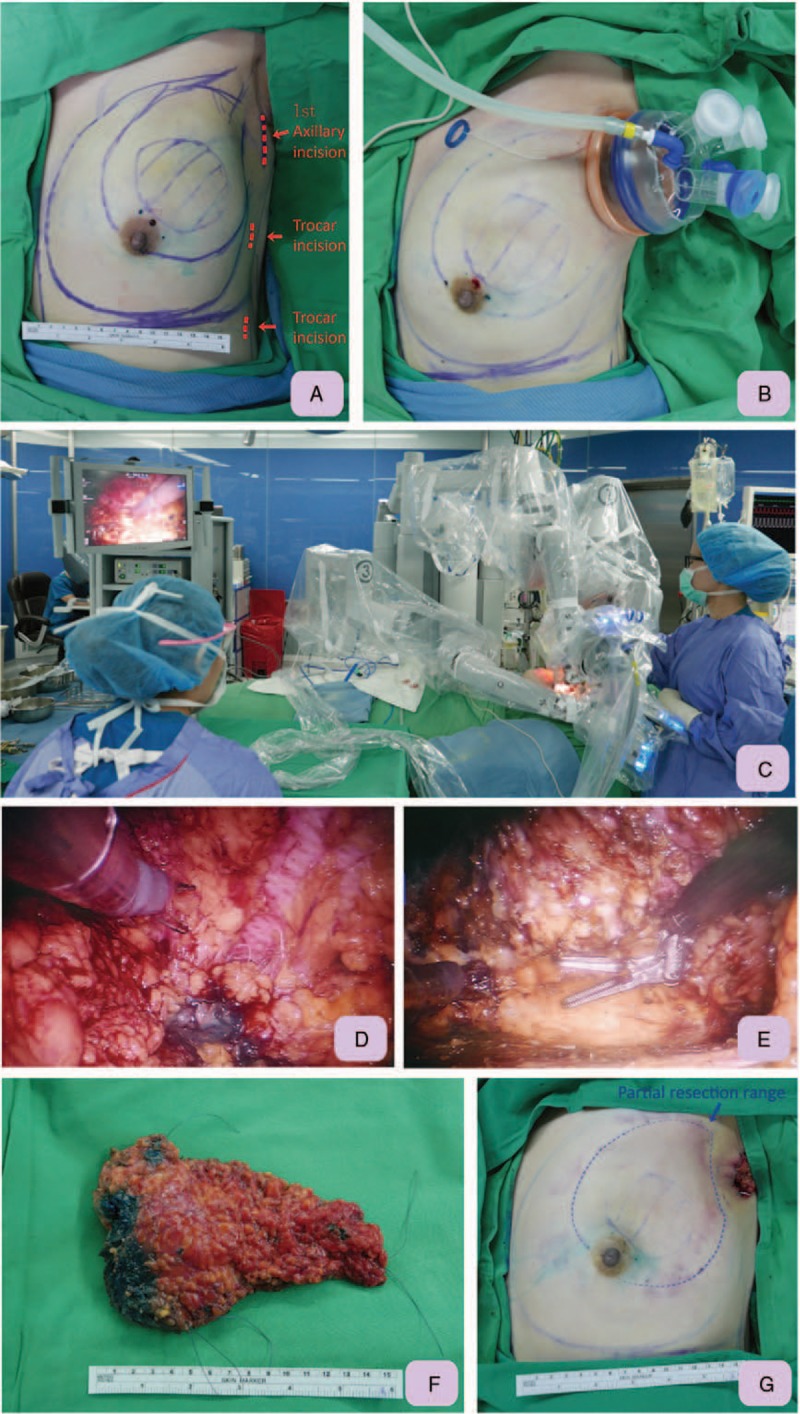
Neoadjuvant chemotherapy consisting of 4 cycles of epirubicin and cyclophosphamide followed by 4 cycles of docetaxel was performed. Breast magnetic resonance imaging showed residual breast cancer about 4.5 cm over the left upper outer quadrant of the breast. Sentinel lymph node biopsy showed no lymph node metastasis. RAQ, which took 82 minutes, was performed first, and the resected breast specimen's weight was 203 gm. She received IPBR with RLDFH, which took 97 minutes.
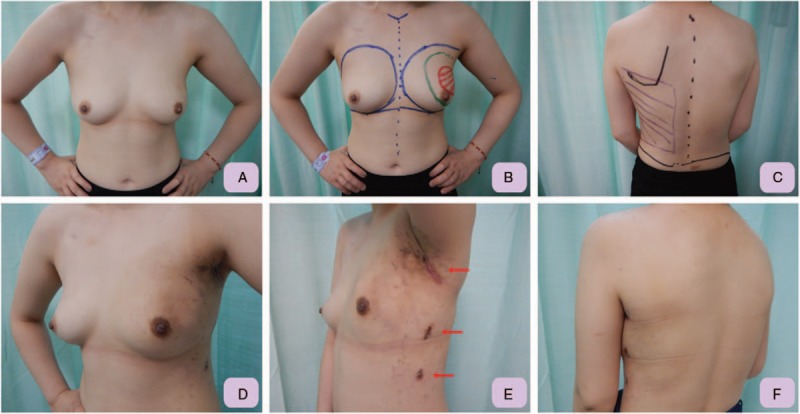
The overall blood loss was 40 mL. The final pathology result was ypT2 (4.2 cm)N0 (sn0/3)M0 and stage IIA. The resection margin was free of tumors. The post-operative recovery was smooth except for seroma formation over the back, which was relieved after repeated aspiration at an outpatient clinic. The patient was satisfied with the post-operative scar and aesthetic outcome. No local recurrence, distant metastasis or case mortality was found during 5 months of follow-up.
RAQ and IPBR with RLDFH is a safe alternative for small-to-medium-breast-size women with breast cancer who desire breast conservation and are indicated for volume replacement with autologous latissimus dorsi flap.
机器人手术在保乳手术或机器人背阔肌肌皮瓣切取(RLDFH)进行乳房容积替代方面的临床应用鲜有报道。在本研究中,我们报告了机器人辅助象限切除术(RAQ)及采用RLDFH进行即刻部分乳房重建(IPBR)的初步经验和临床结果。
减少并避免背阔肌肌皮瓣切取后的背部瘢痕长度。
一名28岁的左乳癌女性接受了RAQ及RLDFH的IPBR手术。最初,她被诊断为左乳浸润性癌,临床分期为T3N1M0,三阴性。
进行了由4个周期表柔比星和环磷酰胺组成的新辅助化疗,随后进行4个周期多西他赛化疗。乳腺磁共振成像显示左乳外上象限残留乳腺癌约4.5厘米。前哨淋巴结活检未发现淋巴结转移。首先进行了耗时82分钟的RAQ,切除的乳腺标本重量为203克。她接受了耗时97分钟的RLDFH的IPBR手术。
总失血量为40毫升。最终病理结果为ypT2(4.2厘米)N0(sn0/3)M0,IIA期。切缘无肿瘤。术后恢复顺利,除背部出现血清肿,门诊反复抽吸后缓解。患者对术后瘢痕和美学效果满意。随访5个月期间未发现局部复发、远处转移或病例死亡。
对于希望保乳且适合自体背阔肌肌皮瓣进行乳房容积替代的中小乳房尺寸乳腺癌女性,RAQ及RLDFH的IPBR是一种安全的选择。