Research Programs Unit, Molecular Neurology and Biomedicum Stem Cell Centre, Faculty of Medicine, University of Helsinki, Helsinki, 00014, Finland.
Department of Biosciences and Nutrition, Karolinska Institutet, Huddinge, 141 83, Sweden.
Nat Commun. 2018 Jul 6;9(1):2643. doi: 10.1038/s41467-018-05067-x.
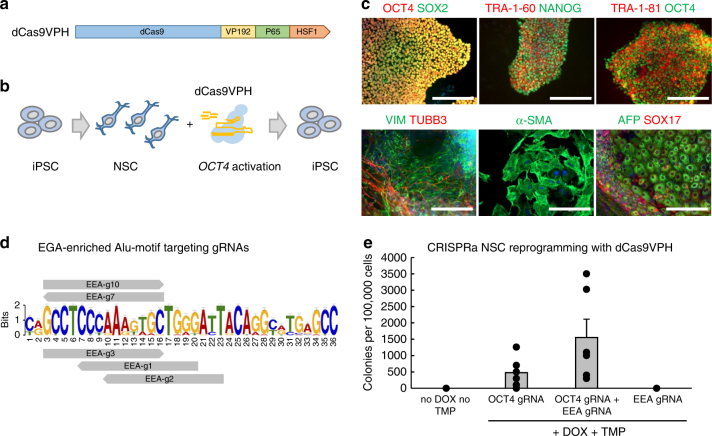
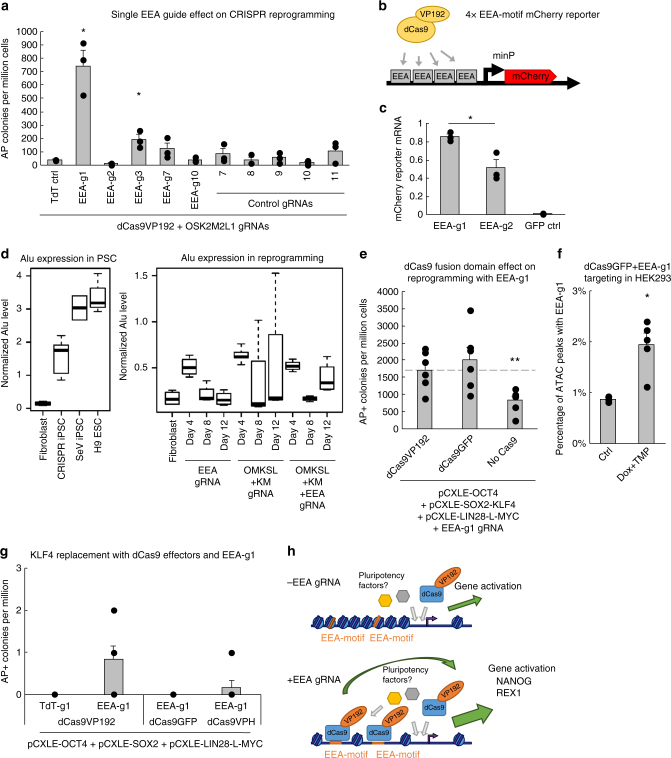
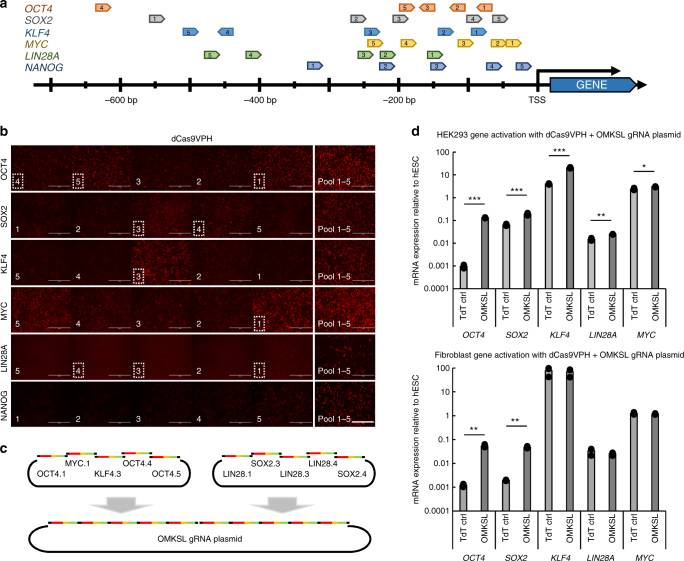
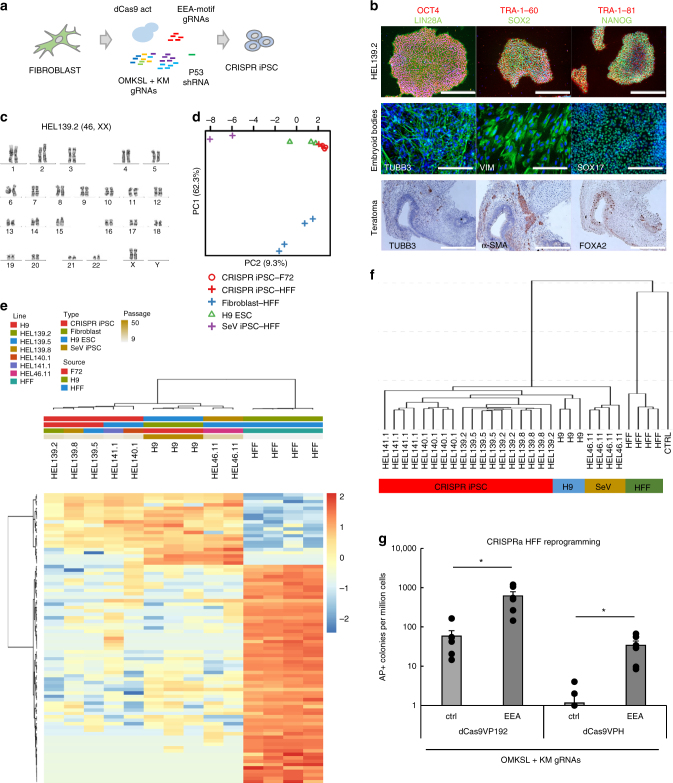
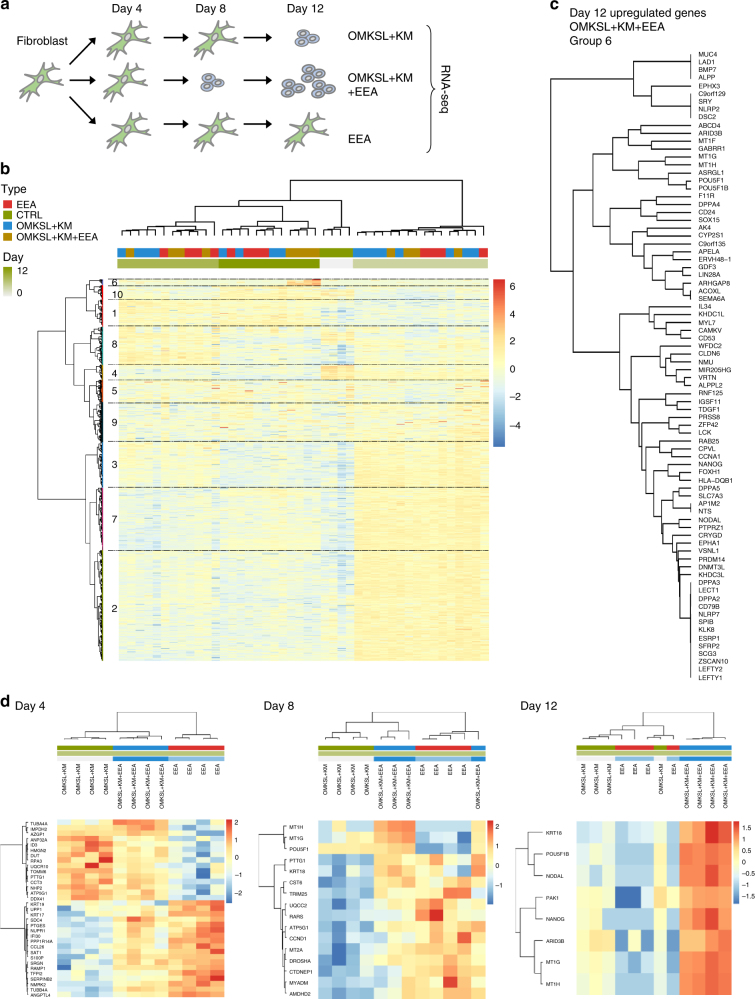
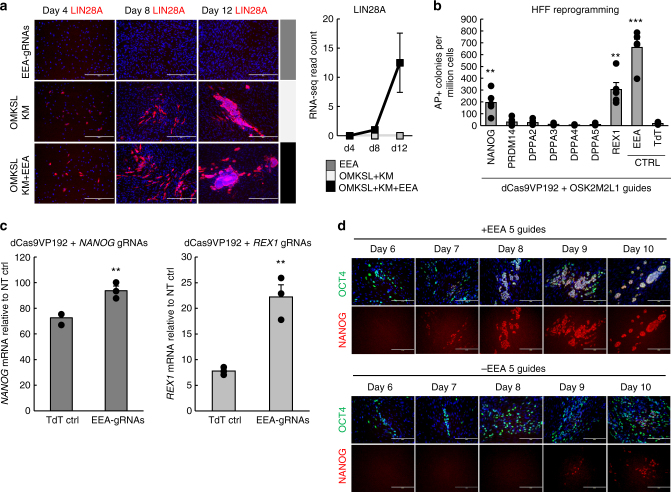
CRISPR-Cas9-based gene activation (CRISPRa) is an attractive tool for cellular reprogramming applications due to its high multiplexing capacity and direct targeting of endogenous loci. Here we present the reprogramming of primary human skin fibroblasts into induced pluripotent stem cells (iPSCs) using CRISPRa, targeting endogenous OCT4, SOX2, KLF4, MYC, and LIN28A promoters. The low basal reprogramming efficiency can be improved by an order of magnitude by additionally targeting a conserved Alu-motif enriched near genes involved in embryo genome activation (EEA-motif). This effect is mediated in part by more efficient activation of NANOG and REX1. These data demonstrate that human somatic cells can be reprogrammed into iPSCs using only CRISPRa. Furthermore, the results unravel the involvement of EEA-motif-associated mechanisms in cellular reprogramming.
基于 CRISPR-Cas9 的基因激活(CRISPRa)因其高多重性和对内源性基因座的直接靶向性,成为细胞重编程应用的一种有吸引力的工具。在这里,我们通过靶向内源性 OCT4、SOX2、KLF4、MYC 和 LIN28A 启动子,使用 CRISPRa 将原代人皮肤成纤维细胞重编程为诱导多能干细胞(iPSC)。通过额外靶向参与胚胎基因组激活(EEA 基序)的基因附近富含保守 Alu 基序的方法,可以将低基础重编程效率提高一个数量级。这种效应部分是通过更有效地激活 NANOG 和 REX1 介导的。这些数据表明,仅使用 CRISPRa 就可以将人类体细胞重编程为 iPSC。此外,这些结果揭示了 EEA 基序相关机制在细胞重编程中的参与。