Department of Radiology, Seoul National University Hospital.
Department of Radiology, Seoul National University College of Medicine.
Magn Reson Med Sci. 2019 Apr 10;18(2):126-133. doi: 10.2463/mrms.mp.2018-0010. Epub 2018 Jul 6.
The purpose of our study was to investigate the effect of different slice thicknesses and/or interslice gaps on longitudinal and transverse relaxation times (T and T) measured by a multi-dynamic, multi-echo (MDME) sequence.
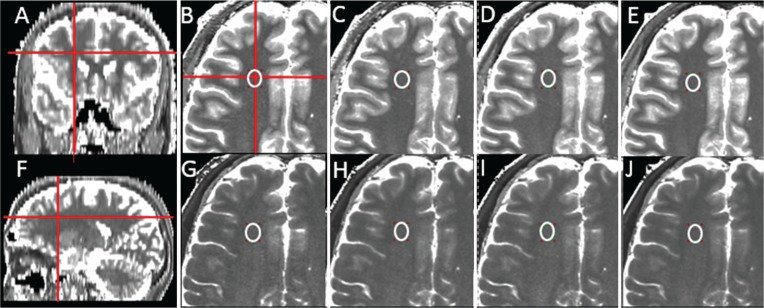
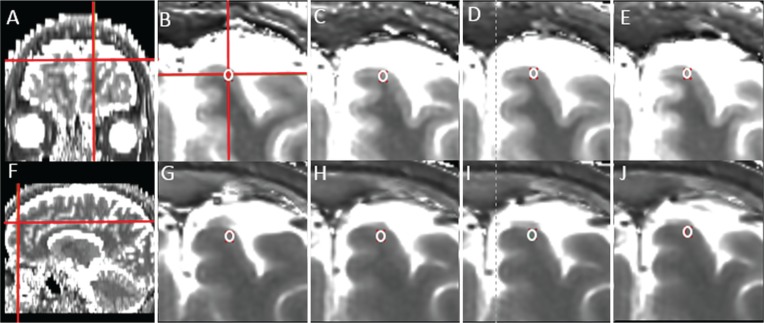
This retrospective study included nine healthy subjects who underwent MDME sequence (at 3T) with four different combinations of slice thicknesses and/or interslice gaps: slice thickness of 4 mm and interslice gap of 0 mm (TH4/G0), TH4/G1, TH5/G0, and TH5/G1. T and T were measured in various brain regions by a qualified neuroradiologist with 8 years of clinical experience: the frontal white matter (WM), occipital WM, genu, splenium, frontal cortex, thalamus, putamen, caudate head, and cerebrospinal fluid (CSF). The paired samples t-test was used to investigate the effect of different slice thicknesses and interslice gaps (TH4/G0 versus TH4/G1 and TH5/G0 versus TH5/G1). P < 0.013 was considered statistically significant.
T in all brain regions and T in the frontal WM, putamen, and CSF did not significantly change for different slice thicknesses and/or gaps (Ps > 0.013). In addition, T in all brain regions of interest did not significantly change between TH4/G0, TH4/G1, TH5/G0 and TH5/G1. However, T in some of the brain regions was higher with TH4/G0 than with TH5/G0 (occipital WM, frontal cortex, and caudate head) and with TH4/G1 than with TH5/G1 (occipital WM, genu, splenium and thalamus, all Ps < 0.013).
T estimated using the MDME sequence was stable regardless of slice thickness or gap. Although the sequence seems to provide stable relaxation values, identical slice thicknesses need to be used for follow-up to prevent potential T changes.
本研究旨在探讨多动态、多回波(MDME)序列测量的不同层厚和/或层间距对纵向弛豫时间(T)和横向弛豫时间(T)的影响。
本回顾性研究纳入了 9 名健康受试者,他们接受了 MDME 序列(3T)检查,共采用了 4 种不同的层厚和/或层间距组合:层厚 4mm 且层间距 0mm(TH4/G0)、TH4/G1、TH5/G0 和 TH5/G1。一位具有 8 年临床经验的合格神经放射科医师在不同脑区测量 T 和 T:额白质(WM)、枕 WM、膝部、压部、额皮质、丘脑、壳核、尾状核头部和脑脊液(CSF)。采用配对样本 t 检验比较不同层厚和层间距(TH4/G0 与 TH4/G1 和 TH5/G0 与 TH5/G1)的影响。P<0.013 认为具有统计学意义。
不同层厚和层间距时,所有脑区的 T 和 T(额 WM、壳核和 CSF)均无显著变化(P>0.013)。此外,TH4/G0、TH4/G1、TH5/G0 和 TH5/G1 之间各感兴趣脑区的 T 也无显著变化。然而,与 TH5/G0 相比,TH4/G0 时一些脑区的 T 更高(枕 WM、额皮质和尾状核头部),TH4/G1 时也更高(枕 WM、膝部、压部和丘脑,所有 P<0.013)。
使用 MDME 序列估计的 T 是稳定的,与层厚或层间距无关。尽管该序列似乎提供了稳定的弛豫值,但为了防止潜在的 T 变化,仍需要使用相同的层厚进行随访。