Department of Biomedical Imaging and Image-guided Therapy, Medical University of Vienna, Währinger Gürtel 18-20, 1090, Vienna, Austria.
Department of Pediatrics and Adolescent Medicine, Comprehensive Center for Pediatrics, Medical University of Vienna, Währinger Gürtel 18-20, 1090, Vienna, Austria.
Clin Neuroradiol. 2021 Jun;31(2):315-323. doi: 10.1007/s00062-020-00894-2. Epub 2020 Mar 11.
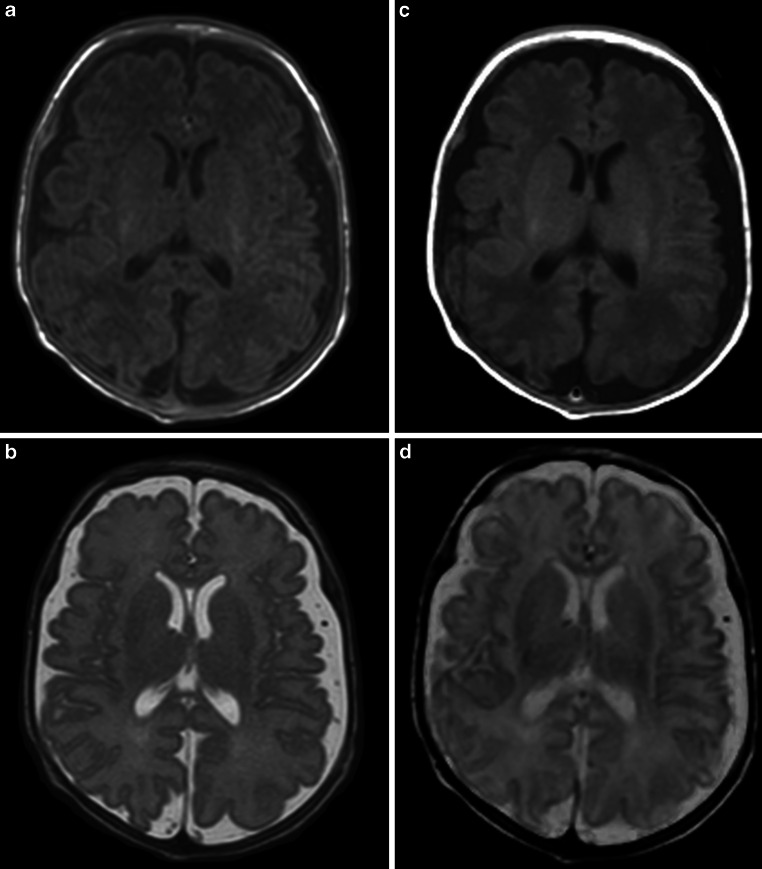
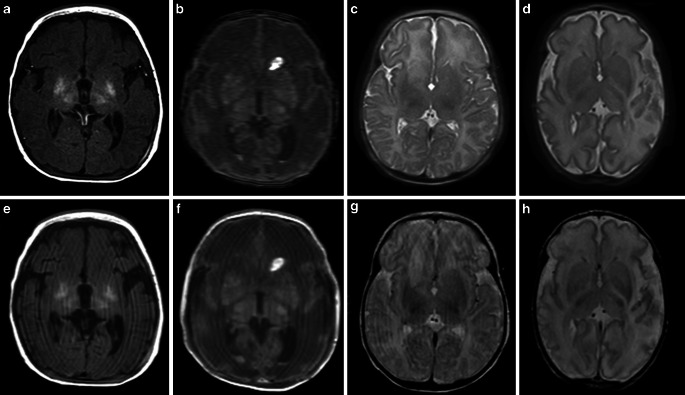
The purpose of this study was to assess the diagnostic accuracy of T1-weighted and T2-weighted contrasts generated by the MR data postprocessing software SyMRI (Synthetic MR AB, Linköping, Sweden) for neonatal brain imaging.
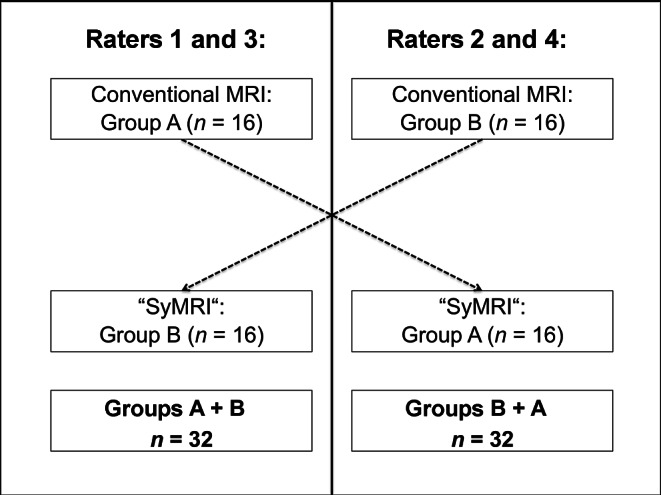
In this study 36 cases of neonatal MRI were retrospectively collected, which included T1-weighted and T2-weighted sequences as well as multi-dynamic multi-echo (MDME) sequences. Of the 36 neonates 32 were included in this study and 4 neuroradiologists independently assessed neonatal brain examinations on the basis of conventional and SyMRI-generated T1-weighted and T2-weighted contrasts, in order to determine the presence or absence of lesions. The sensitivity and specificity of both methods were calculated and compared.
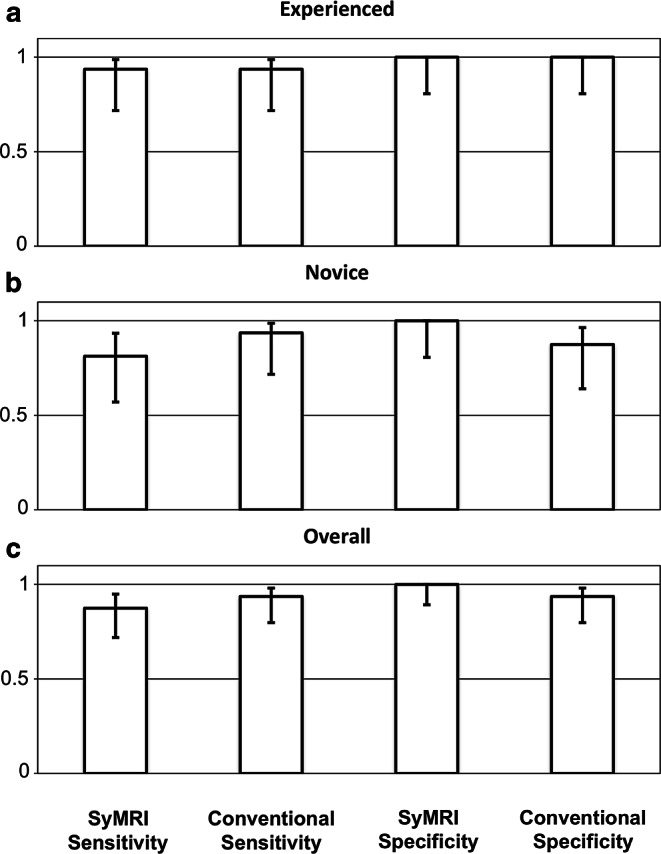
Compared to conventionally acquired T1 and T2-weighted images, SyMRI-generated contrasts showed a lower sensitivity but a higher specificity (SyMRI sensitivity 0.88, confidence interval (CI): 0.72-0.95; specificity 1, CI: 0.89-1/conventional MRI: sensitivity: 0.94, CI: 0.80-0.98; specificity: 0.94, CI: 0.80-0.98).
The T1-weighted and T2-weighted images generated by SyMRI showed a diagnostic accuracy comparable to that of conventionally acquired contrasts. In addition to semiquantitative imaging data, SyMRI provides diagnostic images and leads to a more efficient use of available imaging time in neonatal brain MRI.
本研究旨在评估由 MR 数据后处理软件 SyMRI(瑞典林克平的 Synthetic MR AB)生成的 T1 加权和 T2 加权对比在新生儿脑成像中的诊断准确性。
本研究回顾性收集了 36 例新生儿 MRI 病例,包括 T1 加权和 T2 加权序列以及多动态多回波(MDME)序列。在这 36 例新生儿中,有 32 例被纳入本研究,4 名神经放射科医生独立根据常规和 SyMRI 生成的 T1 加权和 T2 加权对比评估新生儿脑检查,以确定是否存在病变。计算并比较了这两种方法的敏感性和特异性。
与常规采集的 T1 和 T2 加权图像相比,SyMRI 生成的对比显示出较低的敏感性但较高的特异性(SyMRI 敏感性 0.88,置信区间(CI):0.72-0.95;特异性 1,CI:0.89-1/常规 MRI:敏感性:0.94,CI:0.80-0.98;特异性:0.94,CI:0.80-0.98)。
SyMRI 生成的 T1 加权和 T2 加权图像具有与常规采集对比相当的诊断准确性。除了半定量成像数据外,SyMRI 还提供了诊断图像,并使新生儿脑 MRI 中可用成像时间的利用更加高效。