Du Haiying, Li Xiaogan, Yao Pengjun, Wang Jing, Sun Yanhui, Dong Liang
Key Laboratory of Microelectronic Devices & Integrated Technology, Institute of Microelectronics, Chinese Academy of Sciences, Beijing 100029, China.
College of mechanical and Electronic Engineering, Dalian Minzu University, Dalian 116600, China.
Nanomaterials (Basel). 2018 Jul 9;8(7):509. doi: 10.3390/nano8070509.
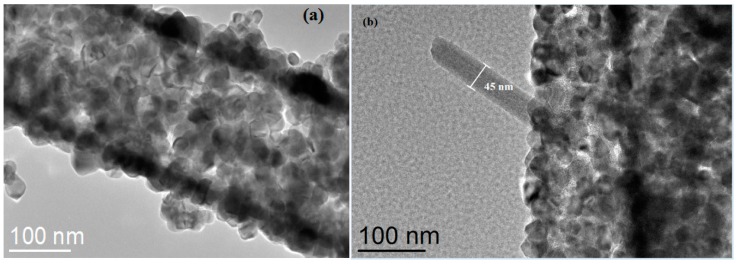
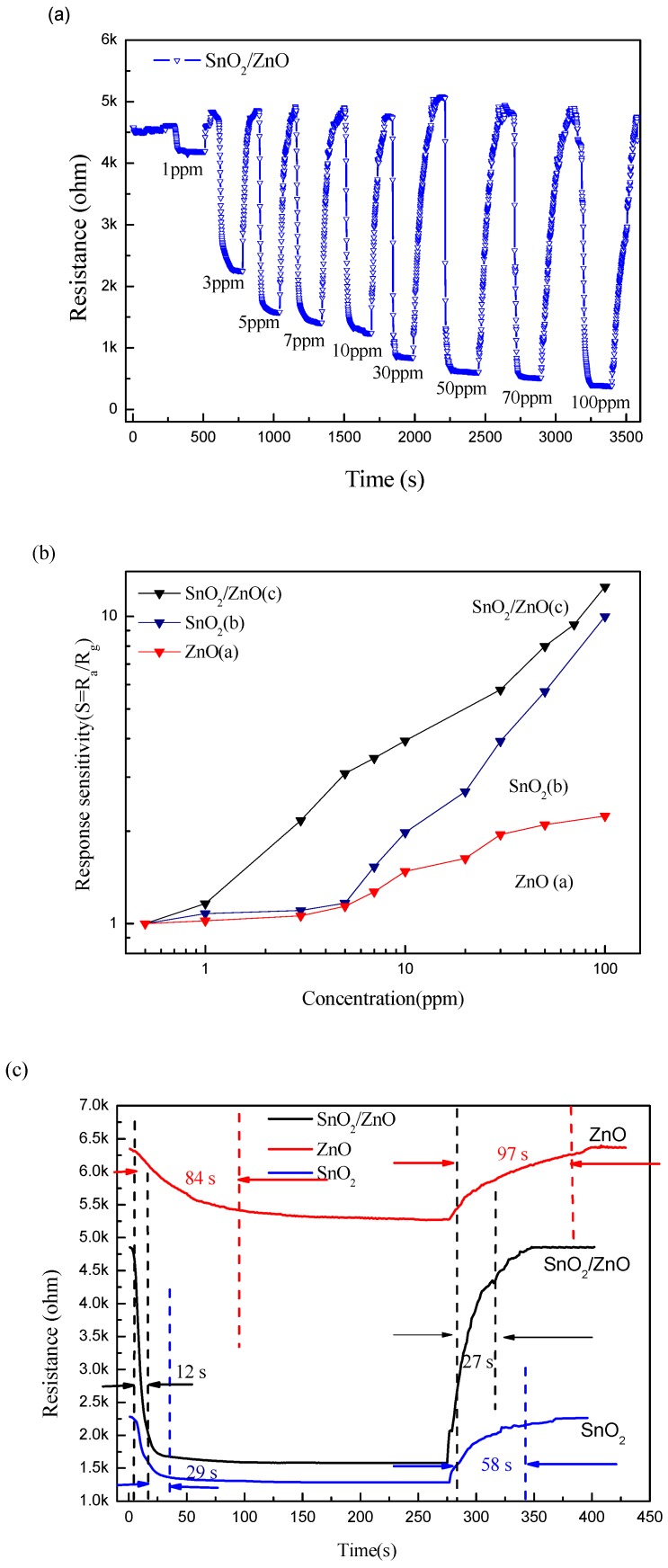
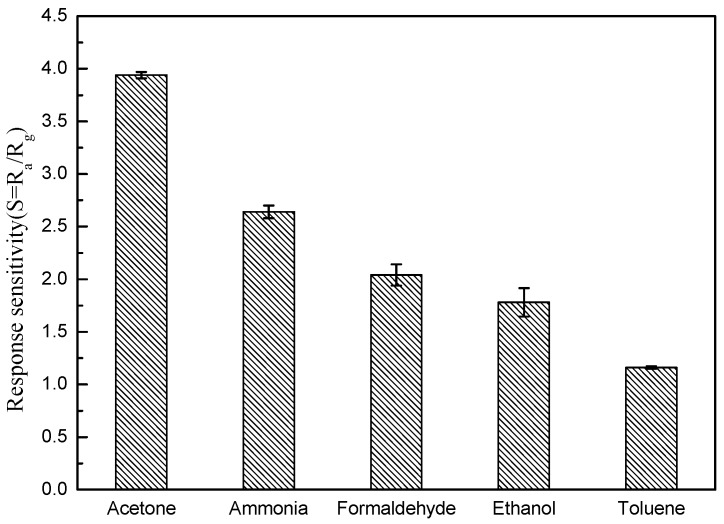
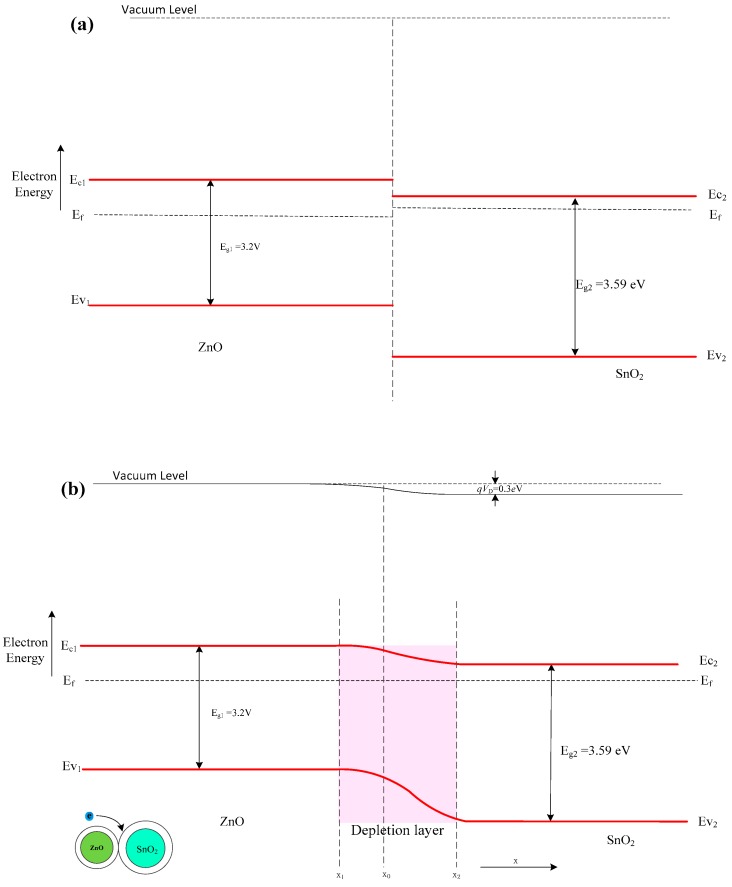
Three-dimensional hierarchical SnO₂/ZnO hetero-nanofibers were fabricated by the electrospinning method followed with a low-temperature water bath treatment. These hierarchical hollow SnO₂ nanofibers were assembled by the SnO₂ nanoparticles through the electrospinning process and then the ZnO nanorods were grown vertically on the surface of SnO₂ nanoparticles, forming the 3D nanostructure. The synthesized hollow SnO₂/ZnO heterojunctions nanofibers were further employed to be a gas-sensing material for detection of volatile organic compound (VOC) species such as acetone vapor, which is proposed as a gas biomarker for diabetes. It shows that the heterojunction nanofibers-based sensor exhibited excellent sensing properties to acetone vapor. The sensor shows a good selectivity to acetone in the interfering gases of ethanol, ammonia, formaldehyde, toluene, and methanol. The enhanced sensing performance may be due to the fact that - 3D heterojunctions, existing at the interface between ZnO nanorods and SnO₂ particles in the SnO₂/ZnO nanocomposites, could prompt significant changes in potential barrier height when exposed to acetone vapor, and gas-sensing mechanisms were analyzed and explained by Schottky barrier changes in SnO₂/ZnO 3D hetero-nanofibers.
通过静电纺丝法并结合低温水浴处理制备了三维分层的SnO₂/ZnO异质纳米纤维。这些分层的中空SnO₂纳米纤维是通过静电纺丝过程由SnO₂纳米颗粒组装而成的,然后ZnO纳米棒垂直生长在SnO₂纳米颗粒的表面,形成三维纳米结构。合成的中空SnO₂/ZnO异质结纳米纤维进一步用作气体传感材料,用于检测挥发性有机化合物(VOC),如丙酮蒸汽,丙酮蒸汽被认为是糖尿病的一种气体生物标志物。结果表明,基于异质结纳米纤维的传感器对丙酮蒸汽表现出优异的传感性能。该传感器在乙醇、氨、甲醛、甲苯和甲醇等干扰气体中对丙酮具有良好的选择性。传感性能的增强可能是由于在SnO₂/ZnO纳米复合材料中,ZnO纳米棒与SnO₂颗粒之间的界面处存在三维异质结,当暴露于丙酮蒸汽时,势垒高度会发生显著变化,并且通过分析SnO₂/ZnO三维异质纳米纤维中的肖特基势垒变化来解释气敏机理。