Department of Ecology and Genetics, University of Oulu, 90014, Oulu, Finland.
Department of Biological and Environmental Science, University of Jyväskylä, 40014, Jyväskylä, Finland.
ISME J. 2018 Nov;12(11):2801-2806. doi: 10.1038/s41396-018-0214-x. Epub 2018 Jul 9.
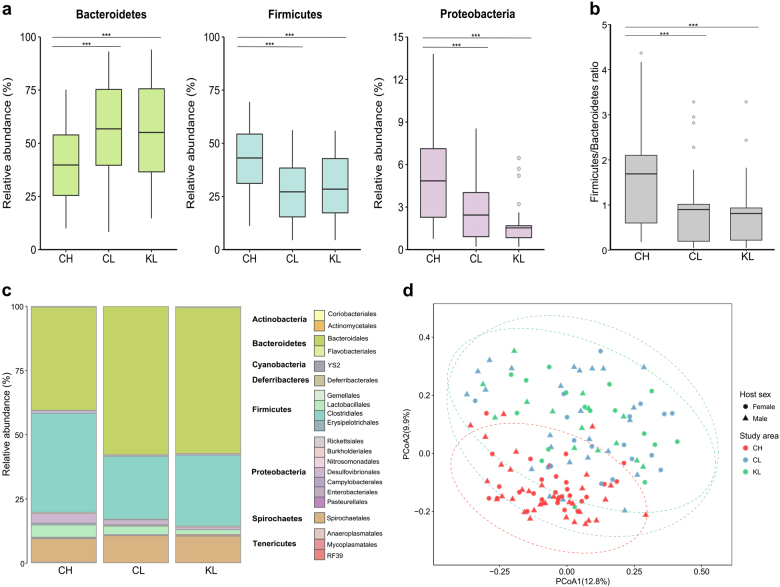
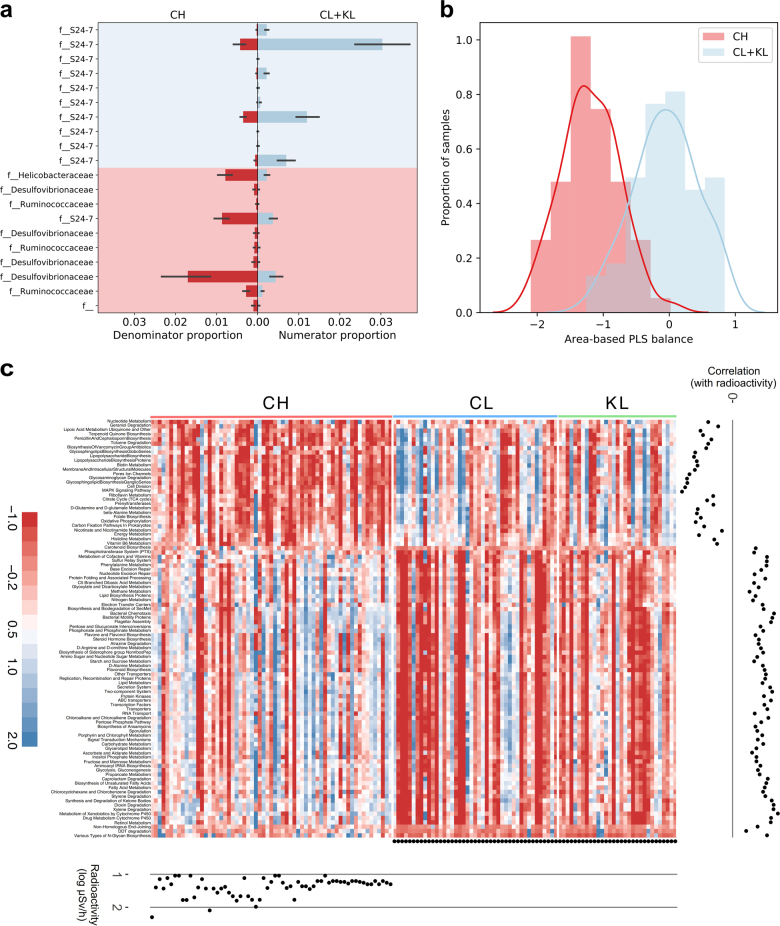
Gut microbiota composition depends on many factors, although the impact of environmental pollution is largely unknown. We used amplicon sequencing of bacterial 16S rRNA genes to quantify whether anthropogenic radionuclides at Chernobyl (Ukraine) impact the gut microbiome of the bank vole Myodes glareolus. Exposure to elevated levels of environmental radionuclides had no detectable effect on the gut community richness but was associated with an almost two-fold increase in the Firmicutes:Bacteroidetes ratio. Animals inhabiting uncontaminated areas had remarkably similar gut communities irrespective of their proximity to the nuclear power plant. Hence, samples could be classified to high-radiation or low-radiation sites based solely on microbial community with >90% accuracy. Radiation-associated bacteria had distinct inferred functional profiles, including pathways involved in degradation, assimilation and transport of carbohydrates, xenobiotics biodegradation, and DNA repair. Our results suggest that exposure to environmental radionuclides significantly alters vertebrate gut microbiota.
肠道微生物群落的组成取决于多种因素,尽管环境污染的影响在很大程度上尚不清楚。我们使用细菌 16S rRNA 基因的扩增子测序来定量分析切尔诺贝利(乌克兰)的人为放射性核素是否会影响欧洲滨鼠肠道微生物组。环境放射性核素的暴露对肠道群落丰富度没有明显的影响,但与厚壁菌门与拟杆菌门的比值增加近两倍有关。生活在未受污染地区的动物无论其与核电站的距离如何,其肠道群落都非常相似。因此,仅基于微生物群落,就可以将样本准确地分类为高辐射或低辐射区域,准确率超过 90%。与辐射相关的细菌具有独特的推测功能特征,包括参与碳水化合物降解、同化和运输、异生物质生物降解以及 DNA 修复的途径。我们的研究结果表明,环境放射性核素的暴露会显著改变脊椎动物的肠道微生物群落。