Department of Ecology and Genetics, University of Oulu, 90570, Oulu, Finland.
Institute of Biology and Medicine, Taras Shevchenko National University of Kyiv, Kyiv, 03022, Ukraine.
Microbiome. 2018 Nov 26;6(1):209. doi: 10.1186/s40168-018-0595-0.
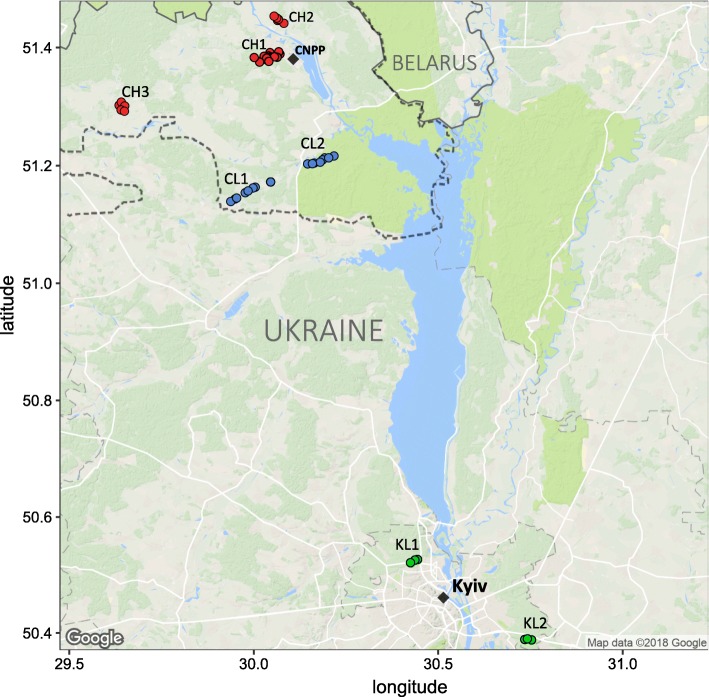
Animal skin and gut microbiomes are important components of host fitness. However, the processes that shape the microbiomes of wildlife are poorly understood, particularly with regard to exposure to environmental contaminants. We used 16S rRNA amplicon sequencing to quantify how exposure to radionuclides impacts the skin and gut microbiota of a small mammal, the bank vole Myodes glareolus, inhabiting areas within and outside the Chernobyl Exclusion Zone (CEZ), Ukraine.
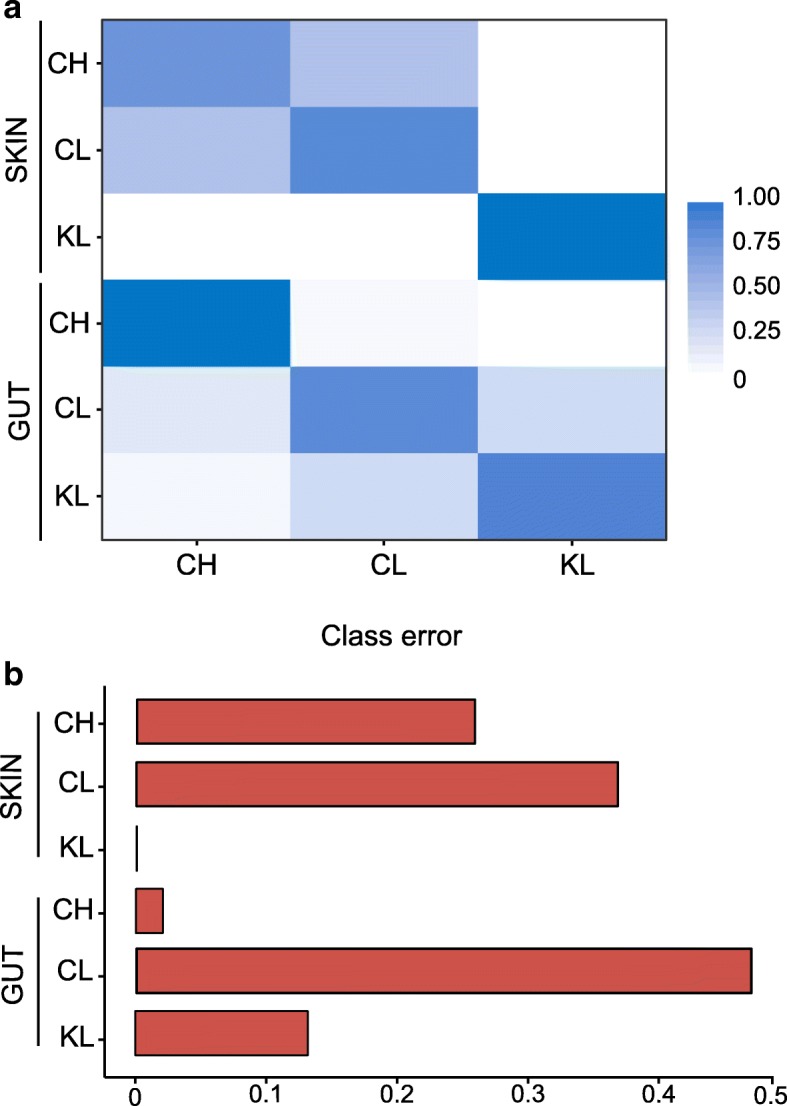
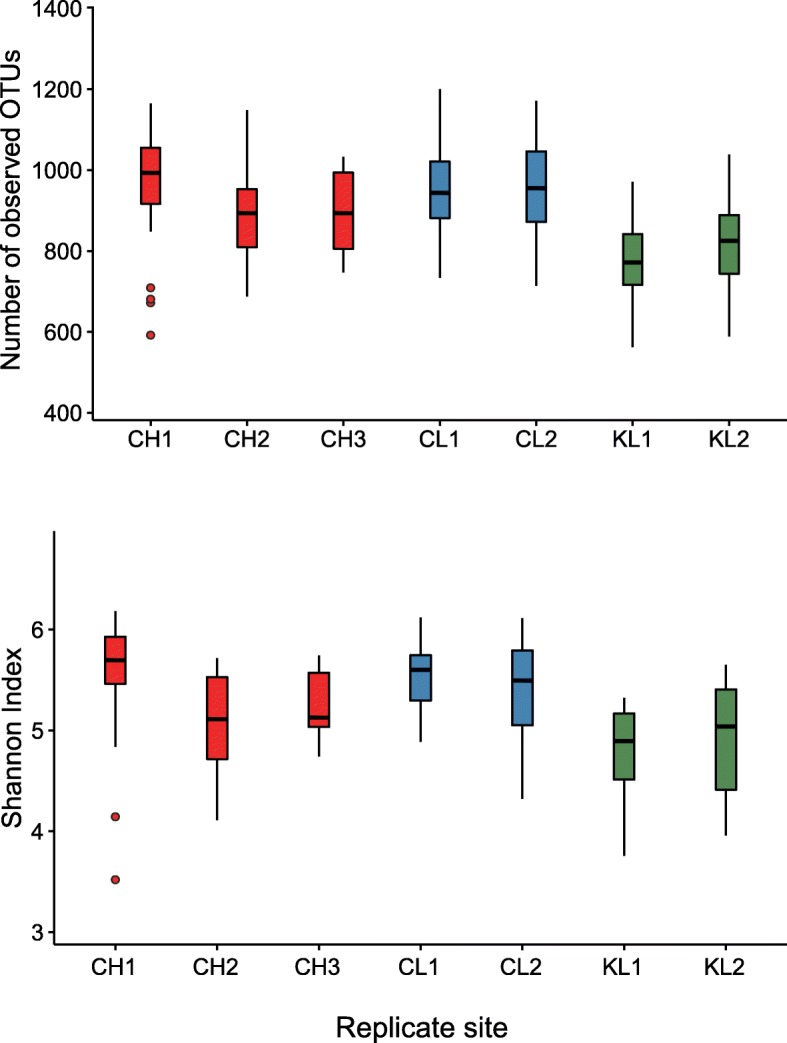
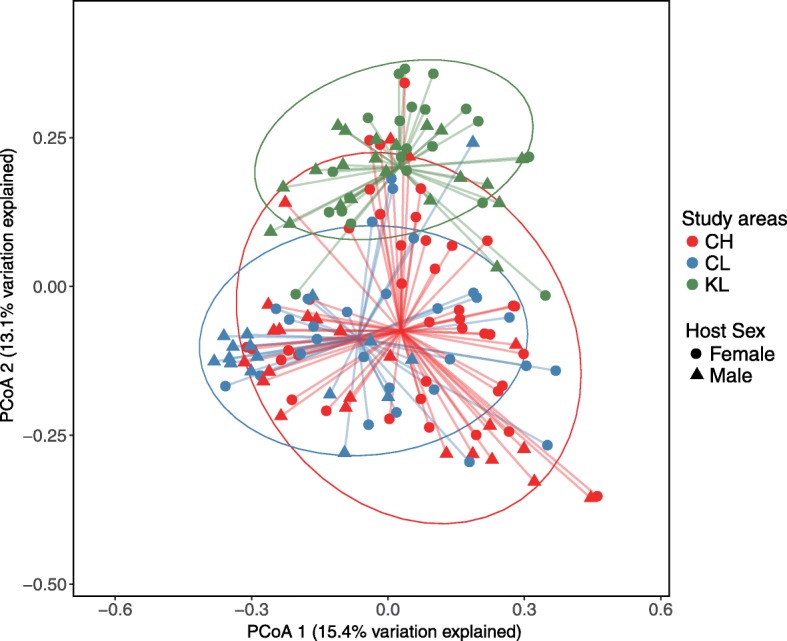
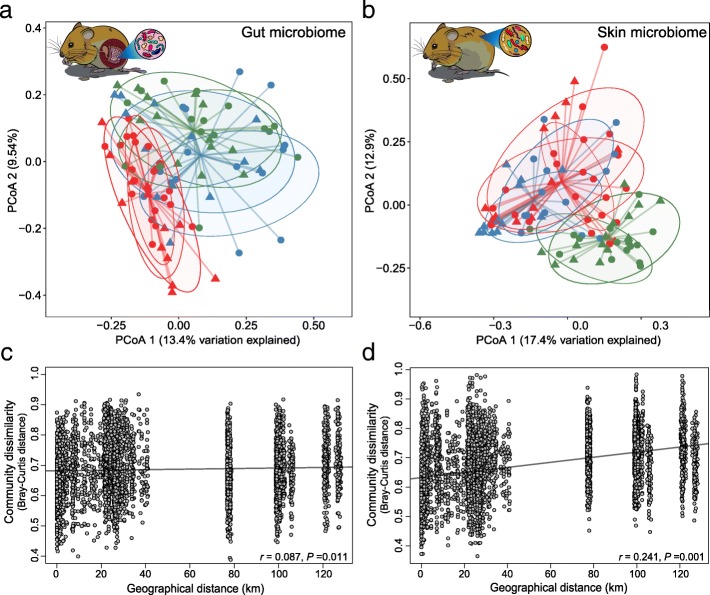
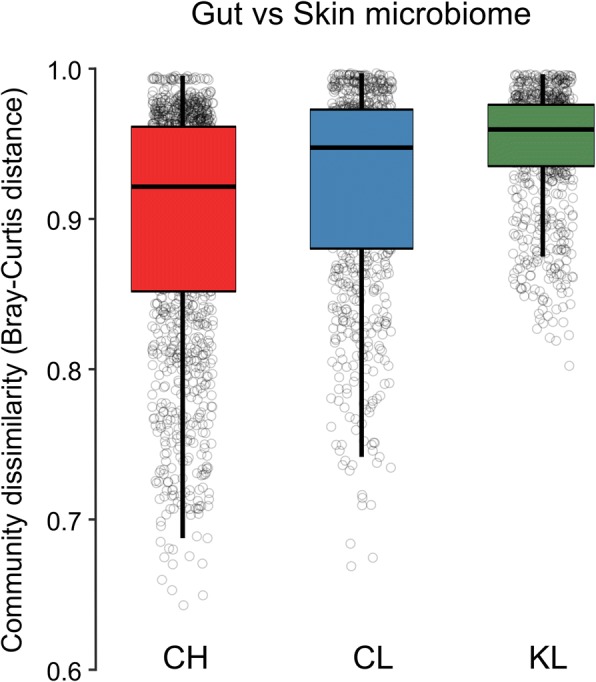
Skin microbiomes of male bank voles were more diverse than females. However, the most pronounced differences in skin microbiomes occurred at a larger spatial scale, with higher alpha diversity in the skin microbiomes of bank voles from areas within the CEZ, whether contaminated by radionuclides or not, than in the skin microbiomes of animals from uncontaminated locations outside the CEZ, near Kyiv. Similarly, irrespective of the level of radionuclide contamination, skin microbiome communities (beta diversity) showed greater similarities within the CEZ, than to the areas near Kyiv. Hence, bank vole skin microbiome communities are structured more by geography than the level of soil radionuclides. This pattern presents a contrast with bank vole gut microbiota, where microbiomes could be strikingly similar among distant (~ 80 km of separation), uncontaminated locations, and where differences in microbiome community structure were associated with the level of radioactivity. We also found that the level of (dis)similarity between the skin and gut microbiome communities from the same individuals was contingent on the potential for exposure to radionuclides.
Bank vole skin and gut microbiomes have distinct responses to similar environmental cues and thus are structured at different spatial scales. Our study shows how exposure to environmental pollution can affect the relationship between a mammalian host's skin and gut microbial communities, potentially homogenising the microbiomes in habitats affected by pollution.
动物的皮肤和肠道微生物群是宿主健康的重要组成部分。然而,野生动物微生物群形成的过程还不太清楚,尤其是在接触环境污染物方面。我们使用 16S rRNA 扩增子测序来量化放射性核素暴露如何影响居住在乌克兰切尔诺贝利禁区(CEZ)内外的小哺乳动物——欧洲林鼠的皮肤和肠道微生物群。
雄性欧洲林鼠的皮肤微生物群比雌性更具多样性。然而,皮肤微生物群最显著的差异发生在更大的空间尺度上,CEZ 内受放射性核素污染或未受污染地区的欧洲林鼠皮肤微生物群的 alpha 多样性高于基辅附近未受污染地区的动物皮肤微生物群。同样,无论放射性核素污染水平如何,皮肤微生物群落(beta 多样性)在 CEZ 内的相似性都大于与基辅附近地区的相似性。因此,欧洲林鼠的皮肤微生物群落结构更多地受到地理位置的影响,而不是土壤放射性核素的水平。这种模式与欧洲林鼠肠道微生物群形成鲜明对比,在距离较远(相隔约 80 公里)、未受污染的地点,肠道微生物群可能非常相似,而微生物群落结构的差异与放射性水平有关。我们还发现,同一个体的皮肤和肠道微生物群落之间的(不)相似程度取决于接触放射性核素的可能性。
欧洲林鼠的皮肤和肠道微生物群对相似的环境线索有不同的反应,因此在不同的空间尺度上构建。我们的研究表明,暴露于环境污染物如何影响哺乳动物宿主的皮肤和肠道微生物群落之间的关系,可能使受污染栖息地的微生物群落同质化。