Søndergaard Jonas Nørskov, van Heeringen Simon J, Looman Maaike W G, Tang Chunling, Triantis Vassilis, Louche Pauline, Janssen-Megens Eva M, Sieuwerts Anieta M, Martens John W M, Logie Colin, Stunnenberg Hendrik G, Ansems Marleen, Adema Gosse J
Radiotherapy & OncoImmunology Laboratory, Department of Radiation Oncology, Radboud Institute for Molecular Life Sciences, Radboud University Medical Center, Nijmegen, Netherlands.
Department of Molecular Developmental Biology, Faculty of Science, Radboud Institute for Molecular Life Sciences, Radboud University, Nijmegen, Netherlands.
Front Immunol. 2018 Jun 22;9:1420. doi: 10.3389/fimmu.2018.01420. eCollection 2018.
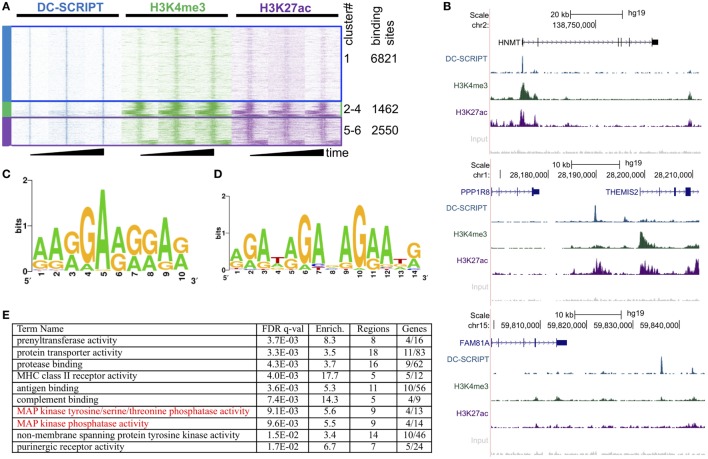
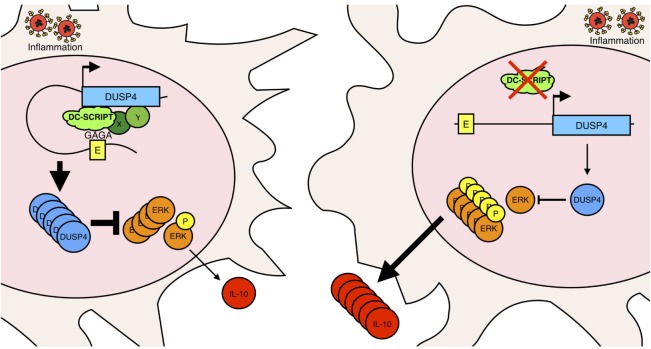
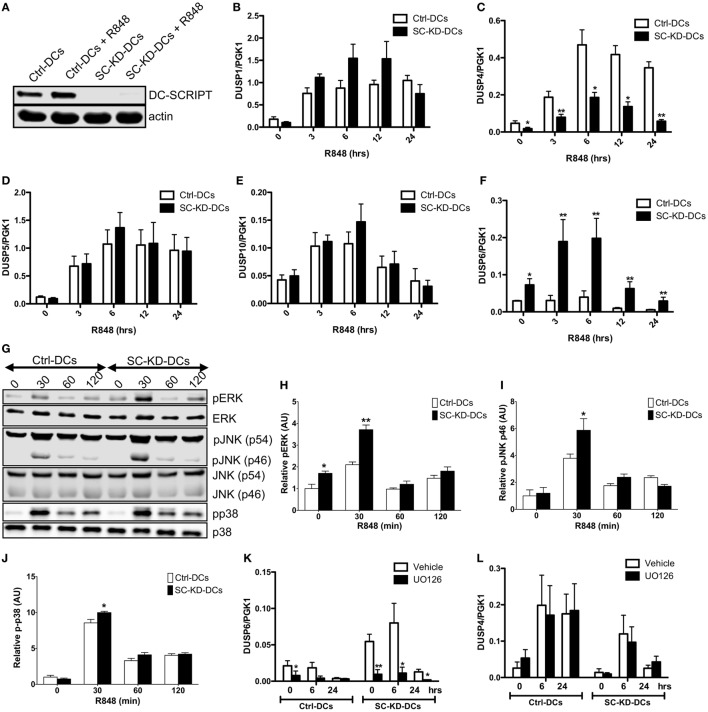
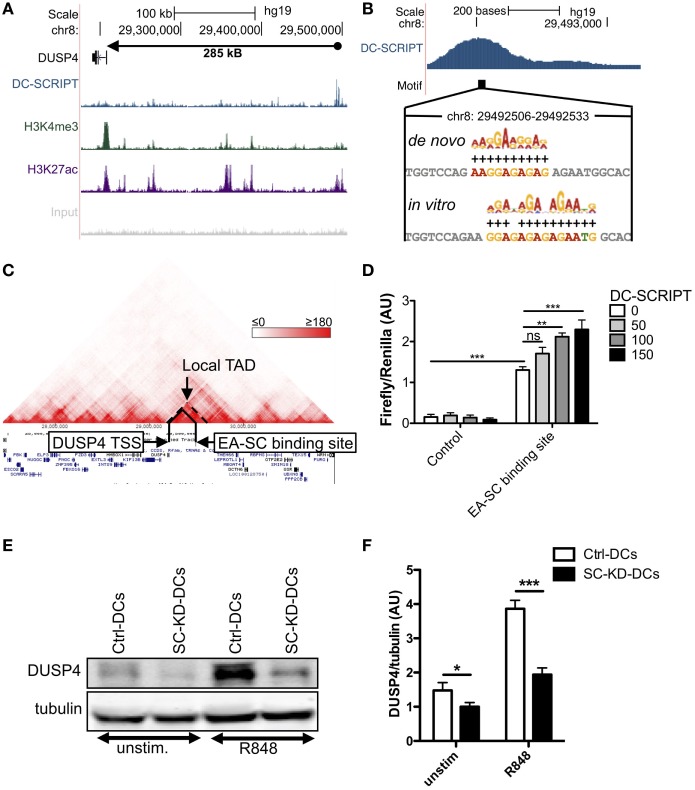
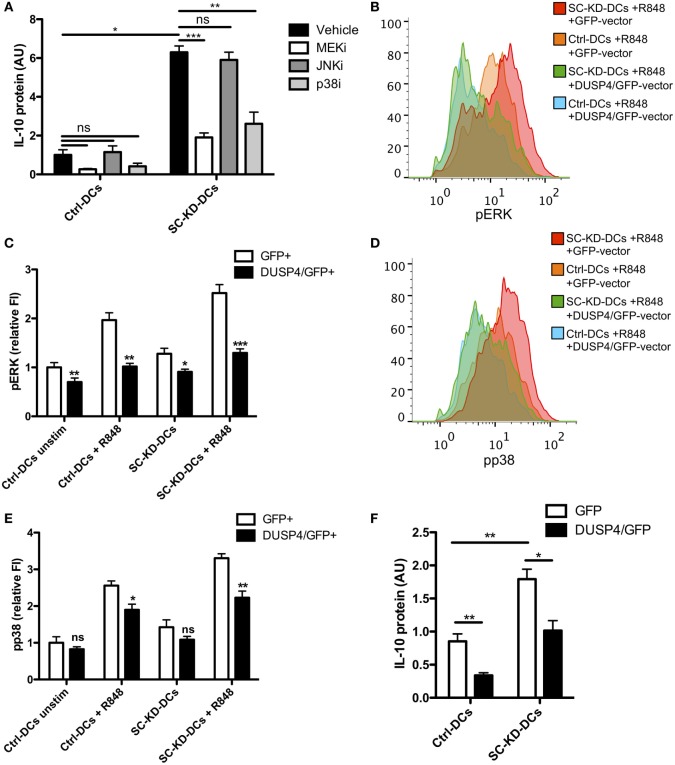
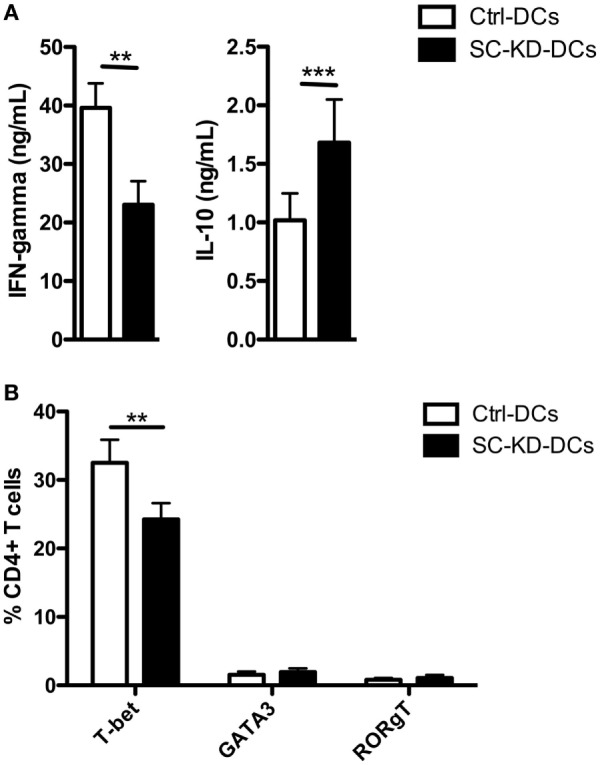
Dendritic cell (DC)-based immunotherapy makes use of the DC's ability to direct the adaptive immune response toward activation or inhibition. DCs perform this immune orchestration in part by secretion of selected cytokines. The most potent anti-inflammatory cytokine interleukin-10 (IL-10) is under tight regulation, as it needs to be predominantly expressed during the resolution phase of the immune response. Currently it is not clear whether there is active suppression of IL-10 by DCs at the initial pro-inflammatory stage of the immune response. Previously, knockdown of the DC-specific transcription factor DC-SCRIPT has been demonstrated to mediate an extensive increase in IL-10 production upon encounter with pro-inflammatory immune stimuli. Here, we explored how DC-SCRIPT contributes to IL-10 suppression under pro-inflammatory conditions by applying chromatin immunoprecipitation sequencing analysis of DC-SCRIPT and the epigenetic marks H3K4me3 and H3K27ac in human DCs. The data showed binding of DC-SCRIPT to a GA-rich motif at H3K27ac-marked genomic enhancers that associated with genes encoding MAPK dual-specificity phosphatases (DUSPs). Functional studies revealed that upon knockdown of DC-SCRIPT, human DCs express much less DUSP4 and exhibit increased phosphorylation of the three major MAPKs (ERK, JNK, and p38). Enhanced ERK signaling in DC-SCRIPT-knockdown-DCs led to higher production of IL-10, which was reverted by rescuing DUSP4 expression. Finally, DC-SCRIPT-knockdown-DCs induced less IFN-γ and increased IL-10 production in naïve T cells, indicative for a more anti-inflammatory phenotype. In conclusion, we have delineated a new mechanism by which DC-SCRIPT allows DCs to limit IL-10 production under inflammatory conditions and potentiate pro-inflammatory Th1 responses. These insights may be exploited to improve DC-based immunotherapies.
基于树突状细胞(DC)的免疫疗法利用DC引导适应性免疫反应激活或抑制的能力。DC部分通过分泌特定细胞因子来进行这种免疫调控。最有效的抗炎细胞因子白细胞介素10(IL-10)受到严格调控,因为它需要在免疫反应的消退阶段大量表达。目前尚不清楚在免疫反应的初始促炎阶段DC是否会主动抑制IL-10。此前,已证明敲低DC特异性转录因子DC-SCRIPT可介导在遇到促炎免疫刺激时IL-10产生的大量增加。在此,我们通过对人DC中DC-SCRIPT以及表观遗传标记H3K4me3和H3K27ac进行染色质免疫沉淀测序分析,探索了DC-SCRIPT在促炎条件下如何促进对IL-10的抑制作用。数据显示DC-SCRIPT与富含GA的基序结合,该基序位于与编码丝裂原活化蛋白激酶双特异性磷酸酶(DUSP)的基因相关的H3K27ac标记的基因组增强子上。功能研究表明,敲低DC-SCRIPT后,人DC表达的DUSP4少得多,并且三种主要丝裂原活化蛋白激酶(ERK、JNK和p38)的磷酸化增加。DC-SCRIPT敲低的DC中增强的ERK信号导致IL-10产生增加,通过挽救DUSP4表达可使其恢复。最后,DC-SCRIPT敲低的DC在初始T细胞中诱导产生的IFN-γ较少,而IL-10产生增加,表明其具有更抗炎的表型。总之,我们阐明了一种新机制,通过该机制DC-SCRIPT使DC在炎症条件下限制IL-10的产生,并增强促炎的Th1反应。这些见解可能有助于改进基于DC的免疫疗法。