Department of Radiation Medicine and Applied Sciences, San Diego Moores Cancer Center, University of California, San Diego, San Diego, CA, United States.
Moores Comprehensive Cancer Center, University of California, San Diego, San Diego, CA, United States.
Front Immunol. 2019 Mar 18;10:491. doi: 10.3389/fimmu.2019.00491. eCollection 2019.
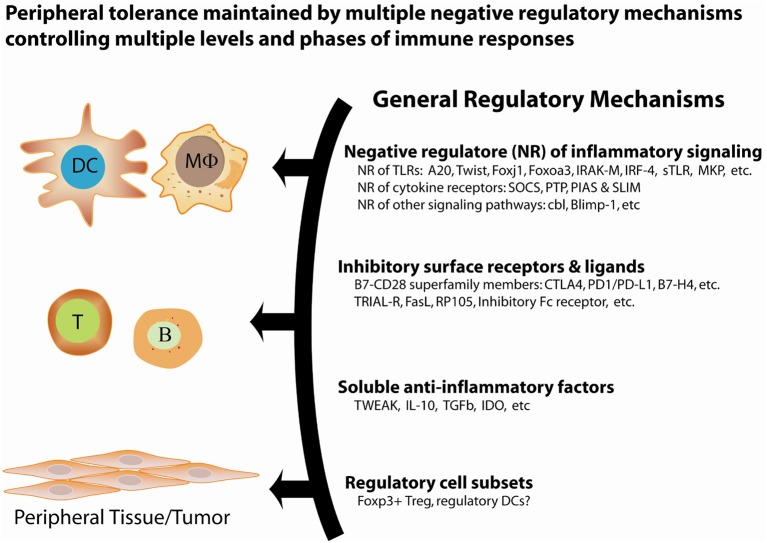
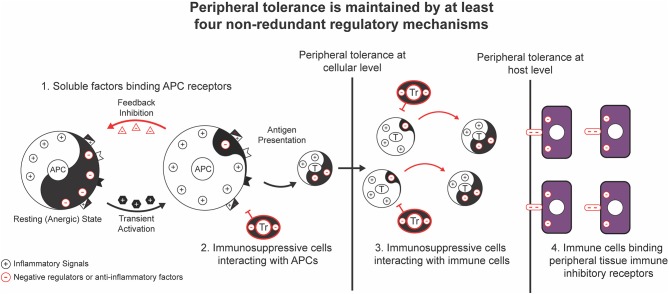
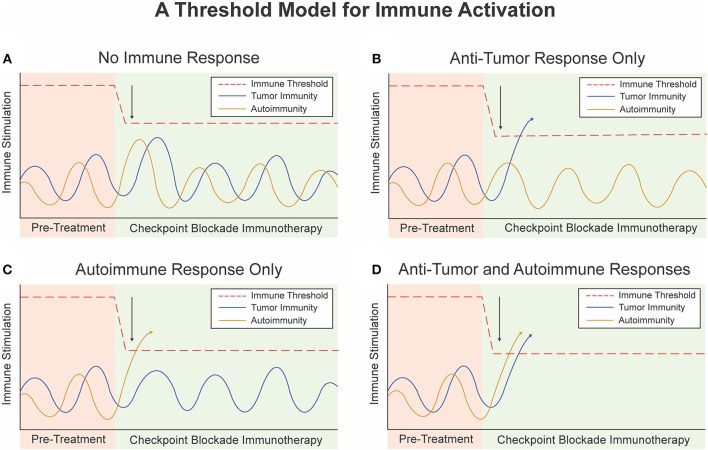
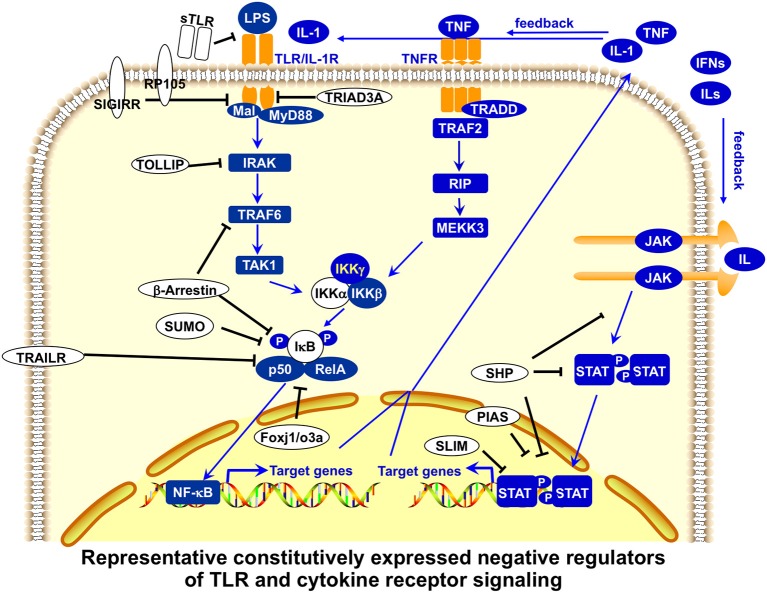
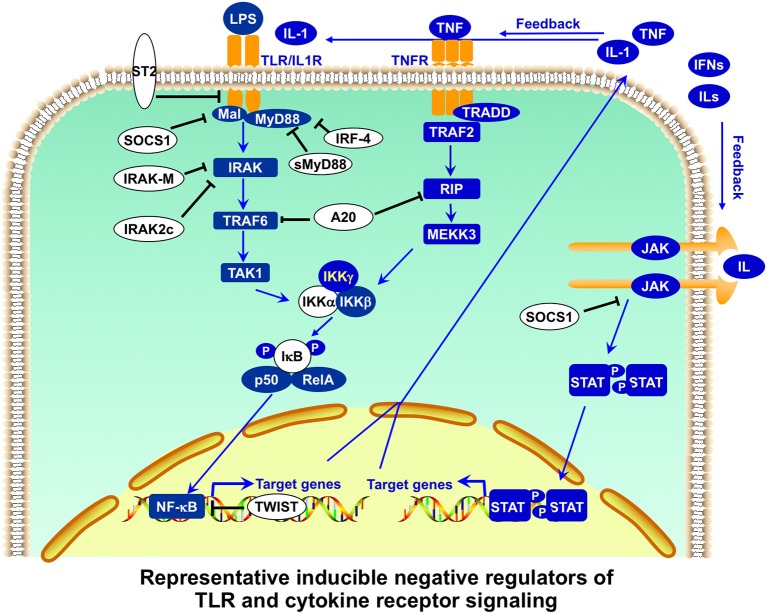
Continued discoveries of negative regulators of inflammatory signaling provide detailed molecular insights into peripheral tolerance and anti-tumor immunity. Accumulating evidence indicates that peripheral tolerance is maintained at multiple levels of immune responses by negative regulators of proinflammatory signaling, soluble anti-inflammatory factors, inhibitory surface receptors & ligands, and regulatory cell subsets. This review provides a global overview of these regulatory machineries that work in concert to maintain peripheral tolerance at cellular and host levels, focusing on the direct and indirect regulation of T cells. The recent success of checkpoint blockade immunotherapy (CBI) has initiated a dramatic shift in the paradigm of cancer treatment. Unprecedented responses to CBI have highlighted the central role of T cells in both anti-tumor immunity and peripheral tolerance and underscored the importance of T cell exhaustion in cancer. We discuss the therapeutic implications of modulating the negative regulators of T cell function for tumor immunotherapy with an emphasis on inhibitory surface receptors & ligands-central players in T cell exhaustion and targets of checkpoint blockade immunotherapies. We then introduce a Threshold Model for Immune Activation-the concept that these regulatory mechanisms contribute to defining a set threshold of immunogenic (proinflammatory) signaling required to elicit an anti-tumor or autoimmune response. We demonstrate the value of the Threshold Model in understanding clinical responses and immune related adverse events in the context of peripheral tolerance, tumor immunity, and the era of Checkpoint Blockade Immunotherapy.
持续发现炎症信号的负调控因子为外周耐受和抗肿瘤免疫提供了详细的分子见解。越来越多的证据表明,通过促炎信号的负调控因子、可溶性抗炎因子、抑制性表面受体和配体以及调节性细胞亚群,在免疫反应的多个水平上维持外周耐受。这篇综述概述了这些调节机制,它们协同作用以在细胞和宿主水平维持外周耐受,重点关注 T 细胞的直接和间接调节。检查点阻断免疫疗法 (CBI) 的最近成功引发了癌症治疗模式的巨大转变。对 CBI 的前所未有的反应突出了 T 细胞在抗肿瘤免疫和外周耐受中的核心作用,并强调了 T 细胞耗竭在癌症中的重要性。我们讨论了调节 T 细胞功能的负调节剂对肿瘤免疫治疗的治疗意义,重点介绍了抑制性表面受体和配体 - T 细胞耗竭的核心参与者和检查点阻断免疫治疗的靶点。然后,我们引入了免疫激活的阈值模型的概念,即这些调节机制有助于定义引发抗肿瘤或自身免疫反应所需的免疫原性(促炎)信号的设定阈值。我们证明了阈值模型在理解外周耐受、肿瘤免疫和检查点阻断免疫治疗时代的临床反应和免疫相关不良事件方面的价值。