Borovcanin Milica M, Janicijevic Slavica M, Jovanovic Ivan P, Gajovic Nevena, Arsenijevic Nebojsa N, Lukic Miodrag L
Department of Psychiatry, Faculty of Medical Sciences, University of Kragujevac, Kragujevac, Serbia.
Faculty of Medical Sciences, Center for Molecular Medicine and Stem Cell Research, University of Kragujevac, Kragujevac, Serbia.
Front Psychiatry. 2018 Jun 22;9:271. doi: 10.3389/fpsyt.2018.00271. eCollection 2018.
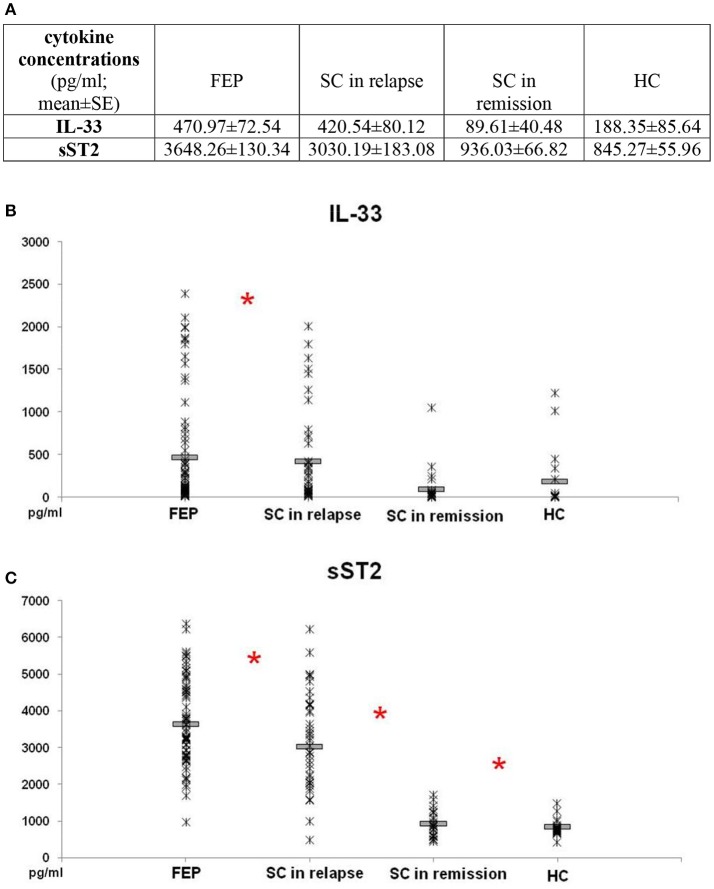
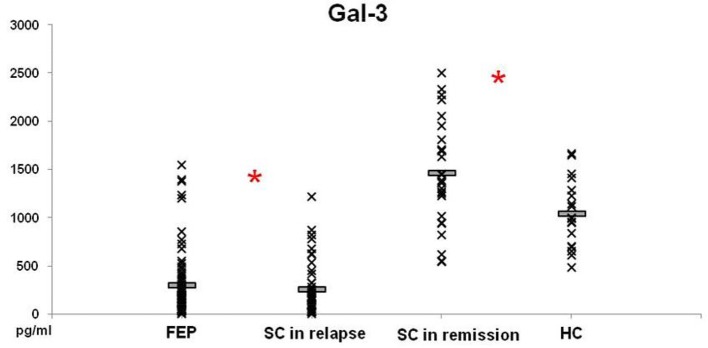
Schizophrenia and treatment of this disorder are often accompanied with metabolic syndrome and cardiovascular issues. Alterations in the serum level of innate immune mediators, such as interleukin-33 (IL-33) and its receptor IL-33R (ST2) and Galectin-3 (Gal-3) were observed in these conditions. Moreover, these parameters are potential prognostic and therapeutic markers. There is also accumulating evidence that these molecules play a role in neuroinflammation. Therefore, in this study we have investigated the serum level of Gal-3, IL-33 and soluble ST2 (sST2) in different stages of schizophrenia. Gal-3 levels were elevated in remission and lower in schizophrenia exacerbation in comparison with controls. Levels of IL-33 and sST2 are higher in schizophrenia exacerbation in comparison with controls and patients in remission. This initial analysis of new markers of neuroinflammation suggested their involvement in schizophrenia pathophysiology and/or cardiometabolic comorbidity.
精神分裂症及其治疗常常伴有代谢综合征和心血管问题。在这些情况下,观察到先天免疫介质血清水平的改变,如白细胞介素-33(IL-33)及其受体IL-33R(ST2)和半乳糖凝集素-3(Gal-3)。此外,这些参数是潜在的预后和治疗标志物。也有越来越多的证据表明这些分子在神经炎症中起作用。因此,在本研究中,我们调查了精神分裂症不同阶段Gal-3、IL-33和可溶性ST2(sST2)的血清水平。与对照组相比,Gal-3水平在缓解期升高,在精神分裂症加重期降低。与对照组和缓解期患者相比,精神分裂症加重期IL-33和sST2水平更高。对神经炎症新标志物的这一初步分析表明它们参与了精神分裂症的病理生理学和/或心脏代谢合并症。