Fisher Robert N, Brehme Cheryl S, Hathaway Stacie A, Hovey Tim E, Warburton Manna L, Stokes Drew C
Western Ecological Research Center US Geological Survey San Diego California.
California Department of Fish and Wildlife Santa Clarita California.
Ecol Evol. 2018 May 20;8(12):6124-6132. doi: 10.1002/ece3.4158. eCollection 2018 Jun.
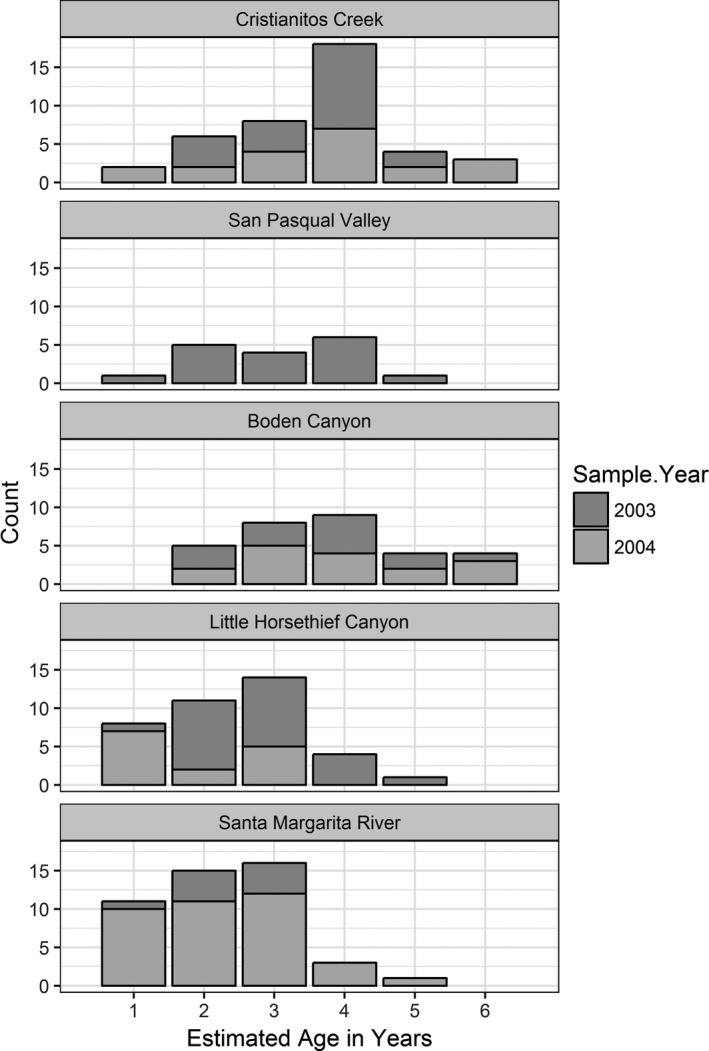
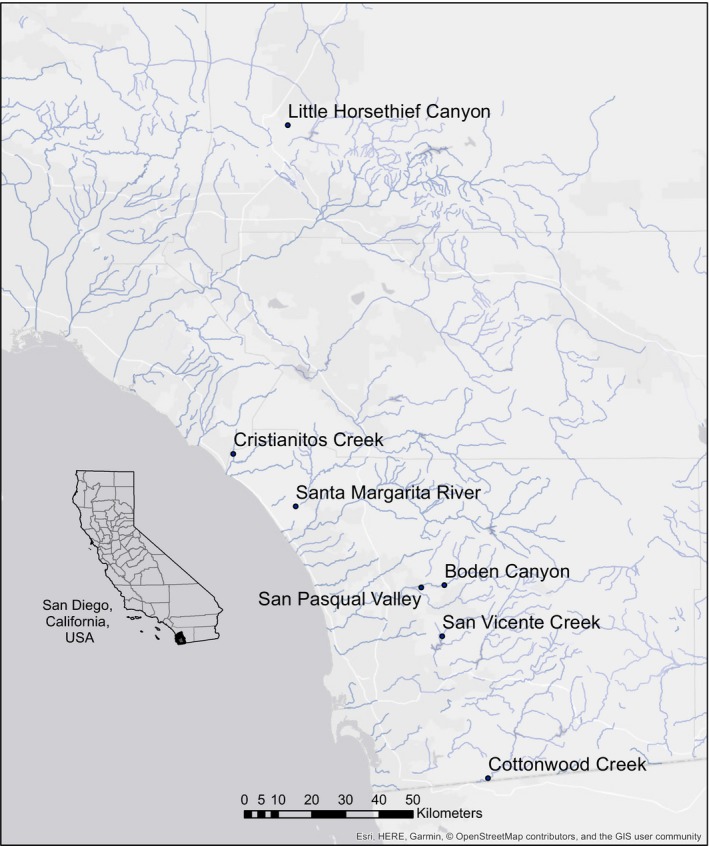
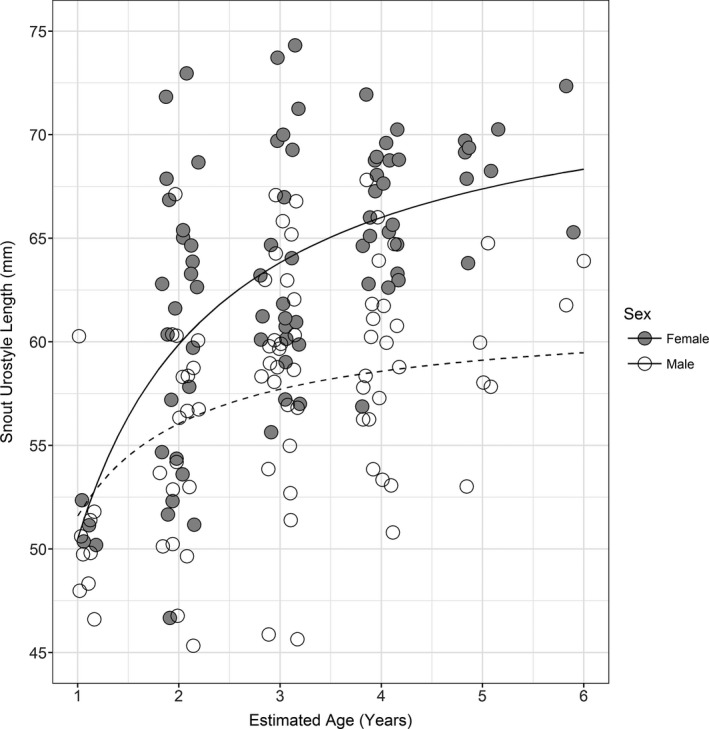
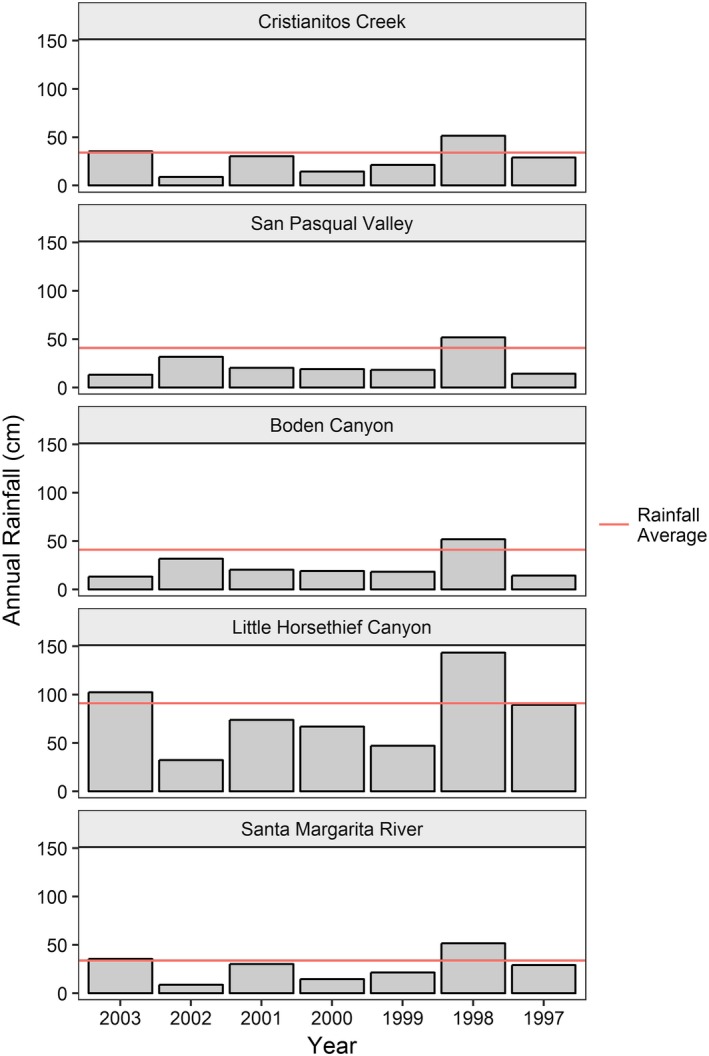
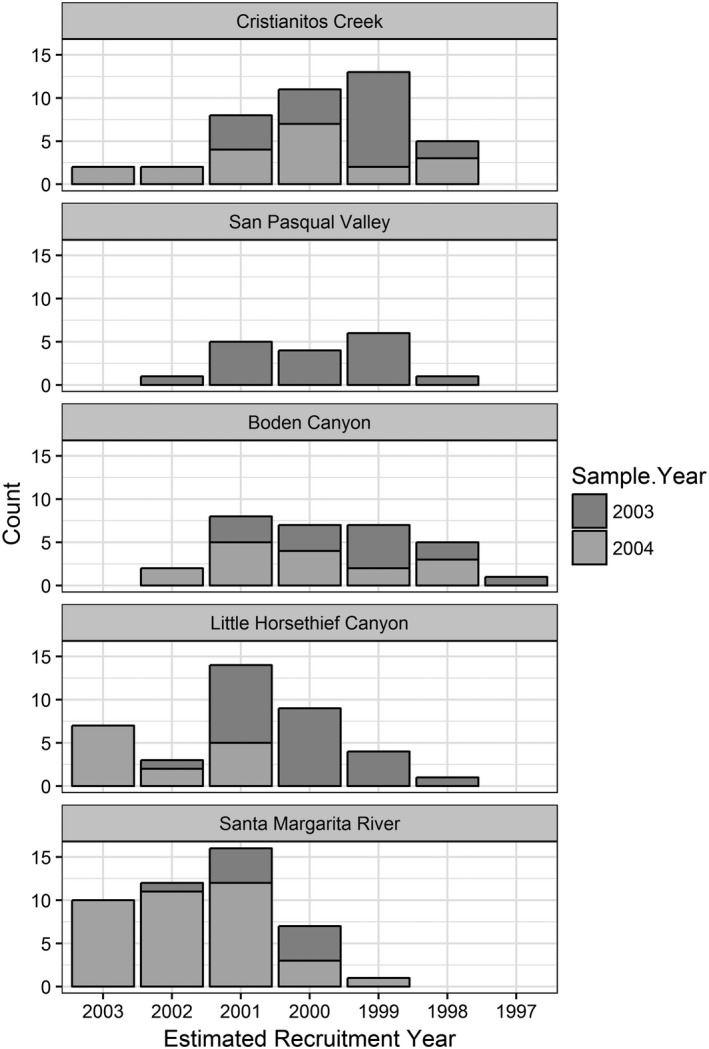
The arroyo southwestern toad is a specialized and federally endangered amphibian endemic to the coastal plains and mountains of central and southern California and northwestern Baja California. It is largely unknown how long these toads live in natural systems, how their population demographics vary across occupied drainages, and how hydrology affects age structure. We used skeletochronology to estimate the ages of adult arroyo toads in seven occupied drainages with varying surface water hydrology in southern California. We processed 179 adult toads with age estimates between 1 and 6 years. Comparisons between skeletochronological ages and known ages of PIT tagged toads showed that skeletochronology likely underestimated toad age by up to 2 years, indicating they may live to 7 or 8 years, but nonetheless major patterns were evident. Arroyo toads showed sexual size dimorphism with adult females reaching a maximum size of 12 mm greater than males. Population age structure varied among the sites. Age structure at sites with seasonally predictable surface water was biased toward younger individuals, which indicated stable recruitment for these populations. Age structures at the ephemeral sites were biased toward older individuals with cohorts roughly corresponding to higher rainfall years. These populations are driven by surface water availability, a stochastic process, and thus more unstable. Based on our estimates of toad ages, climate predictions of extreme and prolonged drought events could mean that the number of consecutive dry years could surpass the maximum life span of toads making them vulnerable to extirpation, especially in ephemeral freshwater systems. Understanding the relationship between population demographics and hydrology is essential for predicting species resilience to projected changes in weather and rainfall patterns. The arroyo toad serves as a model for understanding potential responses to climatic and hydrologic changes in Mediterranean stream systems. We recommend development of adaptive management strategies to address these threats.
阿罗约西南蟾蜍是一种特化的、受到联邦政府濒危保护的两栖动物,原产于加利福尼亚州中部和南部以及下加利福尼亚州西北部的沿海平原和山脉。在自然系统中,这些蟾蜍的寿命有多长、其种群统计学特征在已占据的排水区域中如何变化,以及水文状况如何影响年龄结构,这些情况在很大程度上尚不清楚。我们利用骨骼年代学来估计南加州七个具有不同地表水水文状况的已占据排水区域内成年阿罗约蟾蜍的年龄。我们处理了179只成年蟾蜍,其年龄估计在1至6岁之间。对带有被动集成应答器(PIT)标记蟾蜍的骨骼年代与已知年龄进行比较后发现,骨骼年代学可能将蟾蜍年龄低估了多达2年,这表明它们可能活到7或8岁,但尽管如此主要模式还是很明显的。阿罗约蟾蜍表现出两性体型差异,成年雌性的最大体型比雄性大12毫米。不同地点的种群年龄结构各不相同。地表水季节性可预测的地点的年龄结构偏向年轻个体,这表明这些种群的补充稳定。临时性地点的年龄结构偏向年长个体,同年龄组大致对应于降雨较多的年份。这些种群受地表水可利用性这一随机过程驱动,因此更不稳定。根据我们对蟾蜍年龄的估计,气候预测的极端和长期干旱事件可能意味着连续干旱年份的数量可能超过蟾蜍的最大寿命,使它们容易灭绝,尤其是在临时性淡水系统中。了解种群统计学特征与水文状况之间的关系对于预测物种对预计的天气和降雨模式变化的恢复力至关重要。阿罗约蟾蜍可作为理解地中海溪流系统对气候和水文变化潜在反应的一个模型。我们建议制定适应性管理策略来应对这些威胁。