Shaikh Maaz, Peters Sanne A E, Woodward Mark, Norton Robyn, Jha Vivekanand
The George Institute for Global Health, New Delhi, India.
The George Institute for Global Health, University of Oxford, Oxford, UK.
BMJ Glob Health. 2018 Jun 29;3(3):e000859. doi: 10.1136/bmjgh-2018-000859. eCollection 2018.
Universal healthcare coverage provides healthcare and financial protection to all citizens and might help to facilitate gender equity in care. We assessed the utilisation of hospital care services among women and men in a large underprivileged population with access to free hospital care in India.
The Rajiv Aarogyasri Community Health Insurance Scheme, a state-sponsored scheme, provided access to free hospital care for poor households across undivided Andhra Pradesh. Claims data for hospitalisations between 2008 and 2012 were analysed to determine the number of individuals, hospitalisations, bed-days and hospital expenditure for sex-specific and sex-neutral conditions, by sex, disease category and age group.
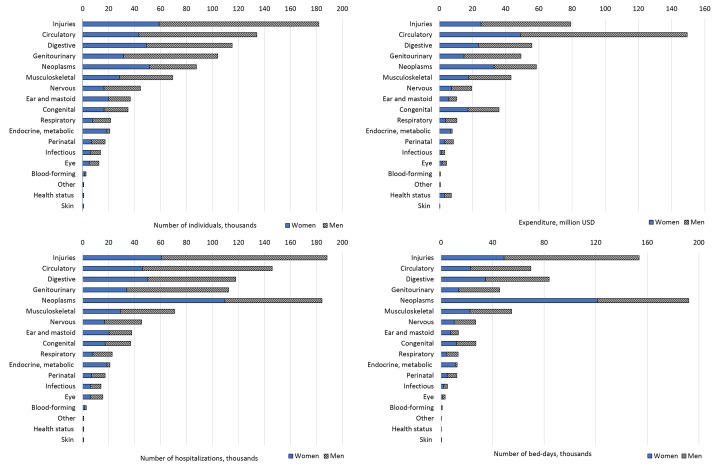
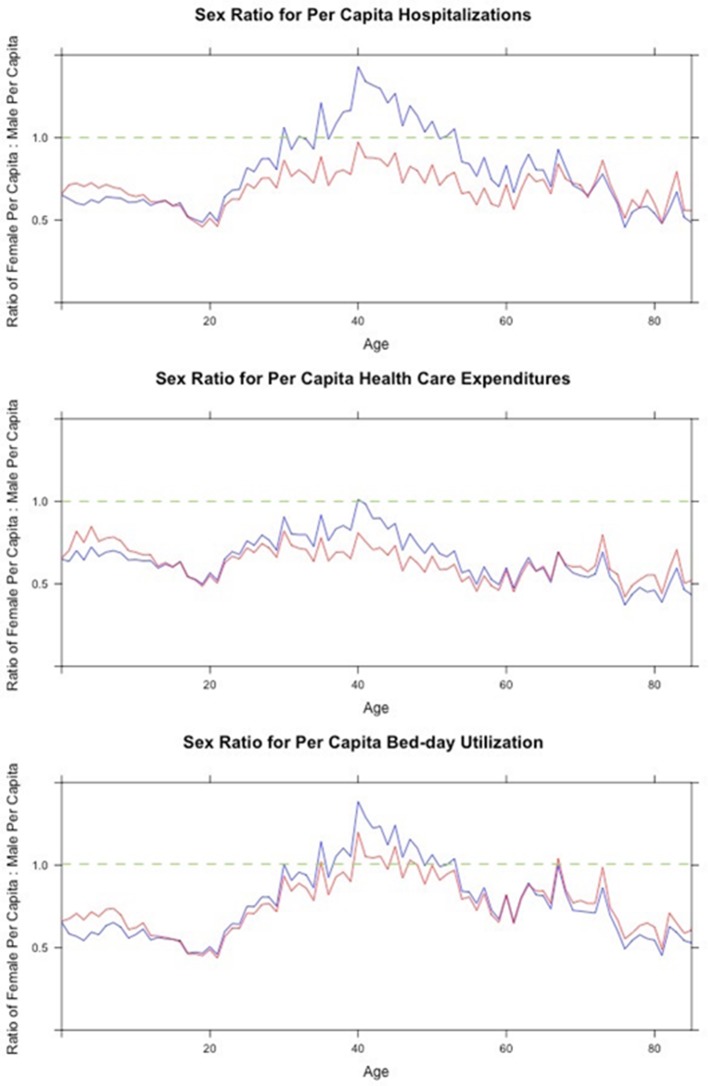
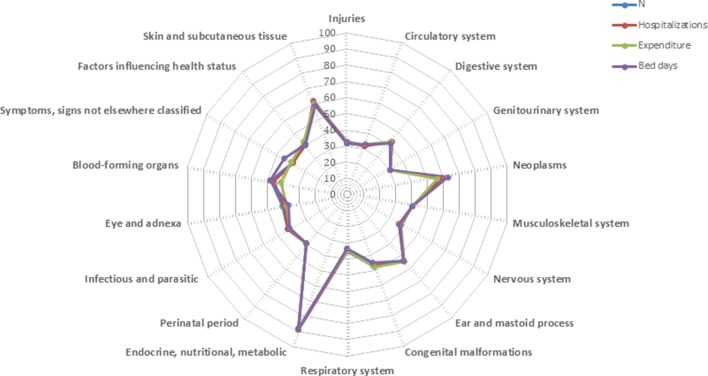
A total of 961 442 individuals (43% women), 1 223 723 hospitalisations (48% women), 7.7 million bed-days (47% women) and hospital expenditure of US$579.3 million (42% women) were recorded. Sex-specific conditions accounted for 27% of hospitalisations, 12% of bed-days and 15% of costs for women, compared with 5%, 4% and 4% in men. Women had a lower share of hospitalisations (42%), bed-days (45%) and costs (39%) for sex-neutral conditions than men. These findings were observed across 14 of 18 disease categories and across all age groups, but especially for older and younger women.
In this large underprivileged population in India with access to free hospital care, utilisation of hospital care differed for women and men. For sex-neutral conditions, women accessed a smaller proportion of care than men, suggesting that coverage of hospital care alone is not sufficient to guarantee gender equity in access to healthcare.
全民医保为所有公民提供医疗保健和经济保障,可能有助于促进医疗服务中的性别平等。我们评估了印度一大弱势群体中男女对医院护理服务的利用情况,该群体可享受免费医院护理。
拉吉夫·阿罗吉亚斯里社区健康保险计划是一项由邦政府资助的计划,为印度未分割的安得拉邦的贫困家庭提供免费医院护理。分析了2008年至2012年期间的住院理赔数据,以确定按性别、疾病类别和年龄组划分的针对特定性别的疾病和非特定性别的疾病的就诊人数、住院次数、住院天数和医院支出。
共记录了961442人(43%为女性)、1223723次住院(48%为女性)、770万住院天数(47%为女性)以及5.793亿美元的医院支出(42%为女性)。针对特定性别的疾病占女性住院次数的27%、住院天数的12%和费用的15%,而男性分别为5%、4%和4%。在非特定性别的疾病方面,女性的住院次数(42%)、住院天数(45%)和费用(39%)的占比均低于男性。在18种疾病类别中的14种以及所有年龄组中均观察到了这些结果,尤其是老年和年轻女性。
在印度这个可享受免费医院护理的庞大弱势群体中,男女对医院护理的利用情况存在差异。对于非特定性别的疾病,女性获得护理的比例低于男性,这表明仅靠医院护理覆盖范围不足以保证在获得医疗保健方面的性别平等。