Helen and Robert Appel Alzheimer's disease Research Institute, Weill Cornell Medicine, New York, NY, USA.
Department of Biochemistry, Feil Family Brain and Mind Research Institute, Weill Cornell Medicine, New York, NY, USA.
J Parkinsons Dis. 2018;8(3):385-398. doi: 10.3233/JPD-171263.
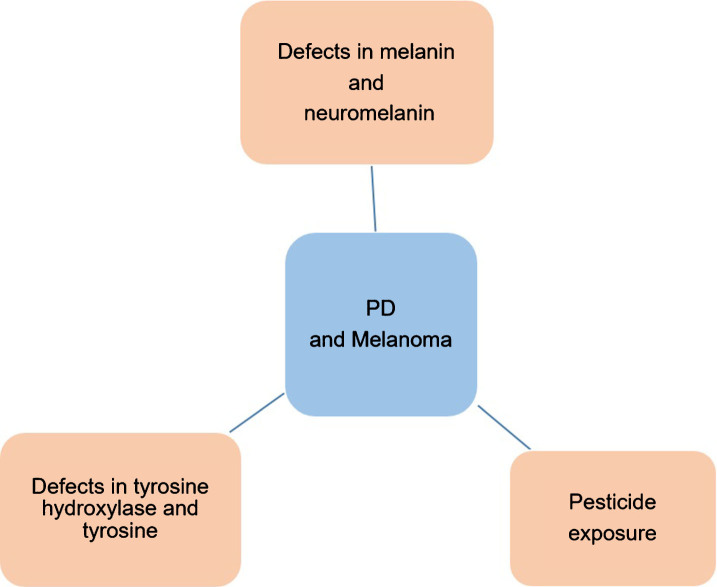
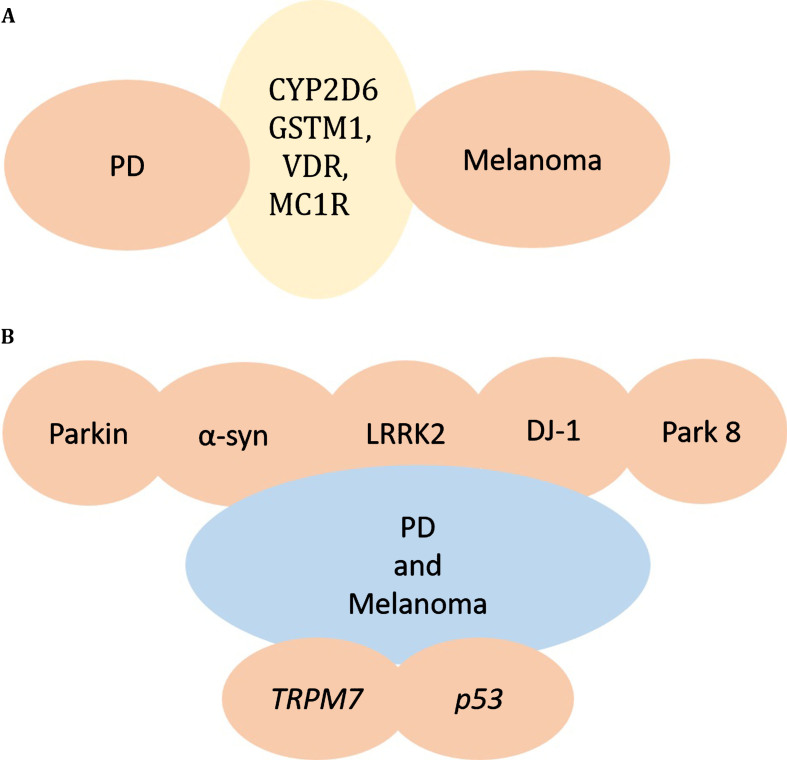
Parkinson's disease (PD) is a neurodegenerative disorder that is characterized by loss of dopaminergic neurons in the substantia nigra pars compacta, depletion of dopamine in the striatum and the presence of Lewy bodies. Cancer is uncontrolled growth of cells in the body and migration of these cells from their site of origin to other parts of the body. PD and cancer are two opposite diseases, one arising from cell proliferation and the other from cell degeneration. This fundamental difference is consistent with inverse comorbidity between most cancers and neurodegenerative diseases. However, a positive association of PD and melanoma has been reported which has recently become of significant interest. A link between PD and cancer has been supported by many epidemiological studies, most of which show that PD patients have a lower risk of developing most cancers than the general population. However, the mechanisms underlying this epidemiological observation are not known. In this review we focus on epidemiological studies correlating PD and melanoma and the possible mechanisms underlying the co-occurrence of the two diseases. We explore possible explanations for the important observations that more PD patients develop melanoma that would otherwise be expected and vice-versa.
帕金森病(PD)是一种神经退行性疾病,其特征是黑质致密部多巴胺能神经元丧失,纹状体多巴胺耗竭和路易体的存在。癌症是指体内细胞的不受控制的生长以及这些细胞从起源部位迁移到身体的其他部位。PD 和癌症是两种相反的疾病,一种源于细胞增殖,另一种源于细胞退化。这种根本差异与大多数癌症和神经退行性疾病之间的反向共病一致。然而,已经报道了 PD 和黑色素瘤之间的阳性关联,最近这一关联引起了人们的极大兴趣。许多流行病学研究支持 PD 和癌症之间的联系,其中大多数研究表明,与一般人群相比,PD 患者发生大多数癌症的风险较低。但是,这种流行病学观察背后的机制尚不清楚。在这篇综述中,我们重点介绍了与 PD 和黑色素瘤相关的流行病学研究以及两种疾病同时发生的可能机制。我们探讨了可能的解释,以说明为什么会出现更多 PD 患者患上黑色素瘤,而不是预期的那样,反之亦然。