Animal Biotechnology Division, National Institute of Animal Science, Rural Development Administration, 1500 Kongjwipatjwi-ro, Isero-myeon, Wanju-gun, Jeollabuk-do, 565-851, Republic of Korea.
Department of Biochemistry, Faculty of Biological Sciences, Quaid-i-Azam University, Islamabad, Pakistan.
Stem Cell Res Ther. 2021 Jan 25;12(1):79. doi: 10.1186/s13287-020-02100-z.
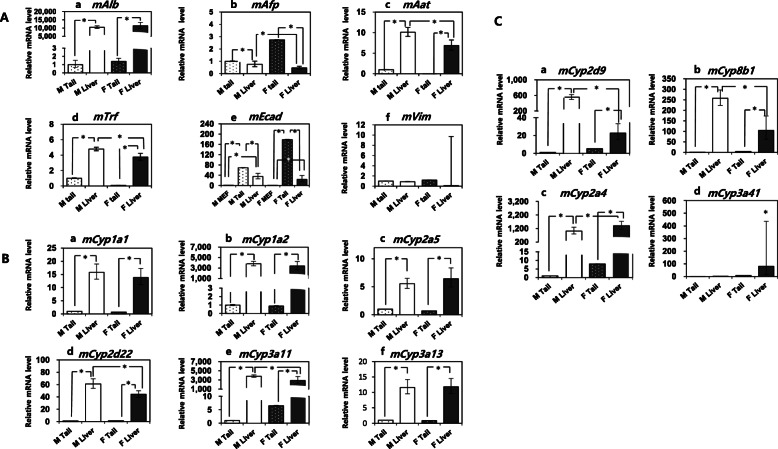
The liver is one of the vital organs involved in detoxification and metabolism. The sex-based differences between the functionality of male and female liver have been previously reported, i.e., male's liver are good in alcohol clearance and lipid metabolism, while female's liver are better in cholesterol metabolism. To date, studies on novel drug toxicity have not considered the sex-specific dimorphic nature of the liver. However, the use of hepatocyte-like cells to treat liver diseases has increased recently.
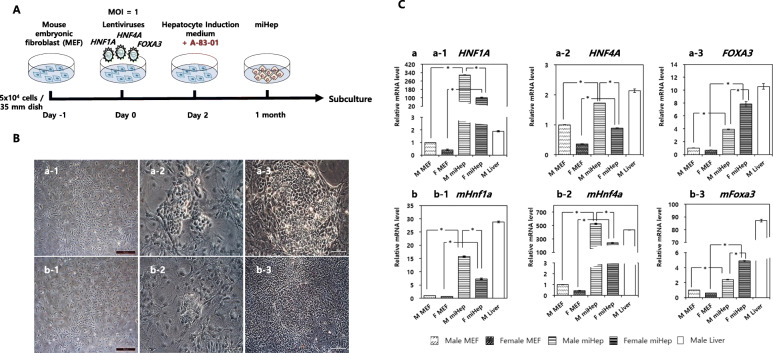
Mouse embryos were isolated from a pregnant female C57BL/6J mouse where mouse embryonic fibroblasts (MEFs) were isolated from back skin tissue of each embryo. MEFs were transduced with human transcription factors hHnf1α, hHnf4α, and hFoxa3 using the lentiviral system. The transduced MEFs were further treated with hepatocyte-conditioned media followed by its analysis through RT-qPCR, immunofluorescence, functional assays, and finally whole-transcriptome RNA sequencing analysis. For in vivo investigation, the mouse hepatocyte-like cells (miHep) were transplanted into CCl4-induced acute liver mouse model.
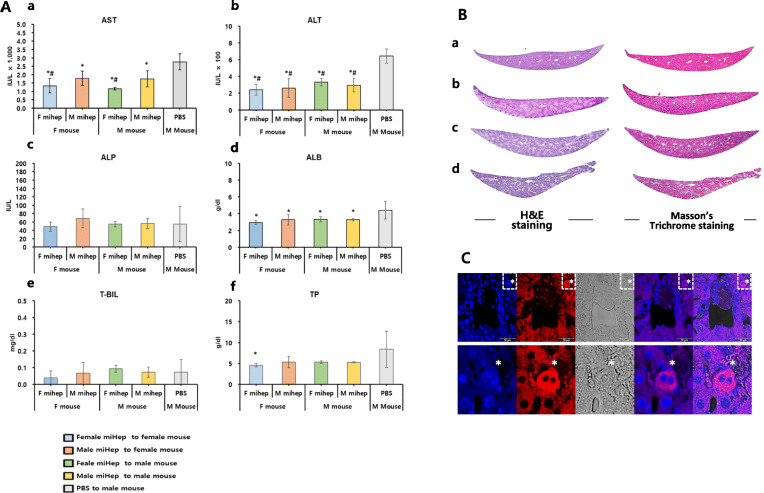
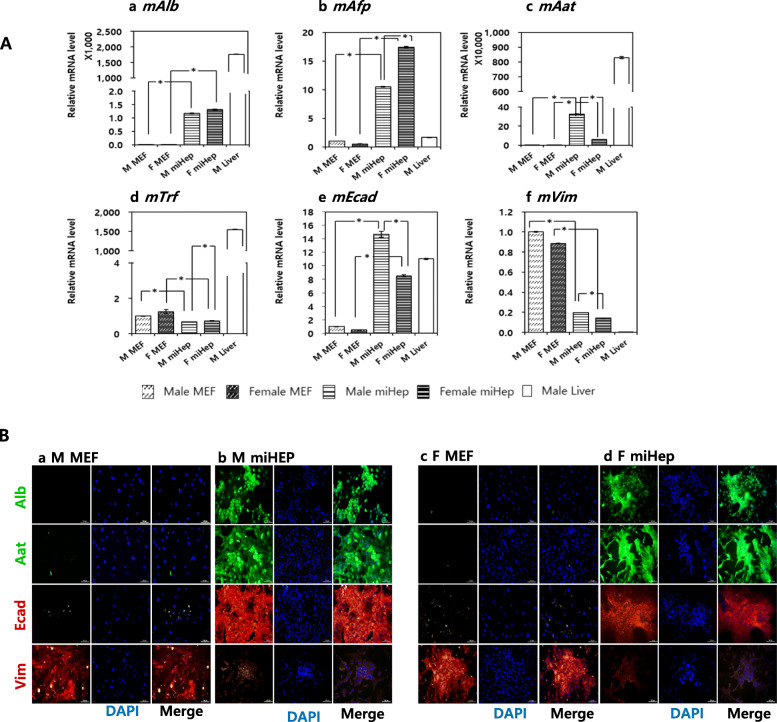
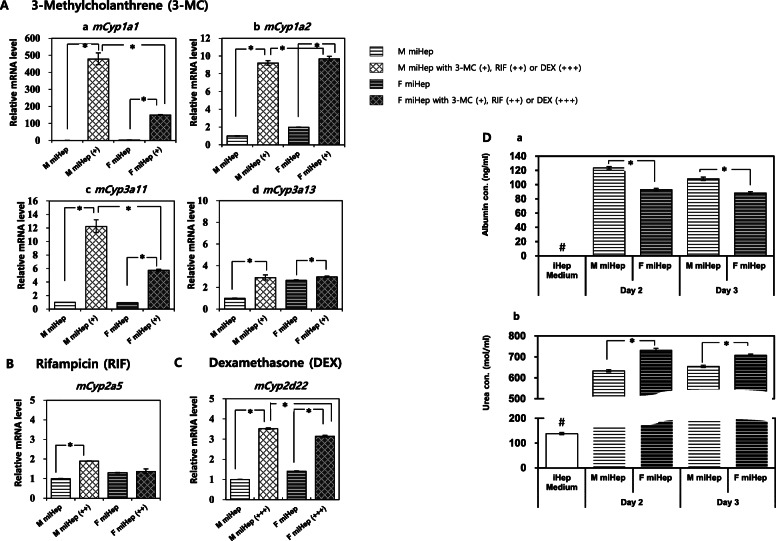
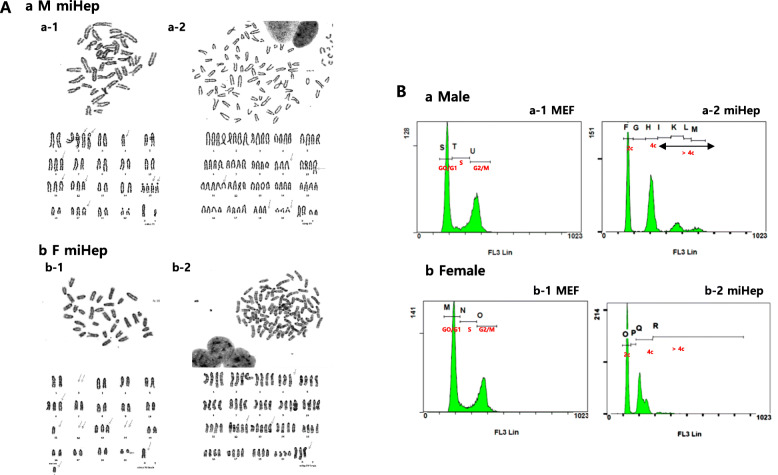
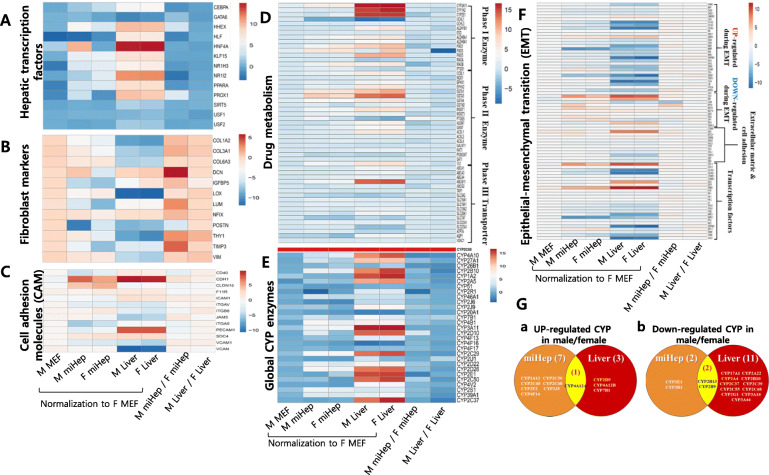
In this study, we evaluated the sex-specific effect of miHep induced from male- and female-specific mouse embryonic fibroblasts (MEFs). We observed miHeps with a polygonal cytoplasm and bipolar nucleus and found that male miHeps showed higher mHnf4a, albumin secretion, and polyploidization than female miHeps. Transcriptomes from miHeps were similar to those from the liver, especially for Hnf4a of male miHeps. Male Cyps were normalized to those from females, which revealed Cyp expression differences between liver and miHeps. In both liver and miHeps, Cyp 4a12a and Cyp 4b13a/2b9 predominated in males and females, respectively. After grafting of miHeps, AST/ALT decreased, regardless of mouse sex.
In conclusion, activation of endogenic Hnf4a is important for generation of successful sex-specific miHeps; furthermore, the male-derived miHep exhibits comparatively enhanced hepatic features than those of female miHep.
肝脏是参与解毒和新陈代谢的重要器官之一。先前已经报道了男性和女性肝脏功能之间存在基于性别的差异,即男性肝脏在酒精清除和脂质代谢方面较好,而女性肝脏在胆固醇代谢方面较好。迄今为止,新型药物毒性的研究尚未考虑到肝脏的性别特异性二态性。然而,最近使用肝样细胞治疗肝脏疾病的方法有所增加。
从小鼠胚胎中分离出 C57BL/6J 孕鼠的胚胎,从小鼠胚胎的背部皮肤组织中分离出小鼠胚胎成纤维细胞(MEFs)。使用慢病毒系统将人转录因子 hHnf1α、hHnf4α 和 hFoxa3 转导到 MEFs 中。转导后的 MEFs 进一步用肝细胞条件培养基处理,然后通过 RT-qPCR、免疫荧光、功能测定进行分析,最后进行全转录组 RNA 测序分析。在体内研究中,将小鼠肝样细胞(miHep)移植到 CCl4 诱导的急性肝损伤小鼠模型中。
在这项研究中,我们评估了来自雄性和雌性特定的小鼠胚胎成纤维细胞(MEFs)诱导的 miHep 的性别特异性效应。我们观察到具有多边形细胞质和双极核的 miHeps,发现雄性 miHeps 的 mHnf4a、白蛋白分泌和多倍体化水平高于雌性 miHeps。miHeps 的转录组与肝脏的转录组相似,特别是雄性 miHeps 的 Hnf4a。雄性 Cyps 与雌性 Cyps 相匹配,这揭示了 Cyps 在肝脏和 miHeps 之间的表达差异。在肝脏和 miHeps 中,Cyp4a12a 和 Cyp4b13a/2b9 分别在雄性和雌性中占主导地位。miHeps 移植后,AST/ALT 降低,与小鼠性别无关。
总之,内源性 Hnf4a 的激活对于成功产生有性别特异性的 miHeps 很重要;此外,与雌性 miHep 相比,雄性衍生的 miHep 表现出更明显的肝脏特征。